impressions of the day – early morning
Every morning, after waking, I spend a little time in my guest room. I get myself ready for the day – doing a few stretches, looking from the window, greeting Zoë (our cat), planning my day.
~
Usually this happens just before sun-up and I am able to watch the sun rise behind the woods in our back yard. I am always amazed at the shift in the location of sun rise, season to season. These November days, it is to the south of where it rose in early summer.
~
This morning the sunrise was brilliant, a fire of orange behind the trees. The flaming colours burst through small gaps in the darker trees – inspiration to get out my watercolours!
~

November 3, 2015 ‘morning fire’ Jane Tims
~
Copyright Jane Tims 2015
Calling all Dragon Kind
Congratulations to my son who, today, opened a new store in downtown Fredericton, New Brunswick. The store, Meta GameZ, specializes in collectable card games, including Magic the Gathering, Pokemon, Force of Will and Star Realms. There is also a large comfortable space for tournament-style play of the card game Magic.
~
To show my son how proud I am, I gave him a gift of my newest painting, ‘Dragon Kind’ (acrylic, 40″ X 40″, gallery edges). Dragons are a recurring theme in the fantasy worlds of many collectable card games and I hope the players will enjoy the painting.
~

~
Copyright 2015 Jane Tims
Ground cover
The autumn rains have begun and already leaves are changing colour. Before the plants go into their winter sleep, I want to pay tribute to the greens of summer. In particular, I love the ground covers in my garden. They create thick carpets of green and provide a backdrop for other garden colour.
~

~
Periwinkle is my favourite ground cover. In early summer blue flowers dot the shiny green foliage. The plant grows well in our very shady yard and makes a good transition from lawn to woodland.
~
~
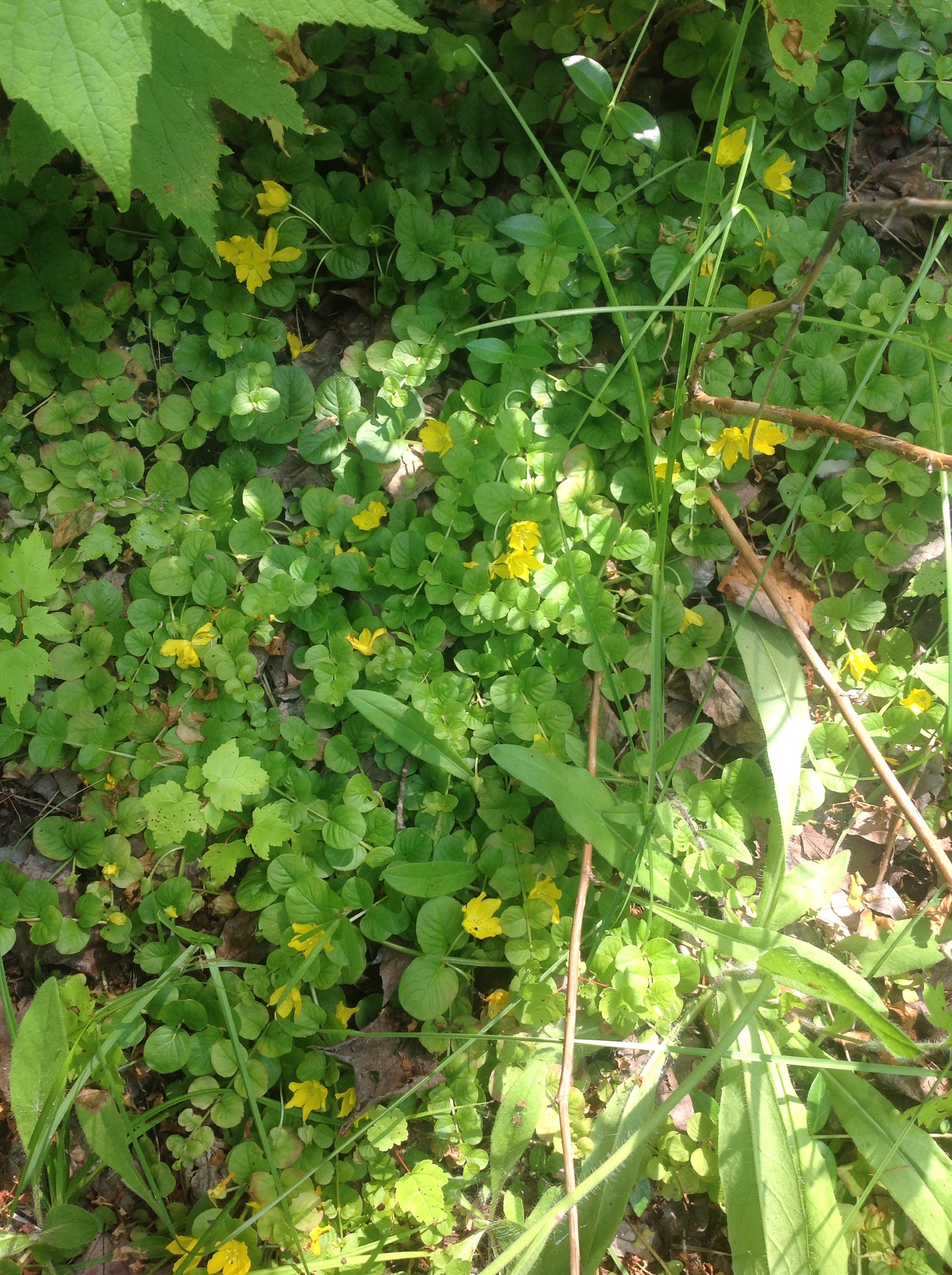
The Creeping Jenny in our yard is a transplant from my grandfather’s farm, probably by way of my mom and dad’s property. The flowers are bright yellow and the leaves grow in pairs of gradually smaller size.
~
~
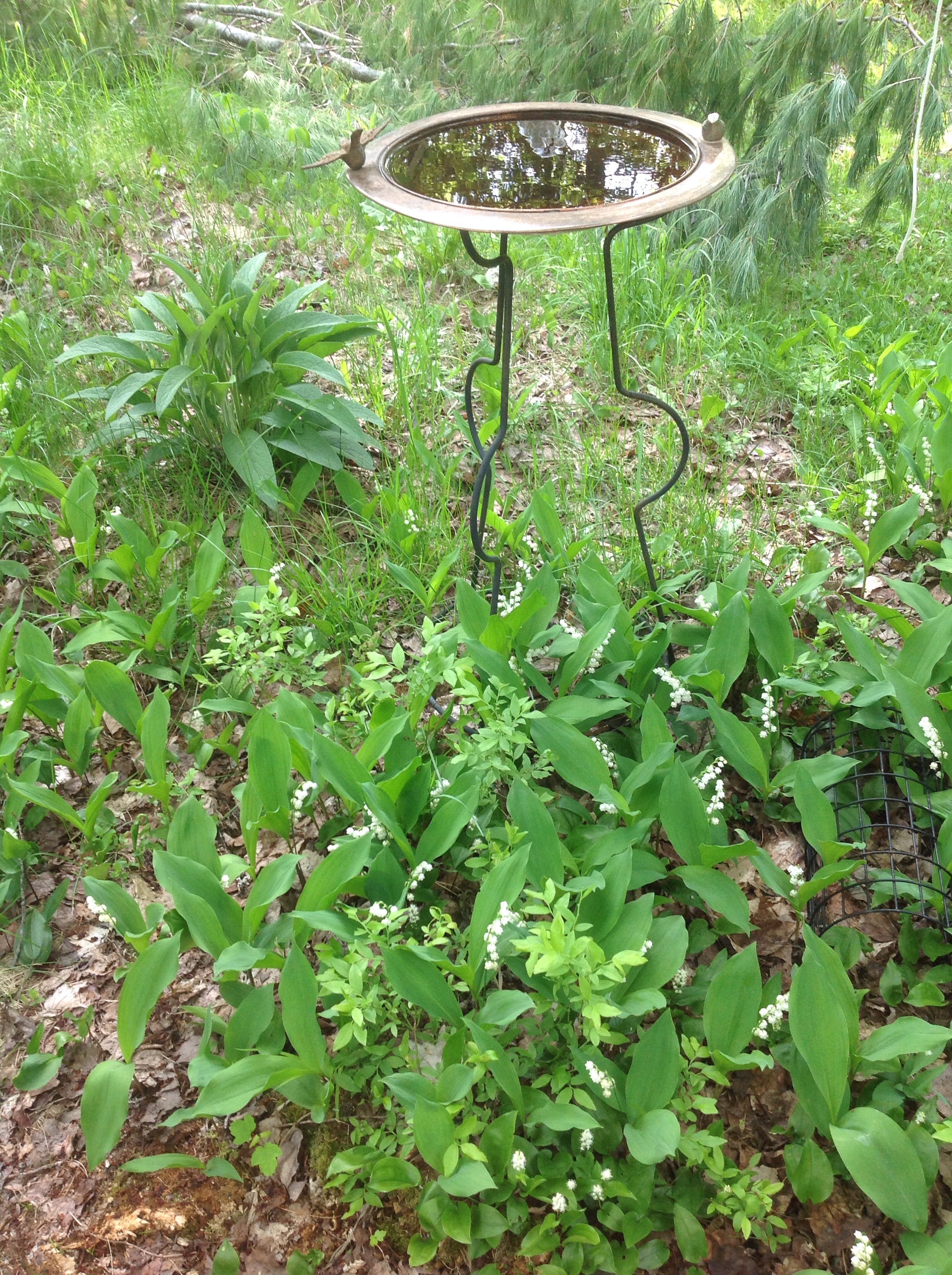
Lily of the Valley grows along the paths in our yard. I love the white flowers and their gentle perfume. Although they are poisonous, the boiled leaves make a pretty grey dye.
~
Soon the ground covers in our area will be layers of autumn leaves and then, blankets of fallen snow. My challenge for next year’s garden will be to find another low-growing cover plant to add to my collection. What are your favourite ground covers?
~
Copyright Jane Tims 2015
in the shelter of the covered bridge – a puzzle
Most covered bridges in new Brunswick have some unique feature that makes them memorable, distinct from all other covered bridges. Sometimes this is because of a puzzle. Why, for example, are ropes and chains hung from the rafters of a covered bridge?
~
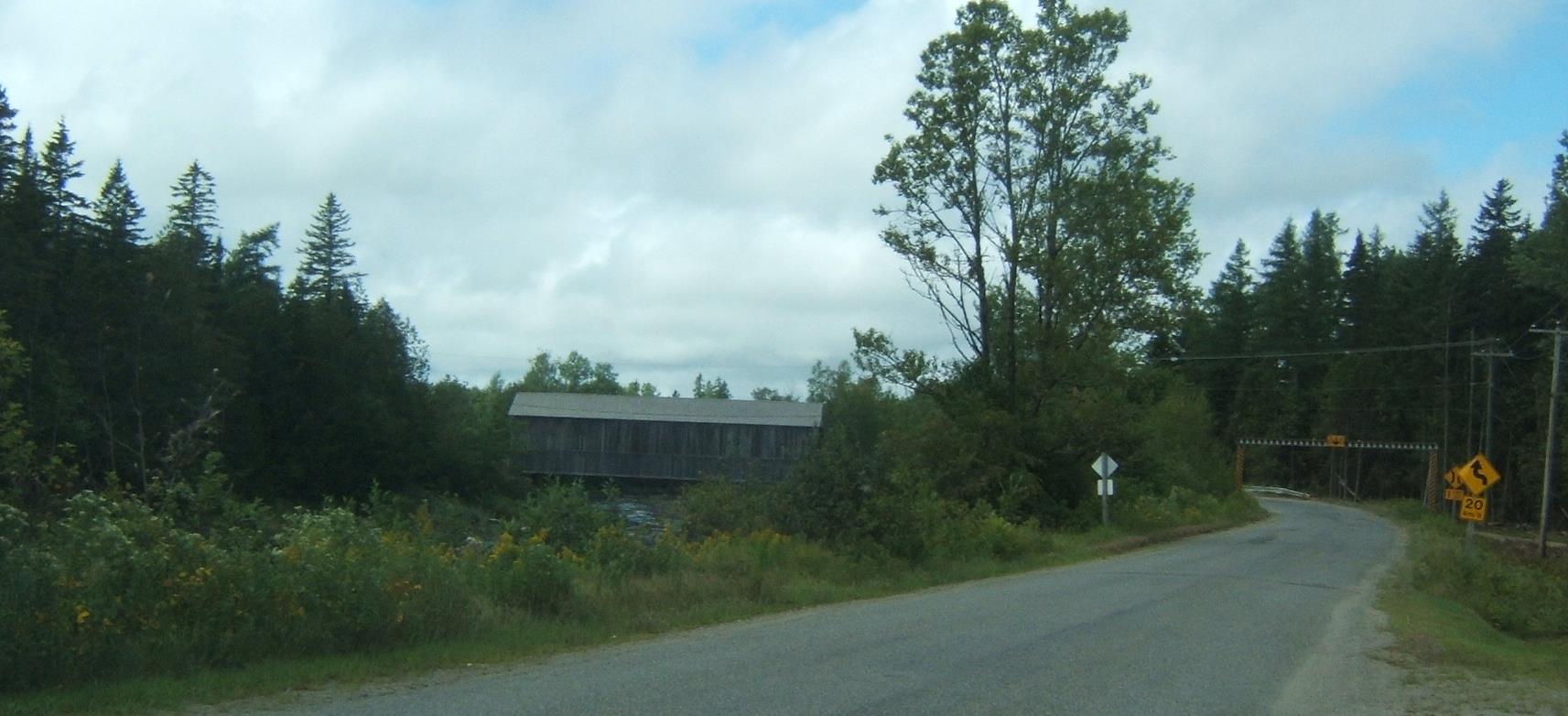
Digdeguash #4, McCann Covered Bridge in New Brunswick. 2015
~
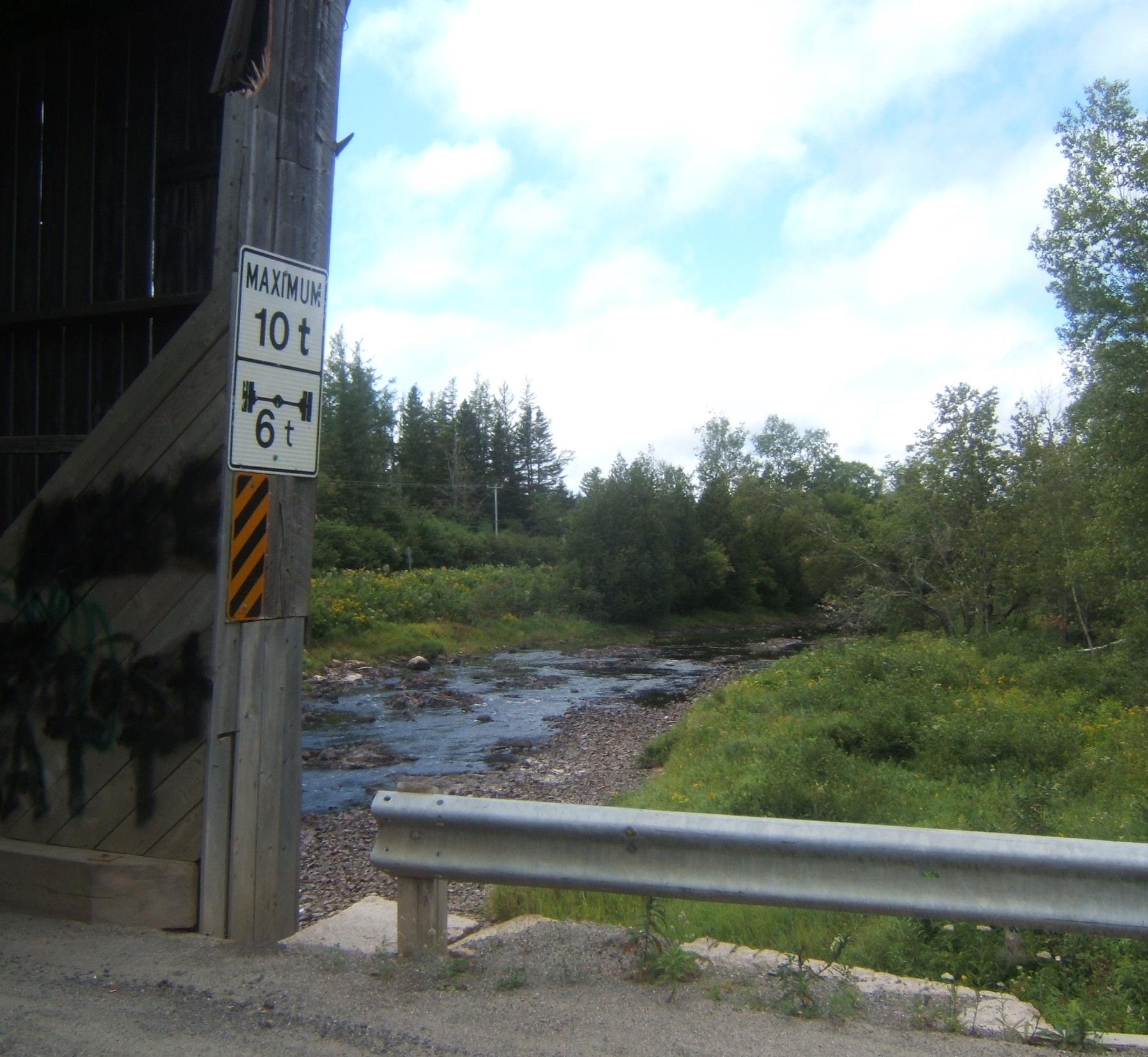
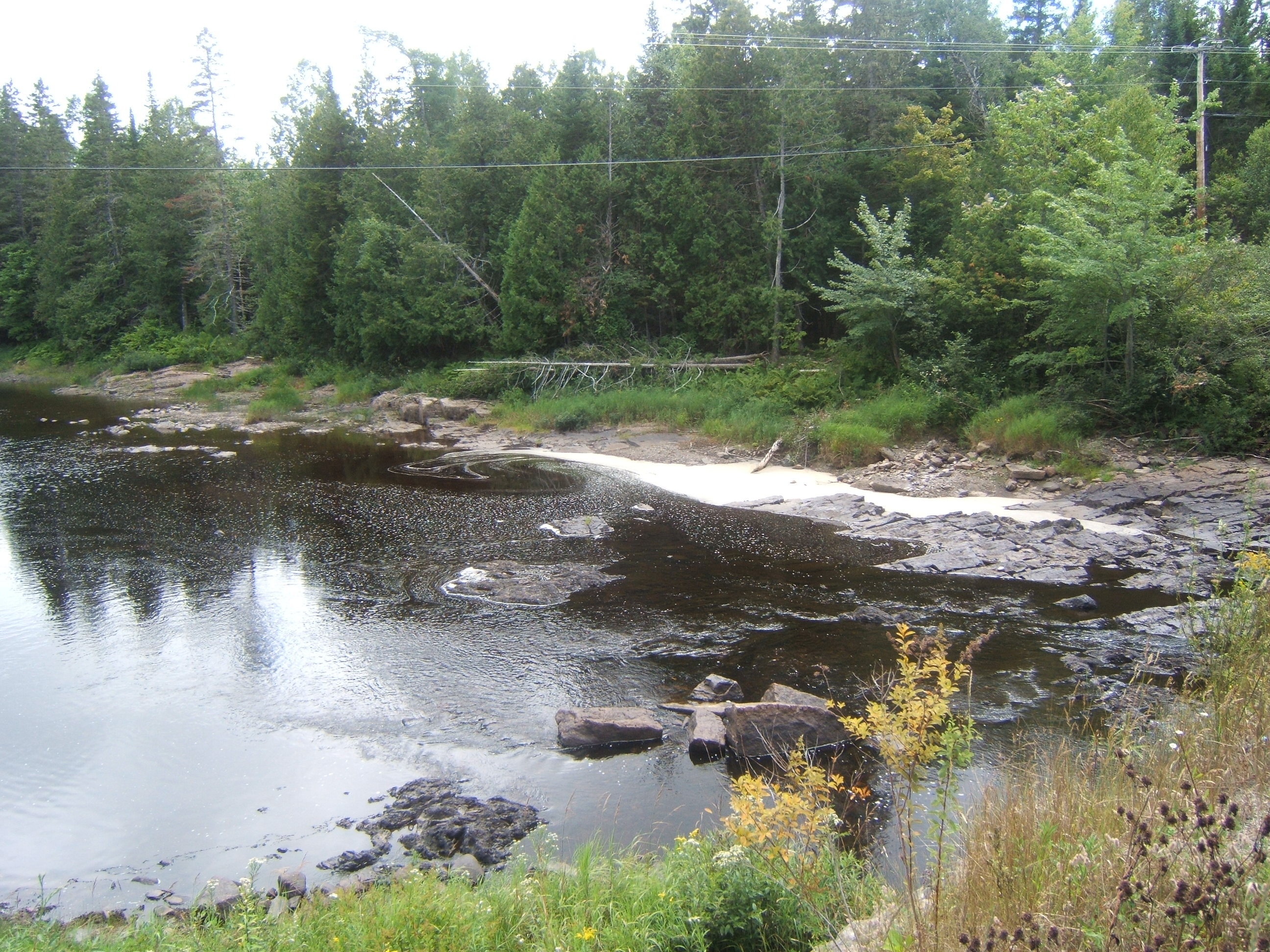
At the end of August, we travelled to some of the covered bridges in Charlotte County. One of these was Digdeguash River #4, the McCann Covered Bridge near Rollingdam. The bridge was built in 1938. On the day we visited, the water was very low, so we could see the ‘bones’ of the Digdeguash River. The bridge walls and beams were covered with names of people, done in knife and pencil and pen, felt marker and paint. The air was thick with the whirr of cicadas.
~
~
~
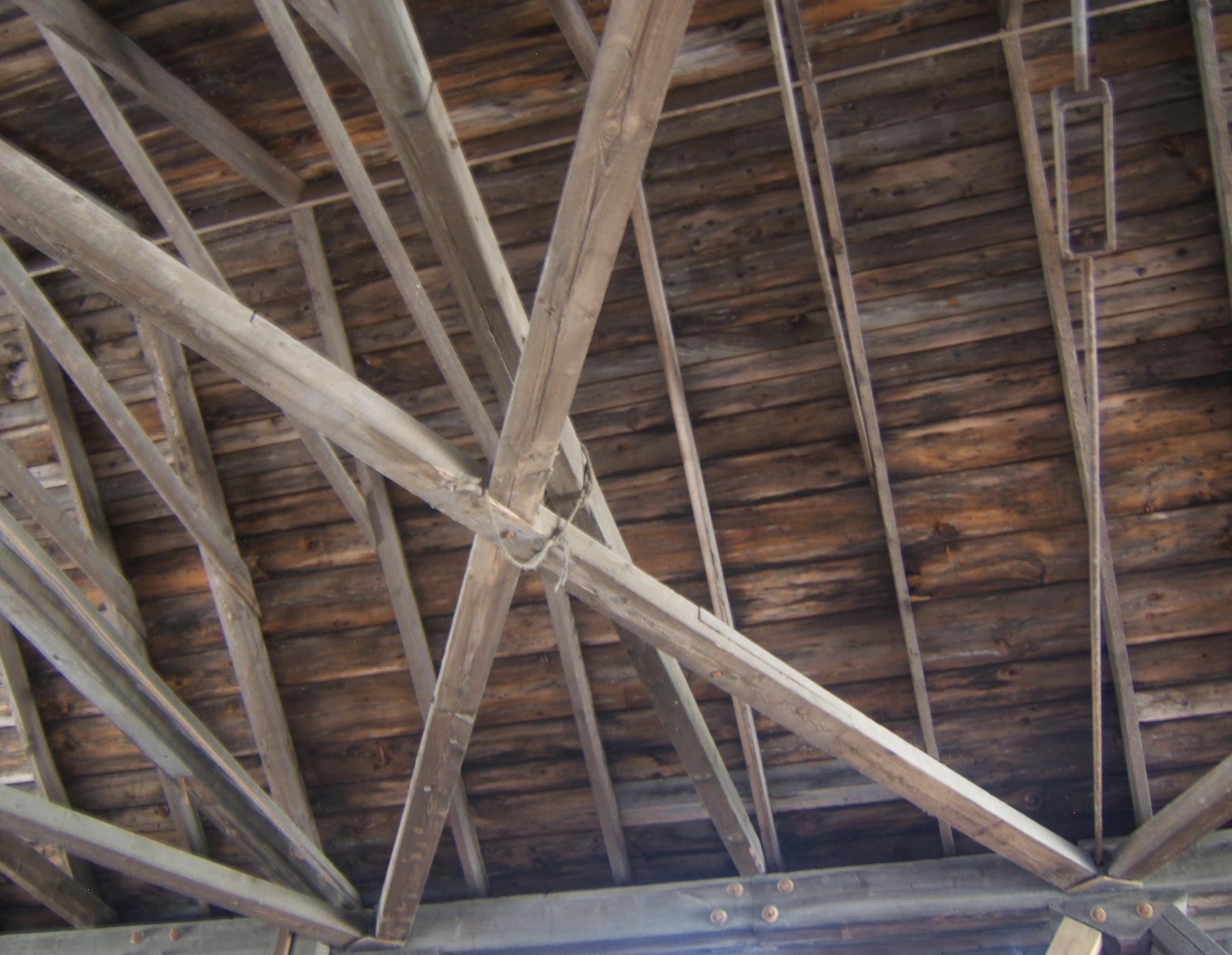
In the rafters of the bridge thick ropes, now frayed, had been hung from the cross beams. There was also a chain hung from one rafter and a piece of steel cable from another. We discussed possible reasons for these, but didn’t have a chance to talk to any local people who may have known the true reason.
~
~
This is my list of possibilities (some more sad, ridiculous or unlikely than others):
- a rope swing inside the bridge after midnight
- a suicide pact
- a hanging
- ghosts and ghouls strung from rafters at Halloween
- a challenge – a timed climb of a knotted rope
- a hammock slung, a cool snooze to the trill of cicadas
- a banner draped by a graduating class
- a way to right a truck’s load after striking the top of the bridge
~
What do you think might be the reason for the ropes and cable and chains?
~

~
Copyright 2015 Jane Tims
art auction – new painting

September 17, 2015 ‘Outside-In #3 – Far from the Sea’ Jane Tims
~
I have submitted another painting to Isaac’s Way Restaurant, for their 25th Art Auction and Sale. This event will run from September 27, 2015 to late January, 2016. The proceeds from the auction go to sponsor kids-in-need. My latest painting is titled ‘Outside-In #3 – Far from the Sea’.
~
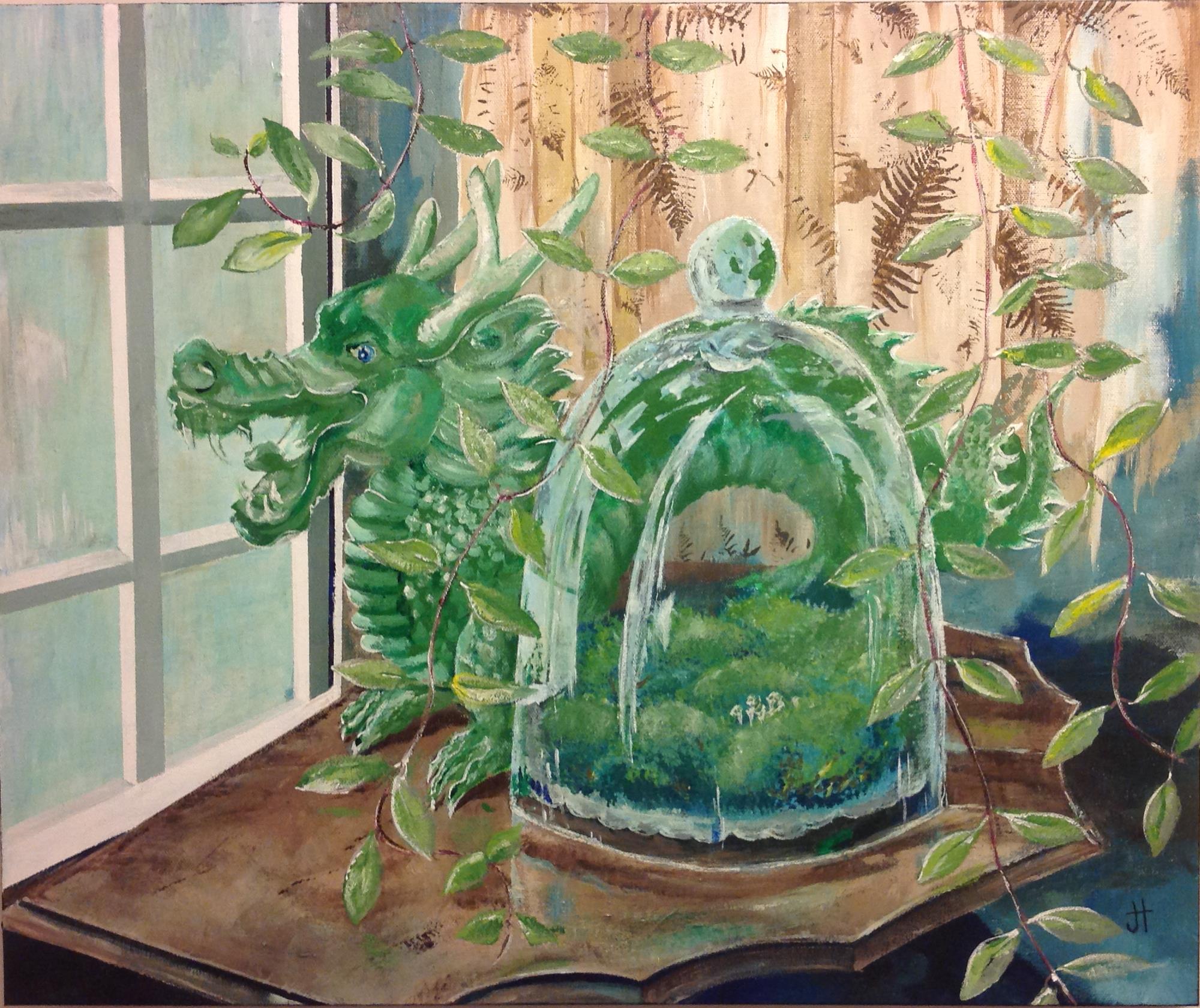
The painting is the third in a series of still life paintings I have done about the many elements of nature we bring into our homes. This includes items collected on walks, motifs on fabrics and metals, small statuary and so on. My first painting in the series was ‘Outside-In’, a Chinese dragon hiding behind a glass cloche. The second painting was ‘Outside-In #2’ , a still life of a potpourri jar.
~
February 12, 2015 ‘Outside-In’ Jane Tims
~

May 2015 ‘Outside-In #2’ Jane Tims
~
For the new painting, I used Chromium Oxide Green, Burnt Umber, Titanium White, Phthalo Blue, Cadmium Yellow, Quinacridone Magenta and Cadmium Red.
~
If you are in the Fredericton area, please drop in to Isaac’s Way. Their food is delicious and over fifty artists have their paintings on display. Bid and you could take home a piece of original art!
~
Copyright Jane Tims 2015
stinkhorns – what’s not to love?
This morning I was trimming the vines at our front door and resting occasionally in my yellow lawn chair. Every time I sat down, I smelled a very disgusting smell. It didn’t take me long to find the source. Something I have never seen before – an Elegant Stinkhorn fungus (Mutinus elegans).
~
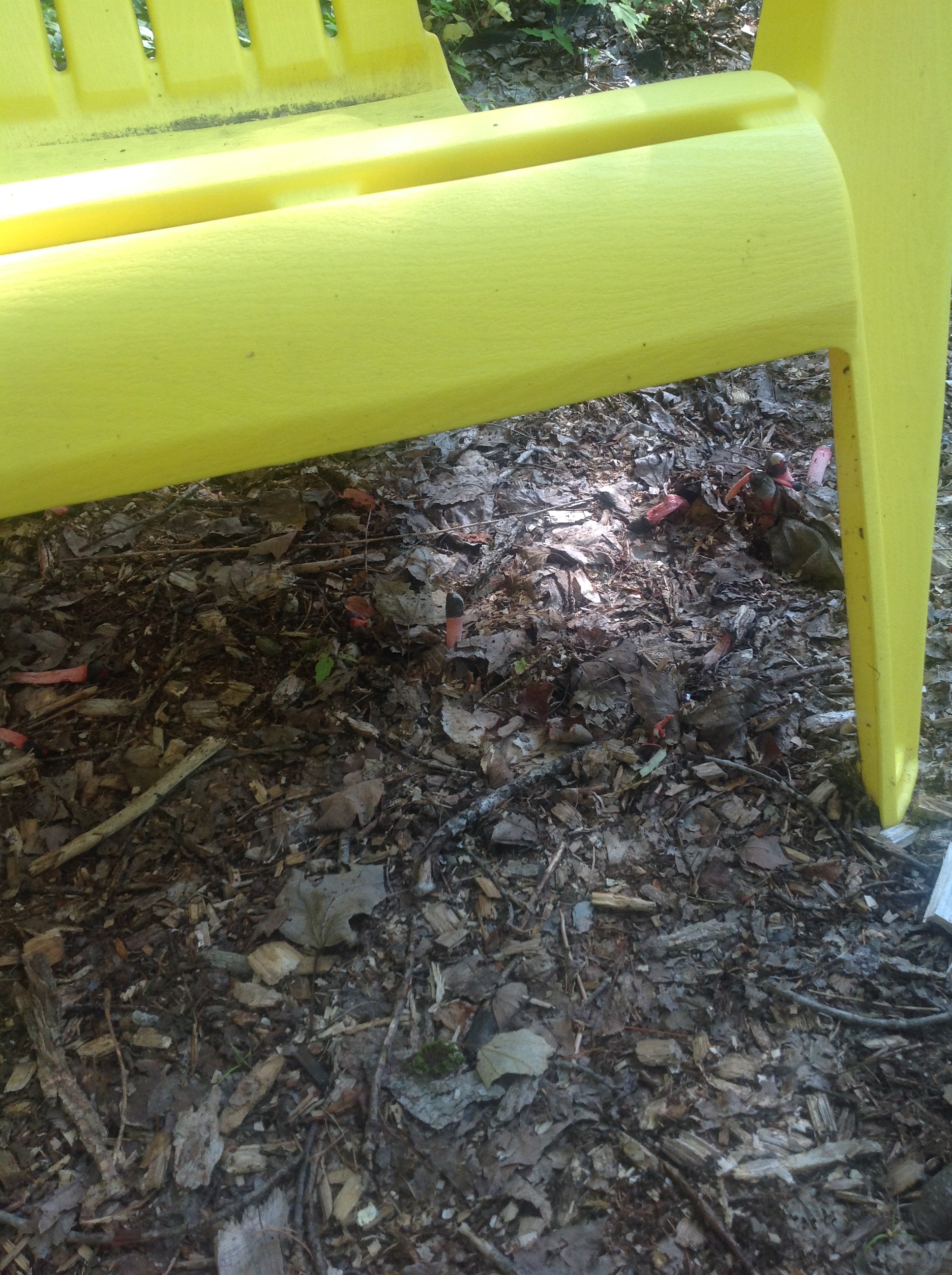
under the yellow chair is a pink stinkhorn fungus
~
Elegant is not an apt word for this fungus in my opinion. Its fruiting body consists of long pink cylinders covered with a dark brown mucilage at the tip. They belong to the family ‘Phallaceae’ (I understand the source of this name). The cylinder emerges from a whitish ‘egg’, a puffball-like body. Flies were buzzing about, attracted to the putrid smell.
~

~
My thought when I first saw the fungus was that Aliens had invaded. Actually, the fungus has found an ideal location to grow. Recently it has been very wet, after a long spell of dry weather. The area where I keep my lawn chairs is mulched with wood chips, providing a source of food for the Stinkhorns. I think the space had been made more habitable by the lawn chair which has kept air movement down and humidity high.
~

~
Sorry. I am a botanist and I understand that I am the invader on our property. But these look disgusting, smell disgusting and, if people have to come to my front door, no one will ever visit me again.
~
Copyright Jane Tims 2015
in the shelter of the covered bridge – a narrow bridge
On our drive last weekend, we visited three covered bridges.
Usually our visits last at least an hour. At each bridge, we:
- get a good look at the abutments beneath the bridge
- watch and listen for birds
- identify the trees near the bridge and any wild plants in the vicinity
- photograph the covered bridge and any interesting architectural elements
- take notes about the state of the bridge, any new construction and the condition and covering of the roof
- look for animal tracks, holes made by woodpeckers, birds nests, spider webs and feathers
- record any notations in the bridge – carvings, chalk, felt marker, pencil, pen and paint
- make a list of the sounds I hear and try to absorb the ‘feeling’ each bridge evokes.
~
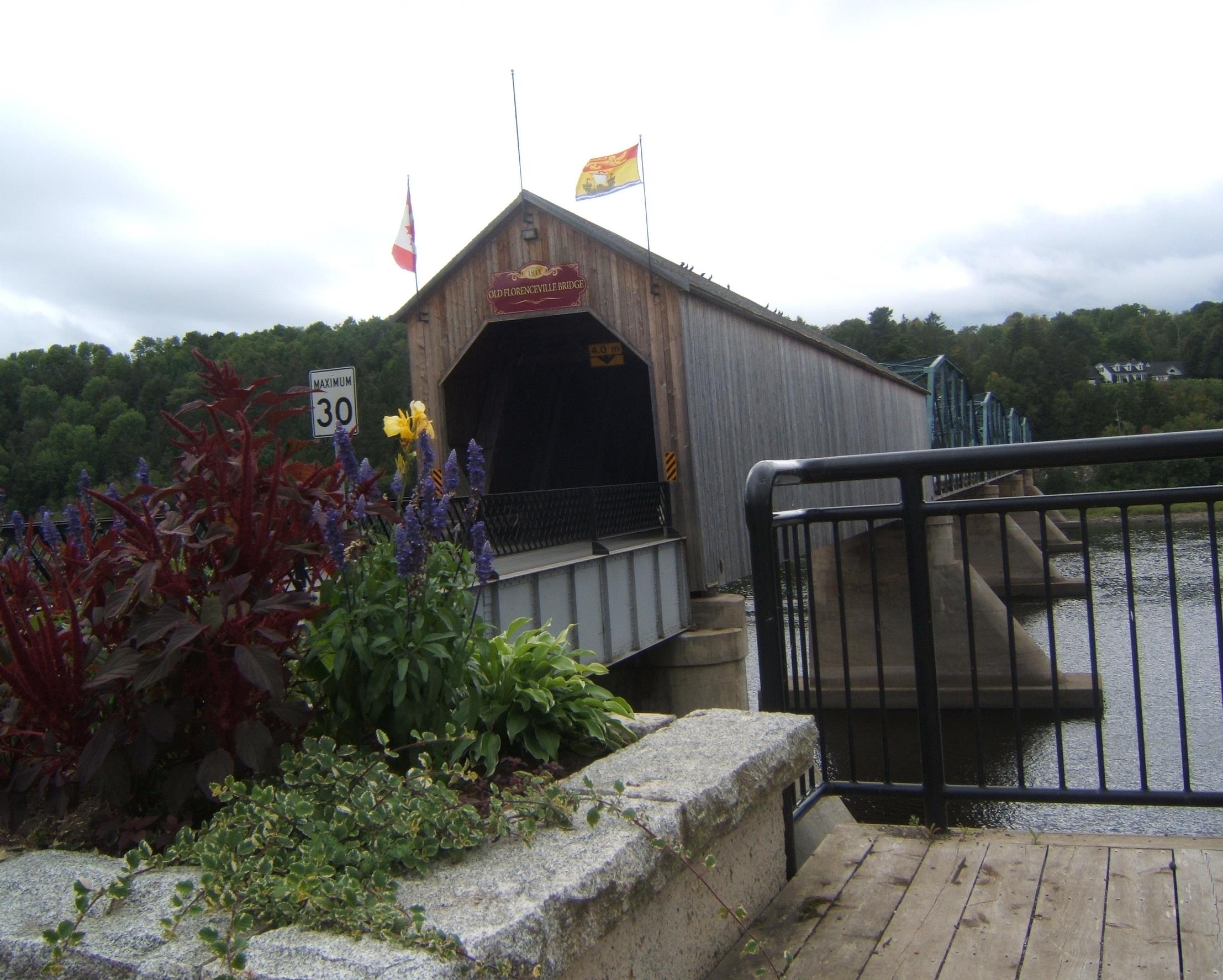
Florenceville Bridge, New Brunswick
~
I knew ahead of time, the Florenceville Bridge across the St. John River would be a different experience. Walking the bridge would be unlikely – there is no pedestrian walkway, the traffic is quite heavy and the bridge is narrow. I did cross the bridge in our truck, a harrowing adventure since the bridge traffic is two-way. Cars slow down when they meet, but the locals are seasoned to the width and scary-brave.
~

a red truck and a white truck meet and pass on the narrow bridge
~
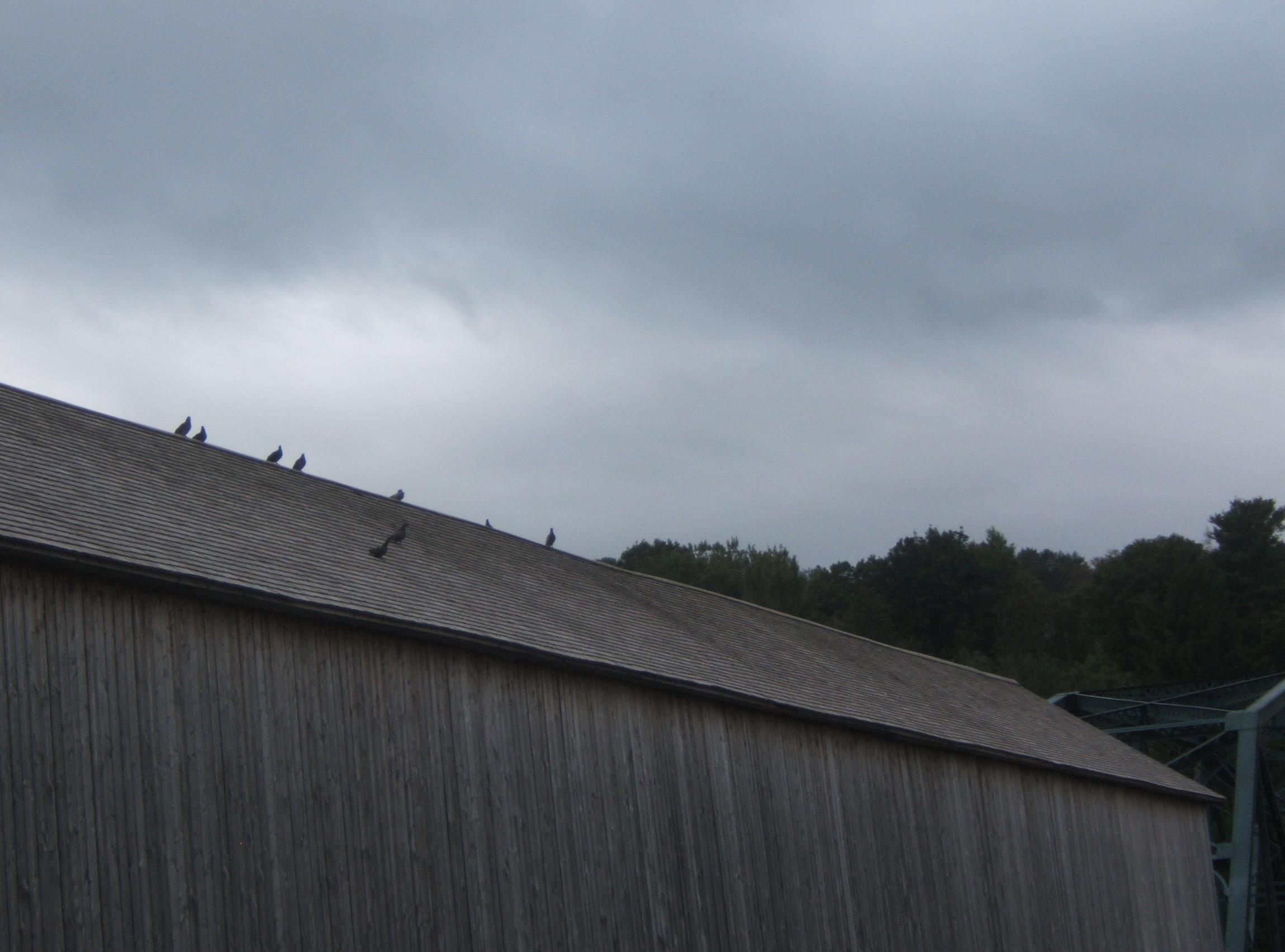
Only one span of the Florenceville Bridge is covered (built in 1907) and this is very well maintained. The other four spans are steel trusses. The pigeons perching on the roof of the bridge are its most obvious wild life.
~
~
~
keeping watch
(Florenceville Bridge)
~
fifteen pigeons swim through air
fill gaps on the ridge line
~
perch on the shingled roof
scrutinize the traffic
the squeeze of half-tons
on the bridge
the kiss of mirrors
~
pigeons quit the ridge, glide
to the shingled shore
~
river winds shiver
hawkweed and sumac, displace
blankets of wild cucumber, billow
the skirts and Tilley
hats of tourists
~

~
Copyright 2015 Jane Tims
in the shelter of the covered bridge – a ghazal
Yesterday, we drove to see a few bridges in north-western New Brunswick. One of these was the North Becaguimec River #4 (Ellis Covered Bridge) in Carleton County.
~
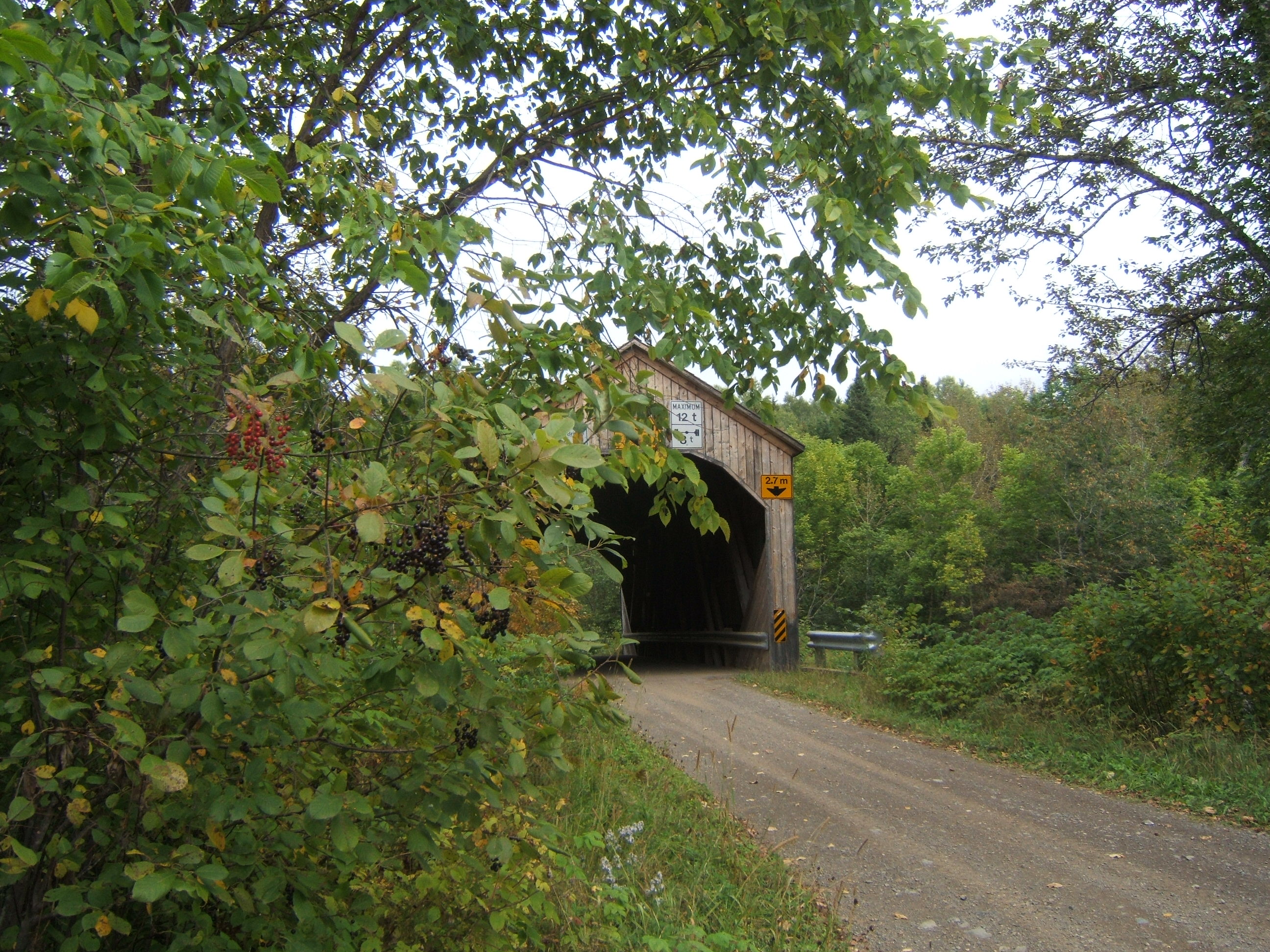
the North Becaguimec River #4 (Ellis Covered Bridge) in Carleton County (Sept 2015)
~
The bridge was built in 1909 and is 18.3 meters long. It shows lots of recent maintenance, including a shingled roof and new timbers and boards in the roof area.
~
The late summer season dominates the atmosphere of the bridges we are visiting. At this bridge, the choke cherries are black, the purple asters are the dominant flower and clematis has set its fuzzy balls of seed.
~

the North Becaguimec River
~
The North Becaguimec is a rocky brook, very shallow after a dry summer.
~
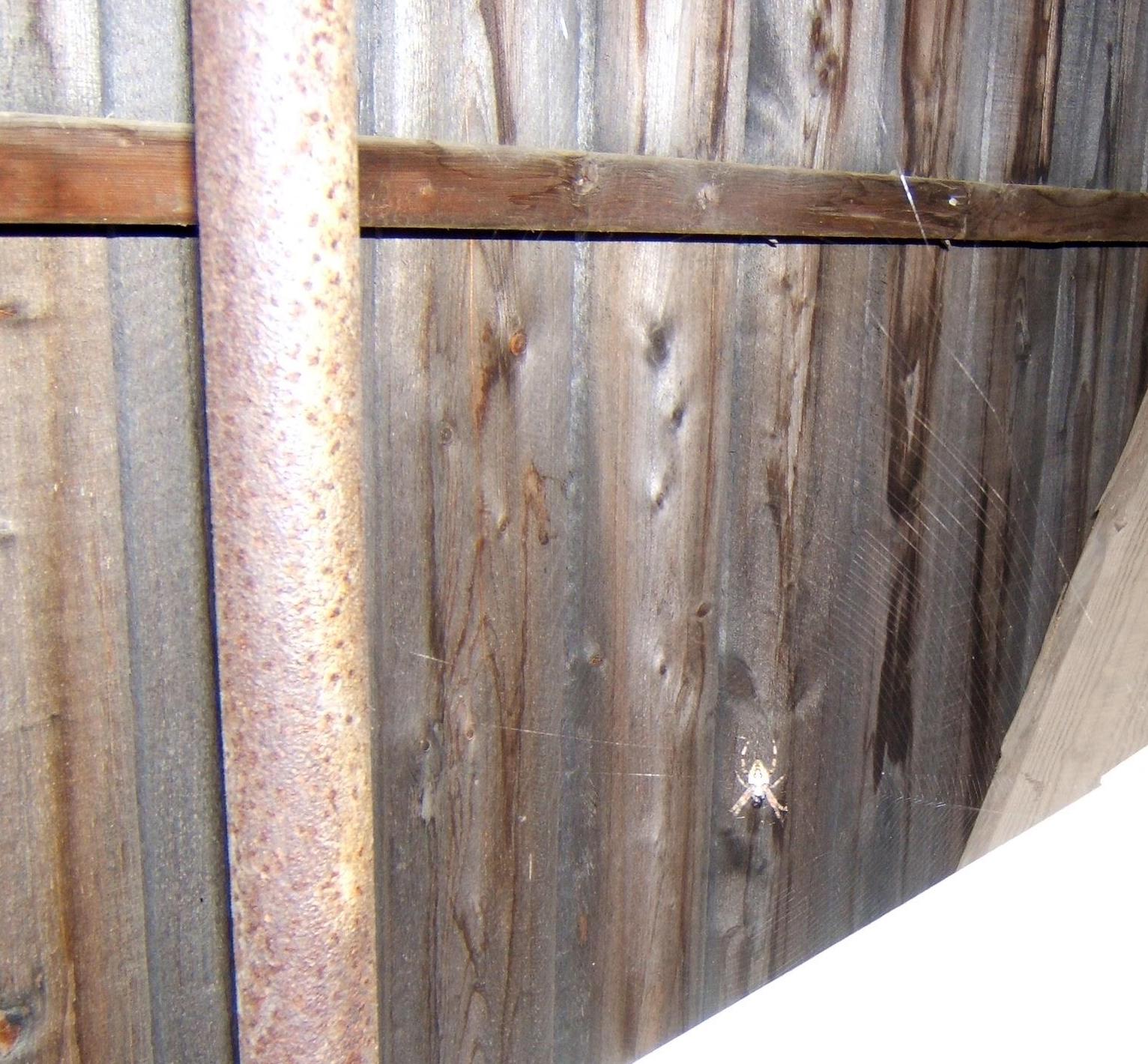
Although there are usually lots of spider webs in a covered bridge, this was the first time I saw a spider. The spider was still and stubborn, not moving for me or my camera.
~
~
As I have said before, in making my manuscript of poems about plants and animals living in the shelter of the covered bridge, I have been trying some different poetic forms. This is my first ghazal.
~
Ghazals are meant to tell of the pain of loss and the triumph of love in spite of loss. A ghazal consists of 5-15 couplets. The second line of each couplet repeats a refrain established in the first couplet. The poem can follow any meter but the meter must stay consistent in every line of the poem.
~
~
the spider waits
~
North Becaguimec River #4 (Ellis Covered Bridge)
~
in the covered bridge a spider weaves and sets its bait
between the beams, and confident, the spider waits
~
cedar shingles, boards replaced and rafters new
but traffic sparse, and in the web the spider waits
~
aster, shepherd’s purse and mullein crowd the road
no risk from the press of tires, and the spider waits
~
after the flood, drifts of birch and maple high
on the river shore, the spider mends its web and waits
~
a skater bug steps and skips on the river’s skin and fears
the water’s dry, and in its web the spider waits
~
on aging crib work velvet moss and lichens grow
landscape formed on rotting wood, and the spider waits
~
years since they wrote their names on the wall of the covered bridge
crickets sing, and in its web the spider waits
~
~
Copyright 2015 Jane Tims
~
a strange place to grow
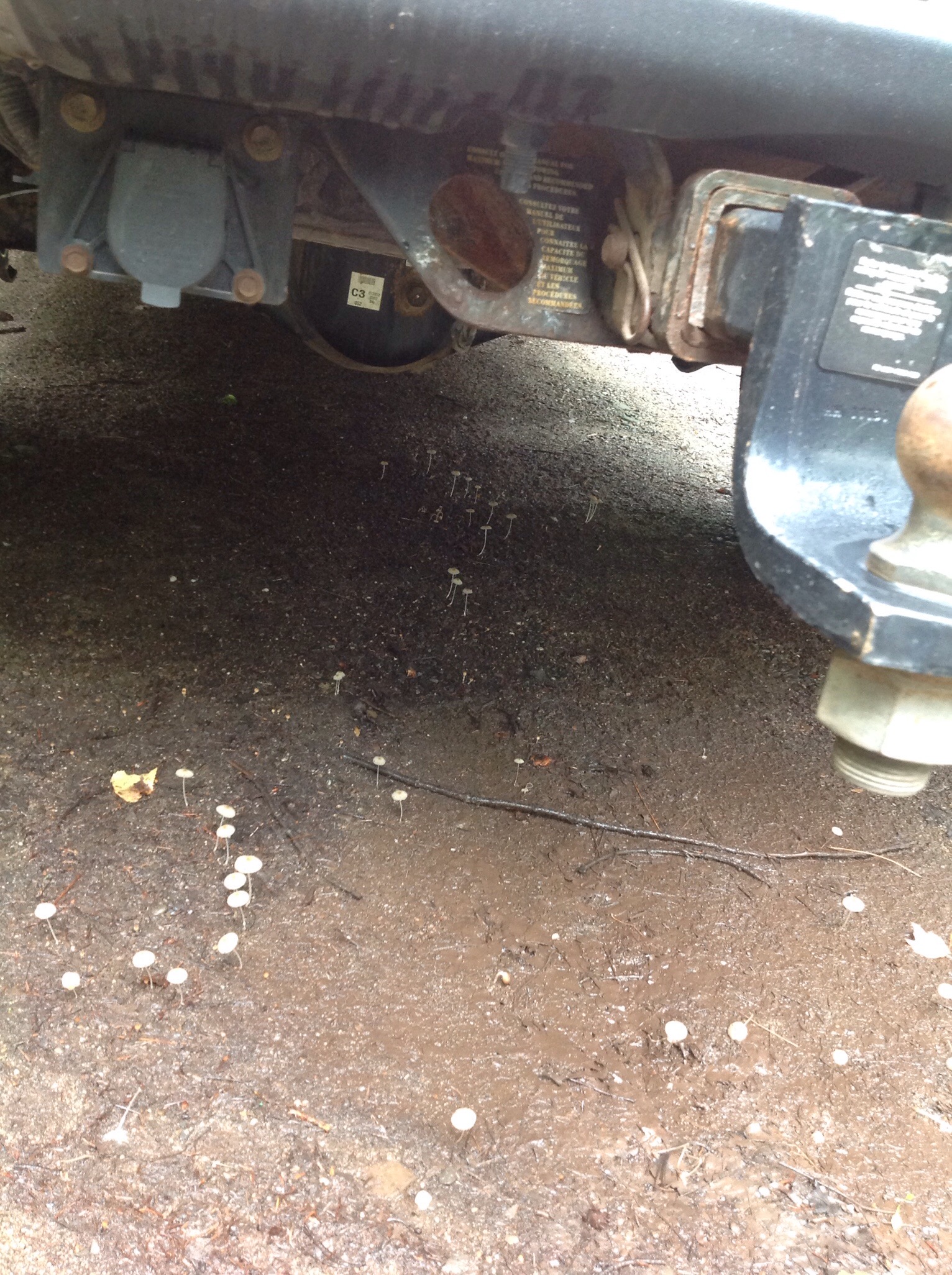
Who knows where life will flourish? Yesterday morning, I found a crowd of tiny toadstools beneath our truck. Although I looked around, I couldn’t find them anywhere else in the yard. But under the truck the microclimate was just right for this faerie land to grow.
Copyright 2015 Jane Tims
in the shelter of the covered bridge – the Canal Bridge twenty three years later
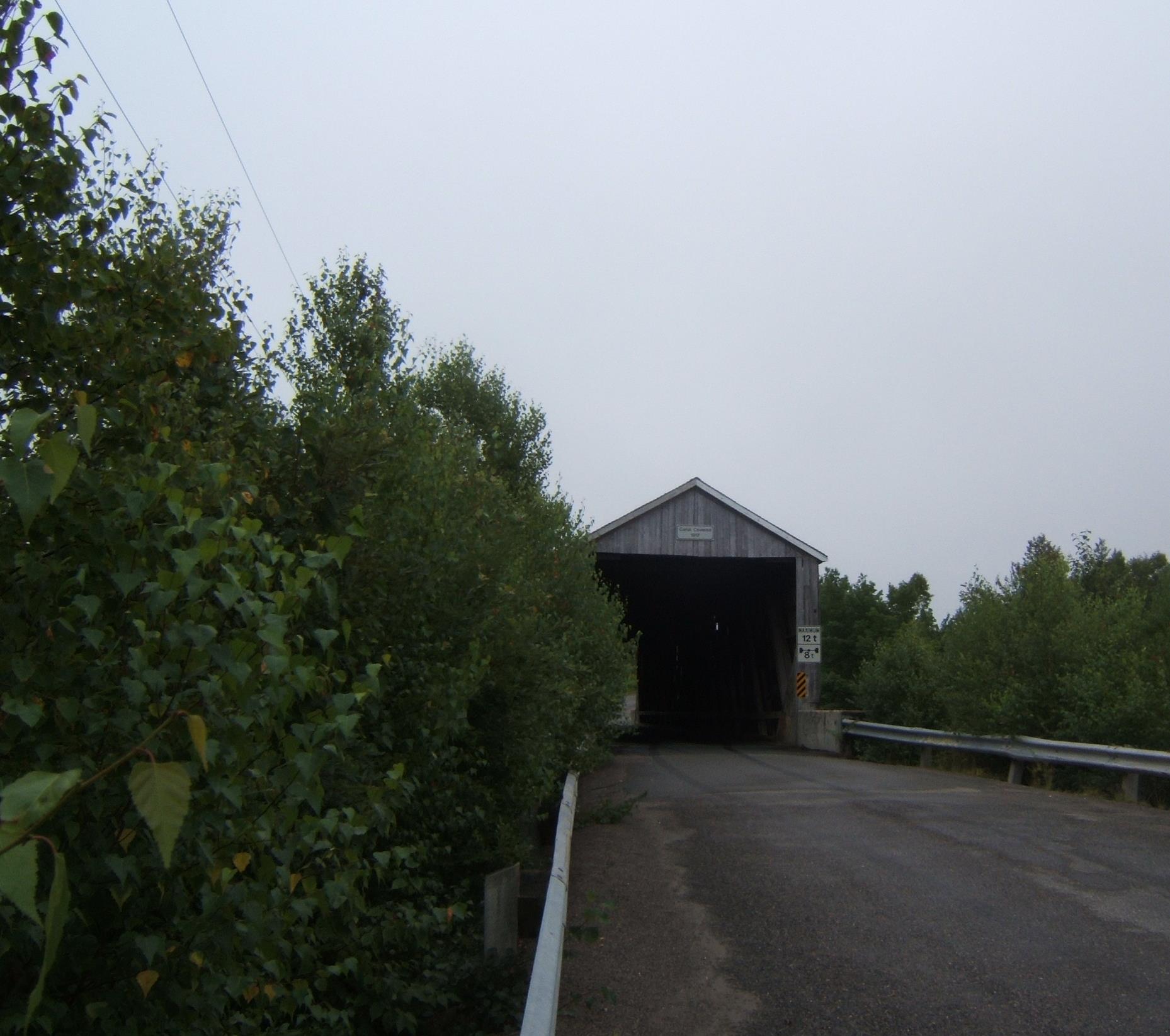
Last Friday we drove to see three covered bridges in Charlotte County, New Brunswick – Canal Covered Bridge, McCann Bridge (Digdeguash River #4) and McGuire Bridge (Digdeguash River #3). My husband, son and I visited two of these in 1992 as part of a project for Canada’s 125th anniversary (see
https://nichepoetryandprose.wordpress.com/2011/09/05/inside-the-covered-bridge/ ).
~
Canal Bridge, Charlotte County, New Brunswick, August 2015
~
The Canal Bridge was built in 1917. It crosses the deep natural canal connecting Lake Utopia with the Magaguadavic River.
~
The Canal is wide and sinuous, unhurried in its flow …
~

~
The water is very low this time of year. The shallow areas are inhabited by water lilies, water shield and pickerel weed …
~

~
Many people have left their initials and messages inside this bridge …
~

~
My husband couldn’t remember if we had visited the Canal Bridge in 1992. But almost immediately he found a small set of initials in black on a board heavily marked by red paint.
~

~
To me, very familiar initials! Back in May of 1992, we had left evidence of our visit. A very emotional experience, seeing our initials more than 23 years later! It was hard to go, knowing I was leaving behind a little bit of my family history.
~
Copyright 2015 Jane Tims






 nichepoetryandprose