Archive for the ‘above the ground’ Category
in the apple orchard
One of the spaces I loved the best on my grandfather’s farm was the apple orchard. It was a small orchard, perhaps twenty trees. I have never seen it in spring when the apple blossoms are in bloom, in fall when the trees are laden with fruit, or in winter when the stark bones of the trees are visible. But I knew the orchard in summer, when the green canopies of the trees shed thick shade over the meadow grasses beneath.

an apple orchard in August
In summer, the orchard was usually a private space. The farm yard could be bustling with people and animals, but the orchard was set apart. It was a still room of dark and dapple.
When I wasn’t pushing the swing to its limits, I was climbing apple trees, one in particular. Its main side branch was as thick as its trunk and jutted out parallel to the ground. A little jump and you could sit on it like a chair. Swing a leg across and you had a horse. Stand on it and you were in the crow’s nest of a sailing ship. Sit down again, lean against the trunk and you had the ideal perch for reading the afternoon away.

an apple orchard in spring (photo by G. Tims)
The orchard was usually a private space. But on Family Reunion Day, it was the focus of the festivities. Big tables covered with white cloths were assembled in a line. Enough chairs were unfolded for every person in our very large family. Cars turned in at the driveway and claimed a spot in the farm yard. Cousins rolled from the cars and were soon climbing and swinging in the orchard. The table gradually filled with a conundrum of casseroles, bean pots, roasters and platters.
After the eating was done, wire hoops went up for a game of croquet. My Dad loved croquet and would show me all the tricks – how to get through the starting hoops in a single turn and how to ricochet off the goal post. He also showed me how to bump up against the ball of another player and send their ball flying out of bounds on the next turn. Armed with my learning, I gripped my croquet mallet, certain to win. And realised my brothers and sister and some of the cousins had some strategies of their own!
After the Reunion was over and the last car was waved from the driveway, I was left alone in the orchard and it seemed more empty and silent than before.
I would love to return to the apple orchard on my grandfather’s farm and read a book in my tree one more time. Are you ever too old to climb an apple tree?
dapple
the worn blanket flung
over the bough
of the apple tree
is an old woman
she hugs the limb
reaches for a branch
or an apple
barely beyond
the crook
of her fingers
she would dare
to set her foot
on the branch
and the next
step up
put the orchard
below her
rise above
the canopy
the valley
the meander of the river
feeble
she waits
in the dapple
clings to the branch
endures the tremble
delays the fall
Published as: ‘dapple’, 1998, Green’s magazine (Autumn 1998) XXXVII (1)
(revised)
© Jane Tims
competing with the squirrels #1
The squirrels and I have issues. I say squirrels, because we have at least two species of squirrel (Sciurus sp.) on our property, reds and greys.
The red squirrels were here before we arrived, about 31 years ago. The red squirrels I see here today must be the great-great-great… grandchildren of the little fellow who used to shimmy down a copper wire to get to our feeder. The grey squirrel arrived only a couple of years ago and is as big as a small cat. Both reds and greys compete with the birds for the sunflower seeds and other food we put in the feeder. The two species of squirrels compete with one another for roughly the same ‘niche’ and my reading tells me that the grey squirrels will eventually displace the red.

grey squirrel cleans out feeder
I overlap with the squirrels’ ‘niche’ in one repect: we all love hazelnuts. I have two large shrubs of Beaked Hazelnut (Corylus cornuta Marsh.) in our woods. Beaked Hazelnut is a wiry shrub with large serrated leaves. Its fruit is contained in bristly beaked husks and the nut is edible, to both me and the squirrels.

Beaked Hazelnut shrub with hazelnuts in beaked husks
The question is, when do I pick my hazelnuts? It has to be the day before the squirrels pick their hazelnuts. I ask my husband every day and he says he doesn’t know…..
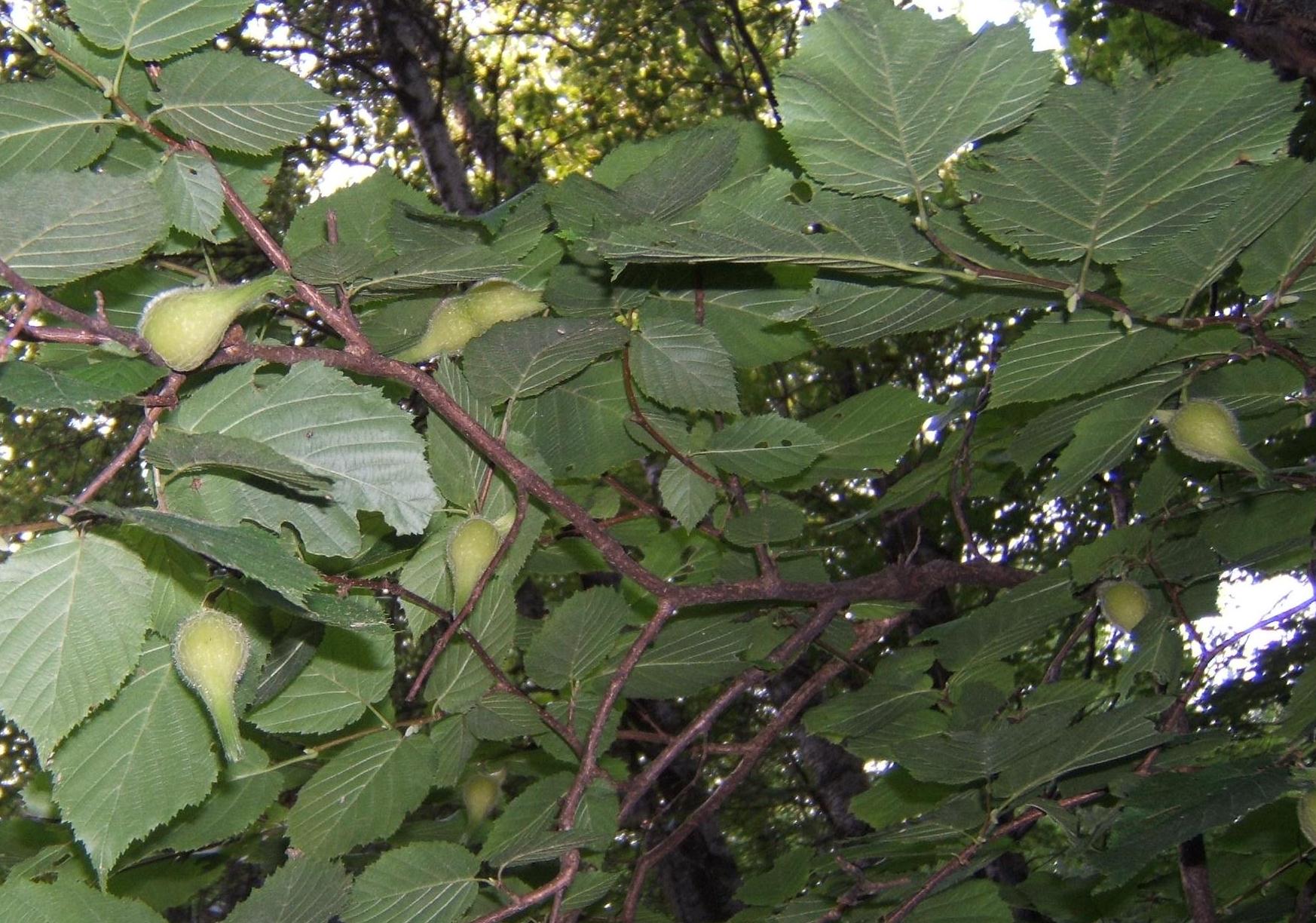
hazelnuts viewed from the underside of the shrub canopy
© Jane Tims
thriving on the roof
Our wood shed is almost thirty years old and its roof has never been re-shingled. This summer, perhaps it is trying to communicate with us.
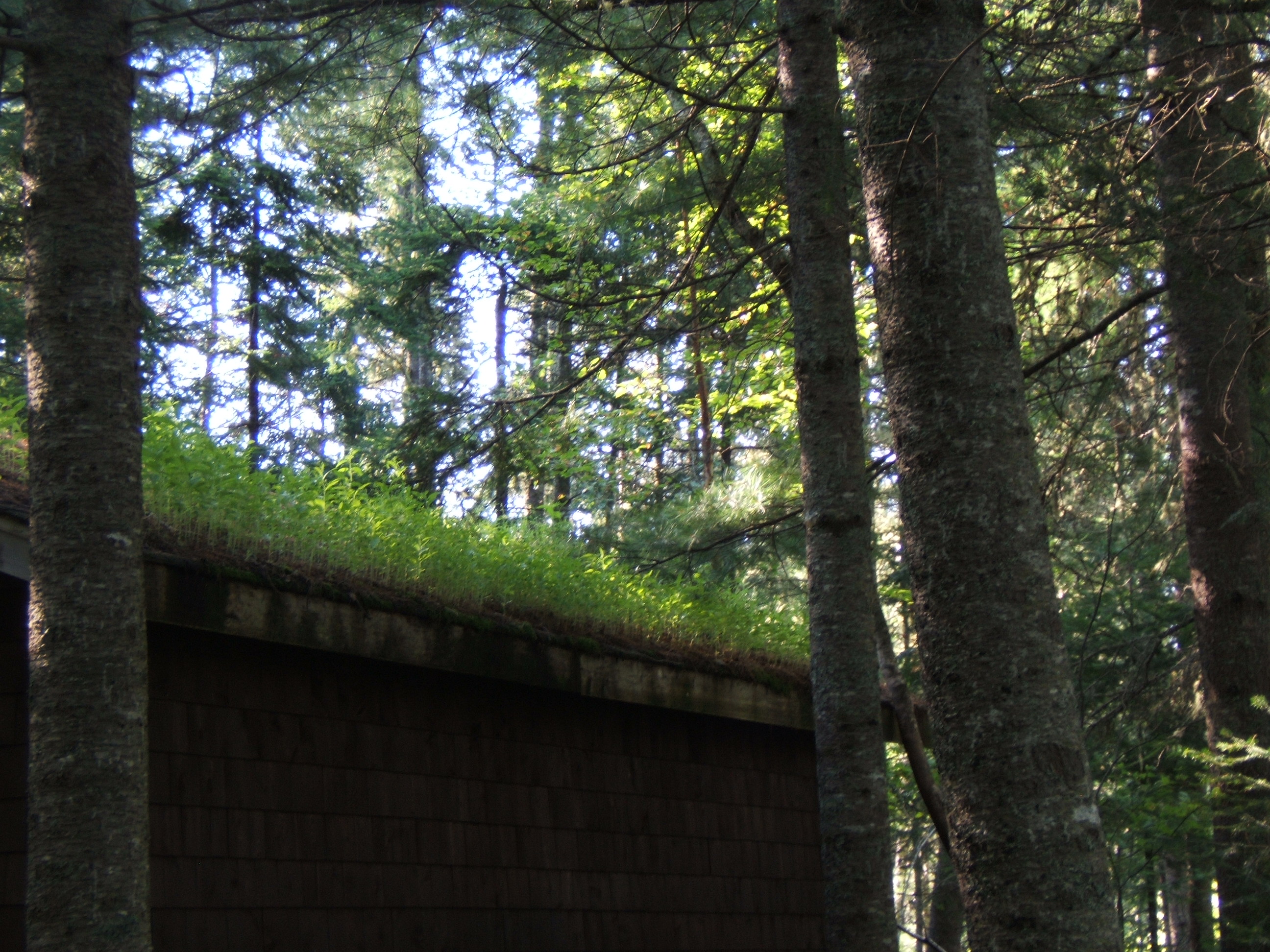
the right amount of soil, the right amount of sun
Just above the wood shed is a white pine. Each year it sheds some of its needles and these land on the roof. Over the years, they have gradually built up, forming a kind of compost. This year, a dusting of seeds found hold, sprouted and are thriving! The roof is still keeping the contents of the wood shed dry, although we expect a vigorous root to break through any time.
Sometimes, we find a space to grow and thrive where it is least expected.

thriving on the wood shed roof
‘niche’ above the ground
Around us are spaces so familiar, we don’t pay attention to them anymore. I remember this when I walk in the woods near our house. On the ground, at my feet, are layers of leaves from last autumn, the carpet of mosses, the plants of the understory.
And then I remember to look up and see the space above me.
This space is the realm of the trees. It is a space shaped by their canopies, the needles of the Balsam Fir and White Pine, the leaves of Red Maple, and the dead branches and twigs of the spruce. Most of the trees reach upward, roughly perpendicular to the ground. They stand together, parallel, the masts and rigging of a sailing ship. Others have succumbed to decay and gravity and wind, and have fallen. Their trunks make diagonal slashes through the spaces above and leave gaps in the canopy.
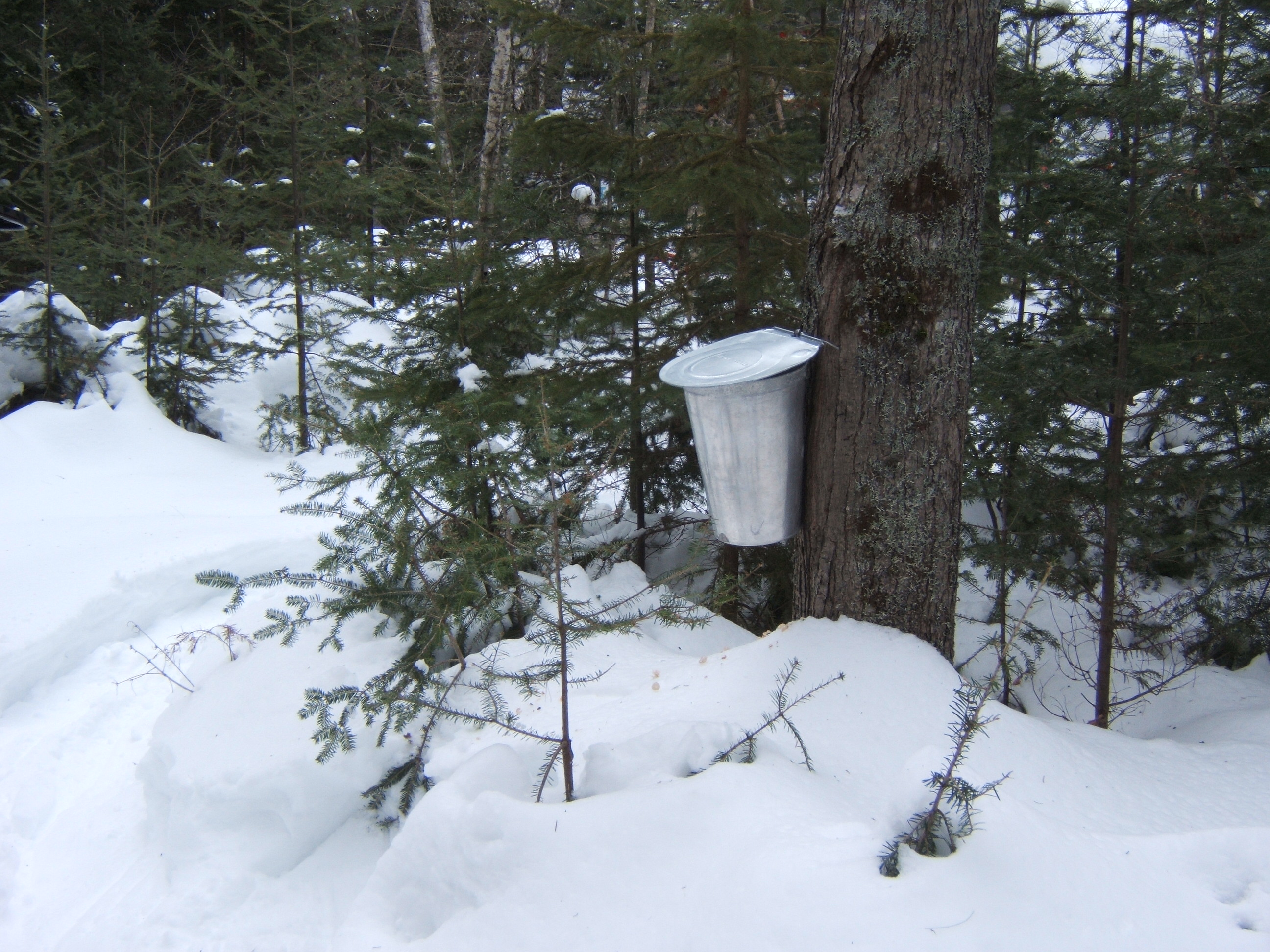
snowshoe trail and sap bucket on maple
These are spaces I cannot access, since my tree-climbing days are over. But I can move there, briefly, in winter. When the snow builds on the ground, it lifts me into the trees. I am reminded of this when I see the empty tap holes in the trunks of the maples along the trail. These are the holes left behind when we pull the taps at the end of maple syrup production in the spring. When we collected the sap, the taps were about three feet above the surface of the snow, so we could access them easily. Now, snow gone, the tap holes are above my head. Our snowshoe paths were elevated into the space above the ground. One winter the snows were so high, we had to trim the branches along the trail. Next summer we could look up and see our winter path, traced by the absence of branches in the space above our heads.

Usnea subfloridana Stirt. is a lichen often found growing on old and stressed trees in coniferous woods. The common name, Old Man's Beard, refers to the matted, stringy appearance of the lichen, hanging in clumps from tree branches. Lichens are made up of two species, an algae and a fungus, living together symbiotically.
Old Man’s Beard
Usnea subfloridana Stirt.
you and I
years ago
forced our ways
bent through the thicket
of lichen and spruce
Usnea
caught in your beard
and we laughed
absurd!
us with stooped backs
and grey hair?
found a game trail
a strawberry marsh
wild berries
crushed into sedge
stained shirts
lips
and fingers
strawberries
dusted with sugar
washed down with cold tea
warmed by rum
today
an old woman
alone
lost her way in the spruce
found beard
caught in the branches
and cried
Published as: ‘Old Man’s Beard’, Summer 1994, the Fiddlehead 180
© Jane Tims




 nichepoetryandprose