Archive for April 2015
writing a novel – getting to know your characters
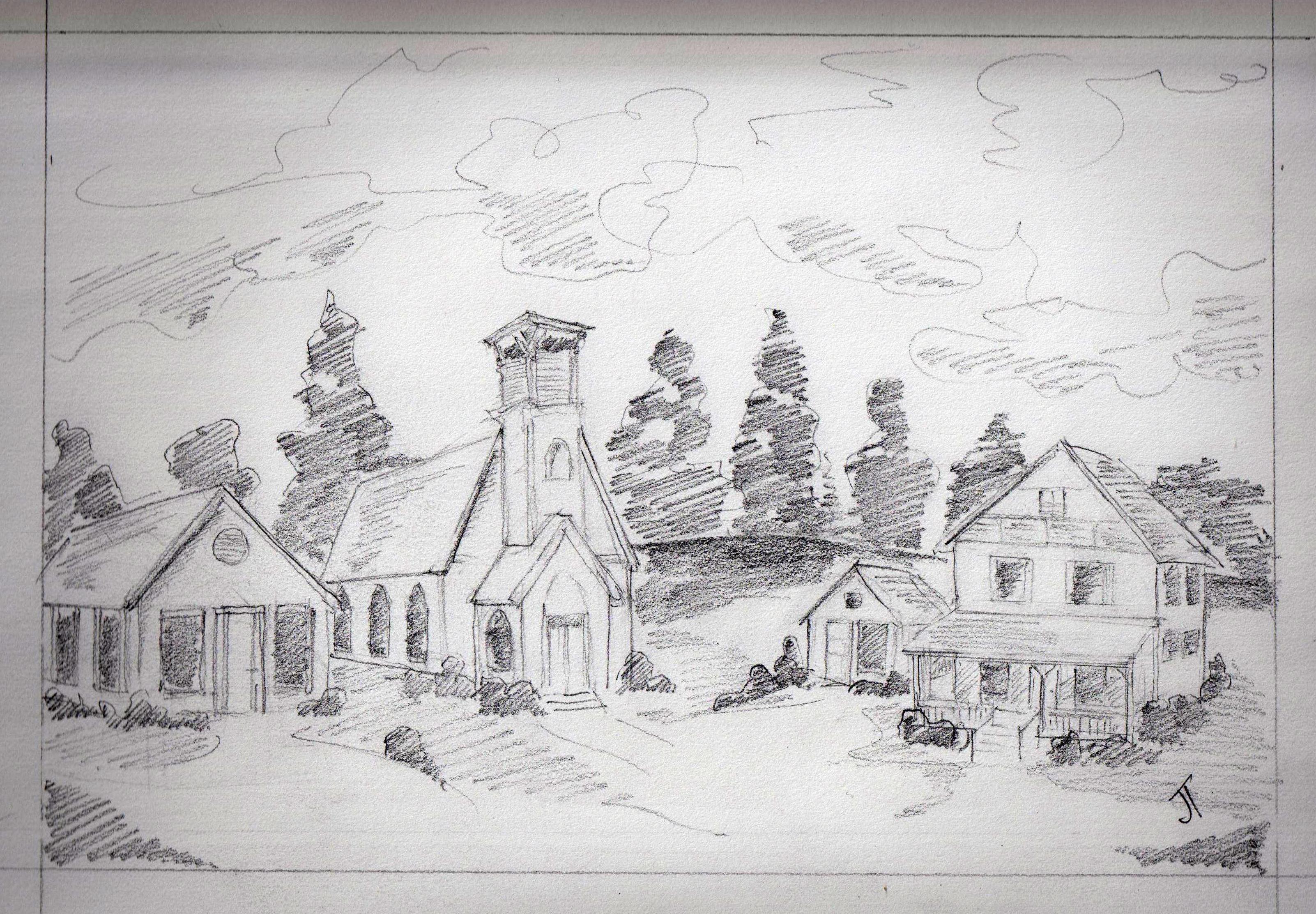
The Whisper Wind Writers’ Retreat – the setting for my novel
~
Working on the drafts of a novel is like combing hair. You start at the top/beginning and comb through the words and sentences, paragraphs and chapters, over and over. Eventually the tangles comb out and the hair becomes smooth and shiny.
~
I find the best way to do the ‘combing’ is to work at specific components of the story. Developing symbols within the story is one. Developing characters in the story is another.
~
I have a lot of characters in my books. In ‘Open to the Skies’ there are 44 characters, major, minor and dead. This is probably too many, but it is a book about a community.
So far, in ‘Crossing at a Walk’, I have 33 characters. These include Sadie and Tom, members of the community, and the six ‘retreaters’ (the writers enjoying a weekend at the Writers’ Retreat).
~
A difficulty with writing a sequel, I feel responsible for all these characters. Leaving one of them out of book #2 seems wrong to me. But by book # 25 (!) I’ll have a whole planet to contend with. So I have to make choices.
~

~
Each of my characters has a character sketch, a background story and a story arc. As I’ve said before, I try to include three ‘bumps’ in each story line.
One of the ‘combings’ I do is to look at each character as he or she appears in the book. I want to make sure the character is consistent with respect to appearance, back story, way of speaking, relationships, and so on.
~
1. Character sketch and background
As an example, let me introduce you to Ruby Milton. She is the fourth character from the left in the sketches above. She is a minor character, a constant companion to one of the major characters. Ruby is 64 and married (she was a Brunelle before she was married). She is a retired librarian and now runs a U-Pick with her husband Lars. Ruby, as a result of her name, loves all things red. She wears red and she bids on a lamp at an auction because it has a red glass finial. A quilter, she works a red patch into every quilt she makes. She was also one of the characters who opposed the sale and relocation of the Landing Church in ‘Open to the Skies’. Ruby snubs Sadie at every opportunity.
~
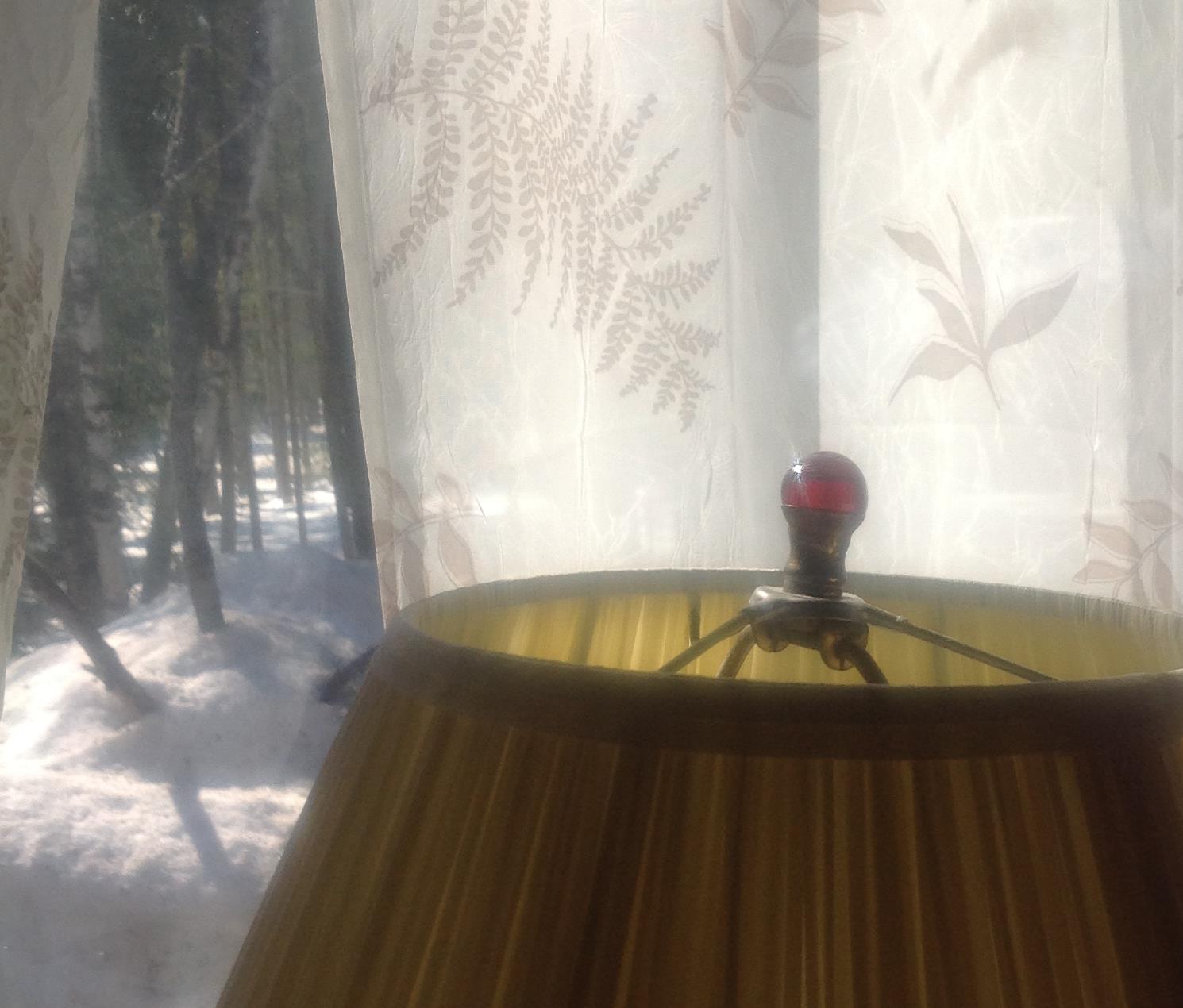
Ruby would love my lamp with the red finial – it once belonged to my mother-in-law Mary
~
It’s hard to have to keep checking on a character sketch as I write, so I prepare a chart of my characters. I keep the chart file open so I can check on it as often as I want.
~
| Name | Occupation | Characteristics | Age | Vocabulary |
| Ruby Milton | Librarian; runs a U-Pick | Wears red; thin; a quilter; maiden name Brunelle; lived in community all her life | 62 | Cemetery; uses lots of contractions |
| Lars Milton | Retired Teacher; runs a U-Pick | Tall; Full head of snowy hair | 65 | Graveyard |
| Marjory Alworth | Shop owner | Nicknamed Margie; Ruby Milton’s daughter | 41 | |
| Betsy Alworth | Waitress | Ruby Milton’s grand-daughter | 24 |
~
2. Story arc
Ruby occurs three times in ‘Crossing at a Walk’. She occurs because she is a friend to Pat, a major character; she runs a local U-Pick and food from the U-Pick is used at the Retreat; she represents the community’s continued interest in its landmarks. She wants to continue to use the Landing Church for her quilting group and she participates in celebrations of the history of the covered bridge. Ruby also represents the part of the community that Sadie hasn’t quite won over in her efforts to fit in.
~
As I read my draft so far, I realise Ruby needs to change in some small way during the book. So, in keeping with her importance as a representative of community, I add some elements to Ruby’s story. At the auction, she won’t even acknowledge Sadie. But during the book, Sadie allows Ruby’s quilters to use the church and treats Ruby as knowledgeable about community history. By the end of the book, Ruby greets Sadie as a friend and contributes a story about her memories of the covered bridge.
~

inside a covered bridge
~
I keep a table of story arcs for each of my characters, to help me build the story, be consistent and make sure that I find the story for each character.
~
| Name | First occurrence | Second occurrence | Third occurrence | Story |
| Ruby Milton | Ignores Sadie at auction (page 35) | Asks to use hall for quilting group (page 146) | Greets Sadie as a friend at a community gathering; tells a story about bridge (page 232) | Pat’s friend; represents community; changes her attitude about Sadie |
~
Ruby is a relatively minor character in the book. However, I treat her with the same respect I give my major characters. And she gives back to me. She suggests turnings for the story. And she helps make the community I have created for these characters more realistic.
~

Ruby puts a bit of red in every quilt she makes
~
Copyright 2015 Jane Tims
writing a novel – searching out the symbols
When I wrote ‘Open to the Skies’, I used various ways to examine and tighten the plot. One of these was to list the various objects in the book and consider them as symbols.
~
For my book ‘Crossing at a Walk’, I will use this process to help my eventual readers understand the progress of the story.
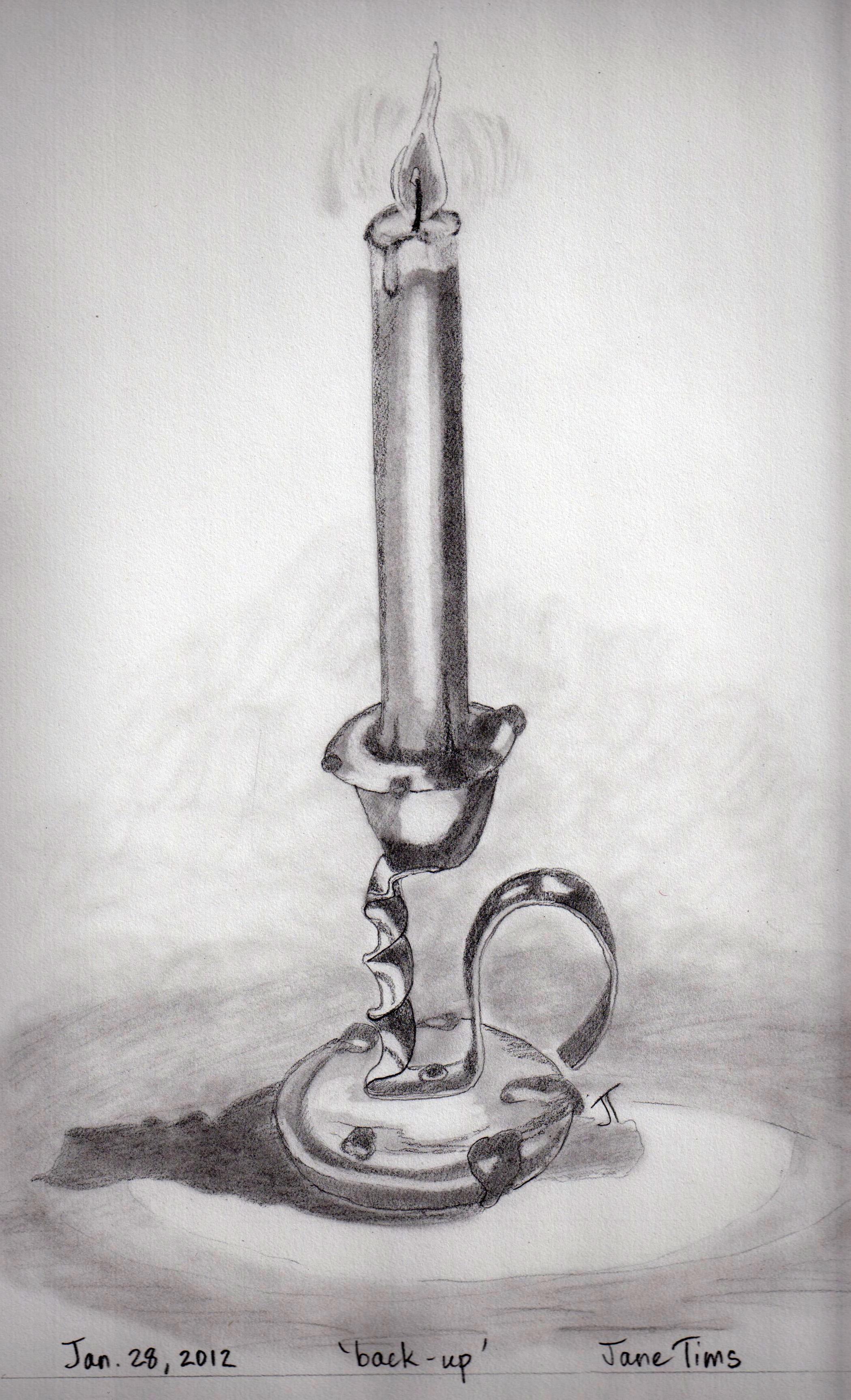
Mentioned once, an object, such as a candle, is just a candle. Mentioned twice, it becomes a symbol, and the reader remembers the first mention of the object and draws understanding from the symbolism. So a candle may be remembered for its light. If, in a subsequent mention, someone blows out the candle, this may make a comment on the idea of communication. Passing a candle from person to person suggests the passing of stories between people. The use of symbols deepens meanings and helps the plot reverberate throughout the writing.
~
~
Symbols operate like mini sub-plots throughout the story. These mini-plots echo the main plot, and the objects change in a way that illuminates the main plot. The mini-plots also tend to occur in three ‘beats’, providing a beginning, middle and end. For example, an unlit candle becomes a useful source of light and is passed between people at a wake.
~
In this round of edits, I have tried to examine the use of symbols in my novel. To do this, I built a list of the objects I have used as symbols. Then I looked for their occurrence in the novel to see if I could identify three ‘beats’ and a mini sub-plot. In some cases, I identified gaps – fixing these has helped me to solidify my overall plot.
~
This is a short version of my list of some of the objects/symbols in my book. When I assembled the list, the items in red were missing and I had to fill out the story accordingly. Perhaps you can use this method to help strengthen the narrative in your own fiction.
~
| Object | Symbol | Occurrence (page numbers) | Mini-plot | ||
| coyote | fear | 87 | 104 | 120 | coyotes howl in woods; they rattle some of the retreaters; Sadie considers it a failing of the retreat |
| church tower | refuge | 15 | 104 | 181 | tower is off-limits to retreaters; becomes a place to sleep in safety; a place to write a poem |
| paper maché ball and chain | servitude | 39 | 58 | 180 | Sadie is asked to provide a community service placement for Minnie, a trouble-maker; Minnie stores the ball and chain, a theatrical prop, on a library shelf during her stay; when the time is up, she destroys the ball and chain |
| rain | a barrier | 6 | 133 | 186 | rain interferes with the retreat at every turn and ends up being the source of the flood that threatens the covered bridge |
| scale model of a covered bridge | remembering | 35 | 132 | 150 | a scale model of the covered bridge is purchased at an auction; helps tell the story of a character in the novel; could become the only memento of the bridge |
| burning candles | passing stories from person to person | 58 | 140 | 188 | candles are not allowed in the old church but later become a practical source of light during a storm and a way of passing stories about the covered bridge from person to person |
| loon | communication | 21 | 169 | 182 | loon calls at retreat encourage people to talk to one another |
| stars, shooting stars | hope | 12 | 109 | 185 | stars become inspiration for an artist, encouragement for a love-interest, and an inspirational setting for a wake |

Copyright 2015 Jane Tims




 nichepoetryandprose