Posts Tagged ‘Yellow Rattle’
snippets of landscape – evidence of old roads
This week, we drove to the south-west corner of the province and spent a little time at the Ganong Nature and Marine Park, at Todd’s Point near St. Stephen. The area is managed by the Quoddy Futures Foundation and is the former property of Eleanor and Whidden Ganong (Whidden Ganong was President of the Ganong Bros. candy factory in St. Stephen). The property is beautiful and good for the soul. We walked through the fields, identified wildflowers, listened to the birdsong, and were returned to a simpler time.
The fields along the path were yellow with Buttercup (Ranunculus sp.) and the largest population of Yellow Rattle (Rhinanthus Crista-galli L.) I have ever seen. The flowers of the Yellow Rattle were bright yellow, but the inflated calyx was tinged with red, giving the field a stippled glow (for more information on Yellow Rattle, see my post for August 3, 2011, ‘along the country road #1’ ).

Yellow Rattle among the field flowers… the fused sepals are tinged and veined with red
The Buttercups were everywhere, but concentrated in certain areas of the field. One area in particular seemed to mark the path of an abandoned road. The Buttercups have found some aspect of the old road to their liking. Perhaps the soil is compacted and they have a competitive ‘edge’ on the other plants. Perhaps the hidden track provides some alteration in the water regime or a place where certain types of seeds concentrate as they are dispersed. Perhaps there are subtle differences in the soil chemistry.
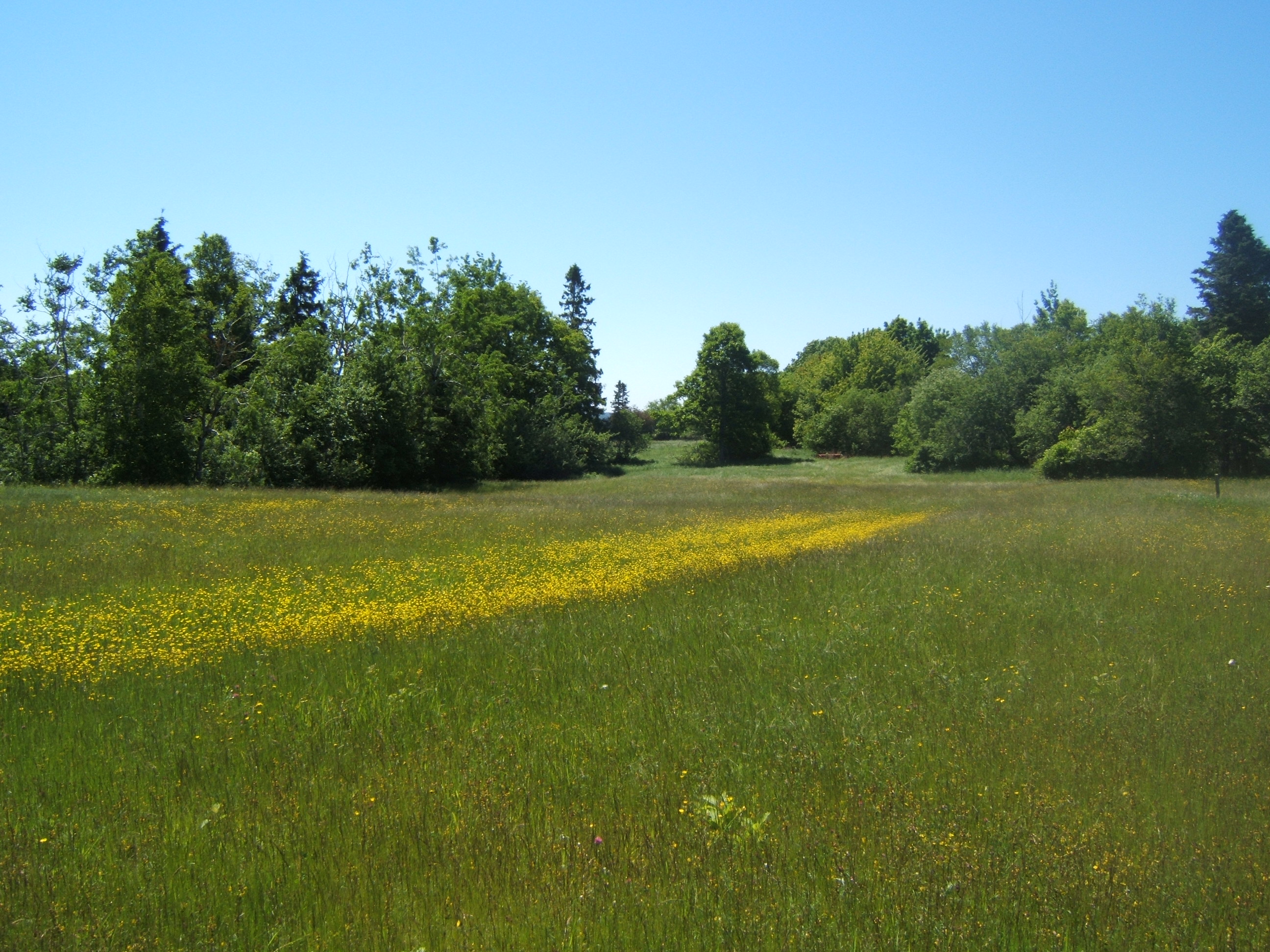
an abandoned track marked in Buttercups… the red tint in the foreground is from the reddish coloration of the Yellow Rattle
Years ago, I visited a property where the roadway to a back field was clearly marked with Bluets (Houstonia caerulea L.). The owner of the property said he thought they grew there because he always took his lime in an open cart back to his fields, and enough had spilled to make the way especially attractive to the Bluets.
Perhaps you will have a look in your landscape for wildflower clues to past activities.
~
~
Invitation to Tea
~
in the afternoon,
I huddle over tea
and watch
the road
~
an old road,
rarely used –
walks scarcely part
the tangle of fern
~
I scan the woods,
I love the look
of ancient trunk
and horizontal green
~
and always,
in the corner of my eye,
the road
~
overgrown –
a narrow course of saplings
intercepts
the sameness
of maturity
~
I watch
expectantly
~
but the road is abandoned –
cart-tracks worn
to rivulets,
culverts buried
by fallen leaves,
rusted oil tins,
depressions in the mould
~
~
© Jane Tims 2012
along the country road #1
When I was taking botany in university, a requirement of my taxonomy course was to make a ‘collection’ of plants, so I could learn how to identify them. Since I lived at home, and spent lots of time on the road, the easiest collection for me to make was of plants living along the roadside.
I made the collection, identified, pressed and dried each plant, glued them to the herbarium sheets, prepared their labels, and got a good mark in the course. The real legacy of the collection was that I developed the habit of botanizing along the road, at the edges and in the ditches. Gradually, I learned the names of the plants of the roadside better than any other group.
One of my favorite roadside plants is Common Yellow Rattle (Rhinanthus minor). In early summer, it’s a small herbaceous plant, with wiry stems and opposite leaves. In the axil of each leaf is a yellow, two-lipped flower with an inflated green calyx.
The charm of Yellow Rattle is also the reason for its common name. After flowering, when the calyx dries and turns brown, it becomes a natural rattle. If you pick the dry plant and give it a shake, you can hear the seeds clattering inside the pod.
Rhinanthus minor L. is also known as Rhinanthus Crista-galli L. The old generic name crista-galli means cock’s-comb, from the deeply toothed flower parts. The present generic name is from rhis meaning snout, referring to the shape of the flowers. In French, the plant is called claquette (tap dance), or sonnette (door chime).
Do you have a favorite roadside plant? Next time you take a walk along the road, what plants do you see and do you know their names?
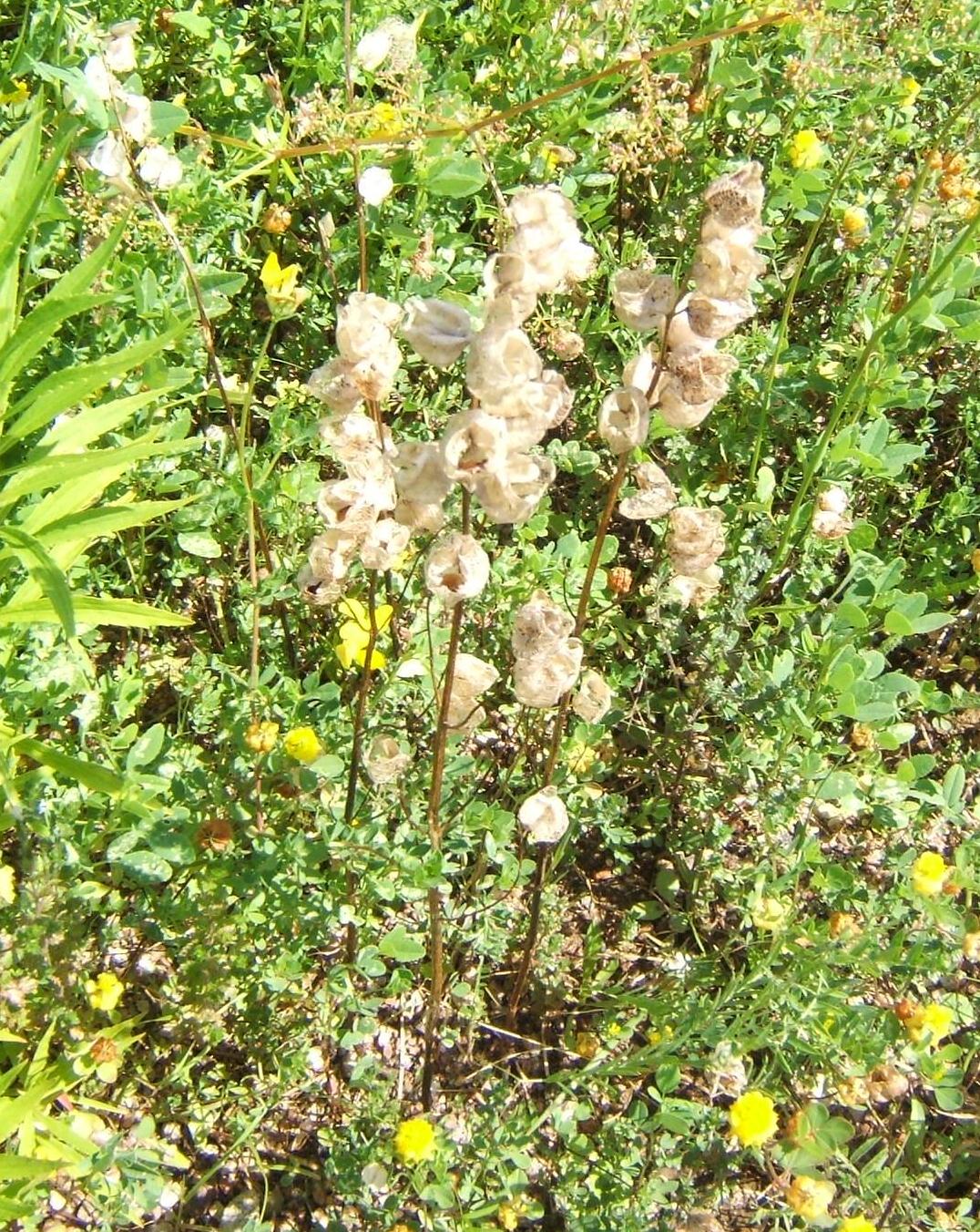
The dry brown plants are the rattling seed-pods of Yellow Rattle. Photo was taken in early August, so no flowers are present. The yellow flowers you see in the photo are two other plant species.
Yellow Rattle
Rhinanthus minor L.
weeds at the roadside
tickle my ankles
parchment whispers
like Alberta prairie
rattler whirr
I freeze
as I do when mouse feet rustle
in a house I thought empty
shake
loose seeds
in paper packets
yellow rattle snouts
test the air
crista-galli flowers
toothed as a cock’s comb
chatter at the north wind
claquette
tap dance on the chilly breeze
sonnette
quick scratching at summer’s door
Published as: ‘Yellow Rattle’, Summer 1994, the Fiddlehead 180
© Jane Tims




 nichepoetryandprose