Posts Tagged ‘stone fences’
A virtual journey to the Burren area of Ireland: Burren Way
I have been continuing on my virtual trail-walking, using The Burren &Aran Islands: A Walking Guide (Kirby, 2009). My trip yesterday was along the 22 km Burren Way. The trail starts at Ballynalackan (Clare County) and ends at Ballyvaughn to the northeast. Most of the road is on older, unpaved ways, but I was able to follow the start and finish of the trail on Google Earth Street View.
~
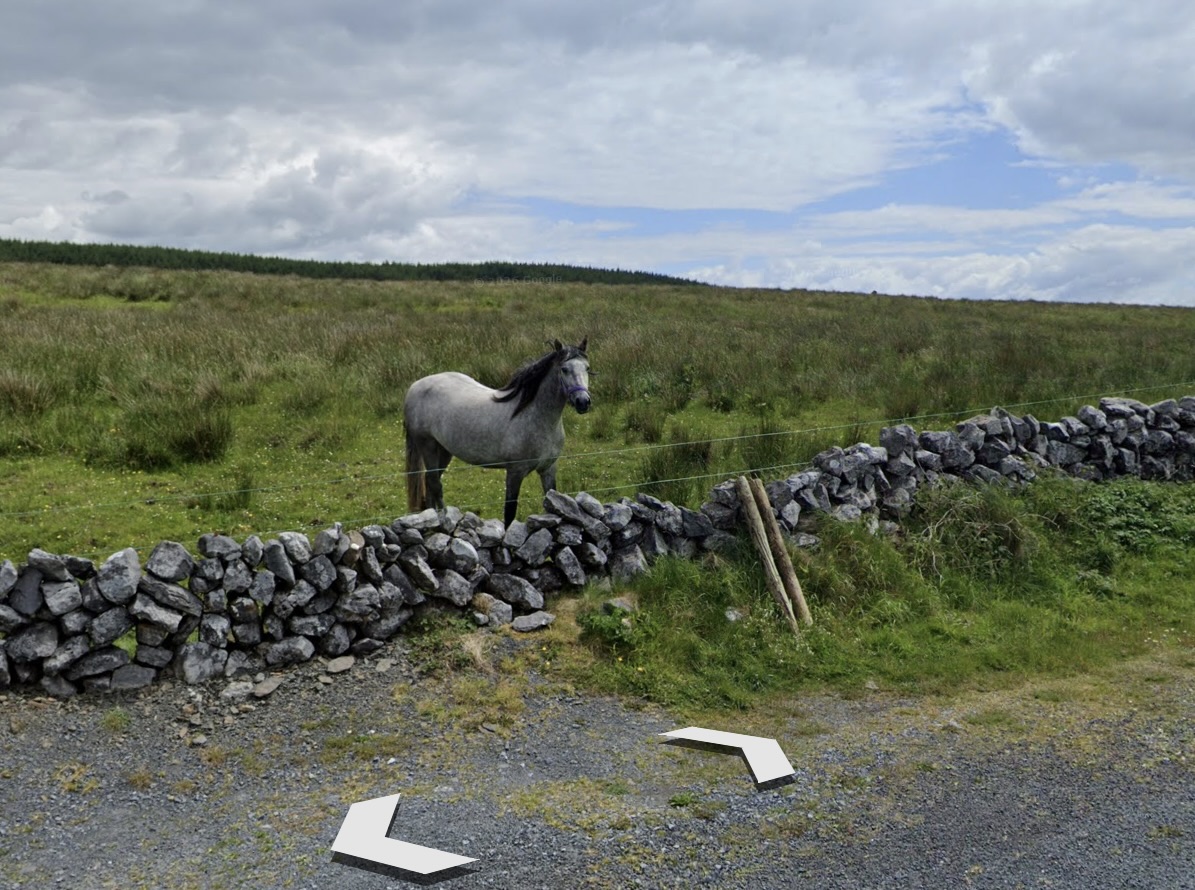
My first view of the trail involved meeting a friendly horse at Ballynalackan. The trail begins to the left of the photo. You can see how open the landscape is here. Much of the trail crosses the limestone pavements mentioned in my last post about the Burren.
~
The trail begins at a ‘y’ in the road. To the left is a view of Galway Bay:
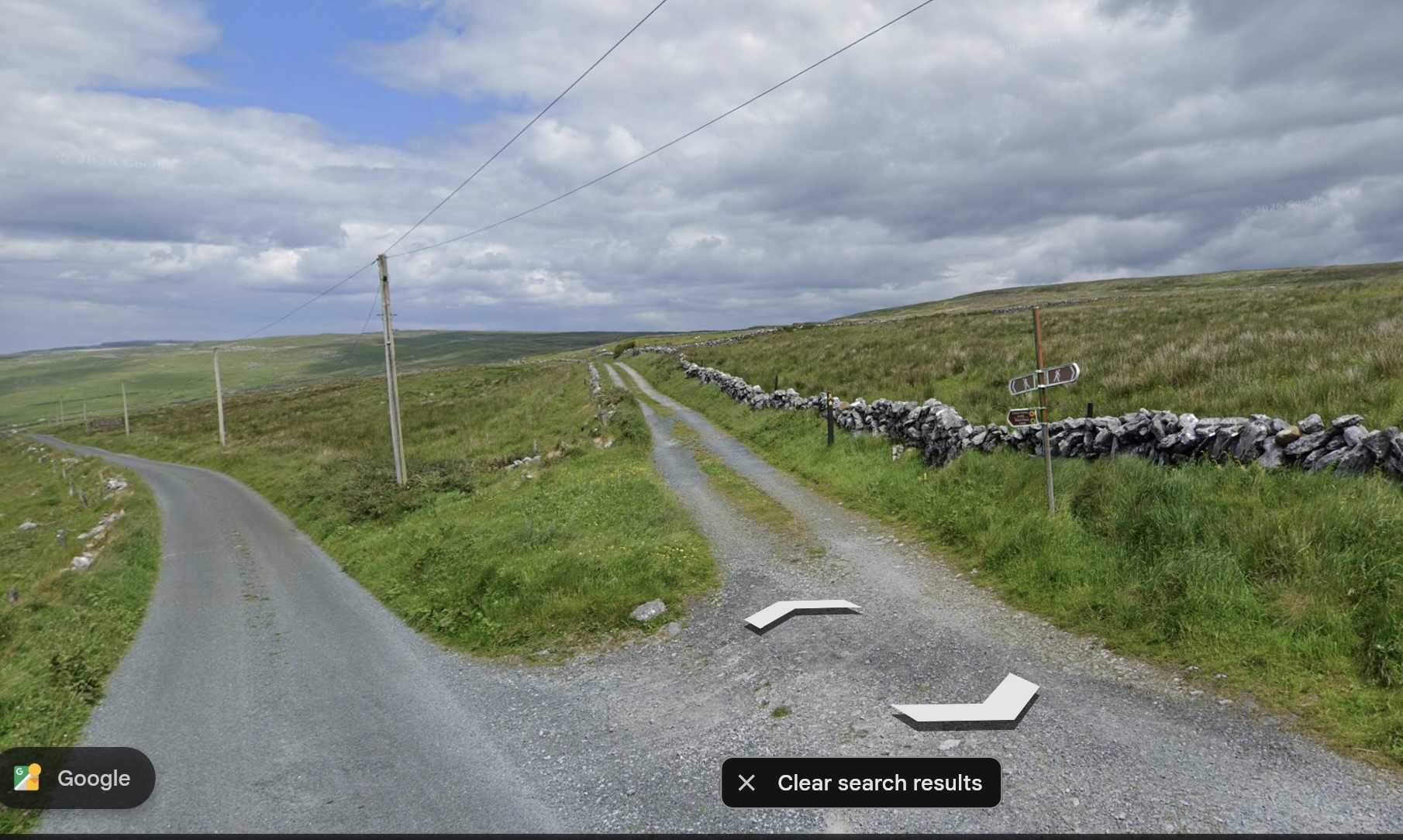
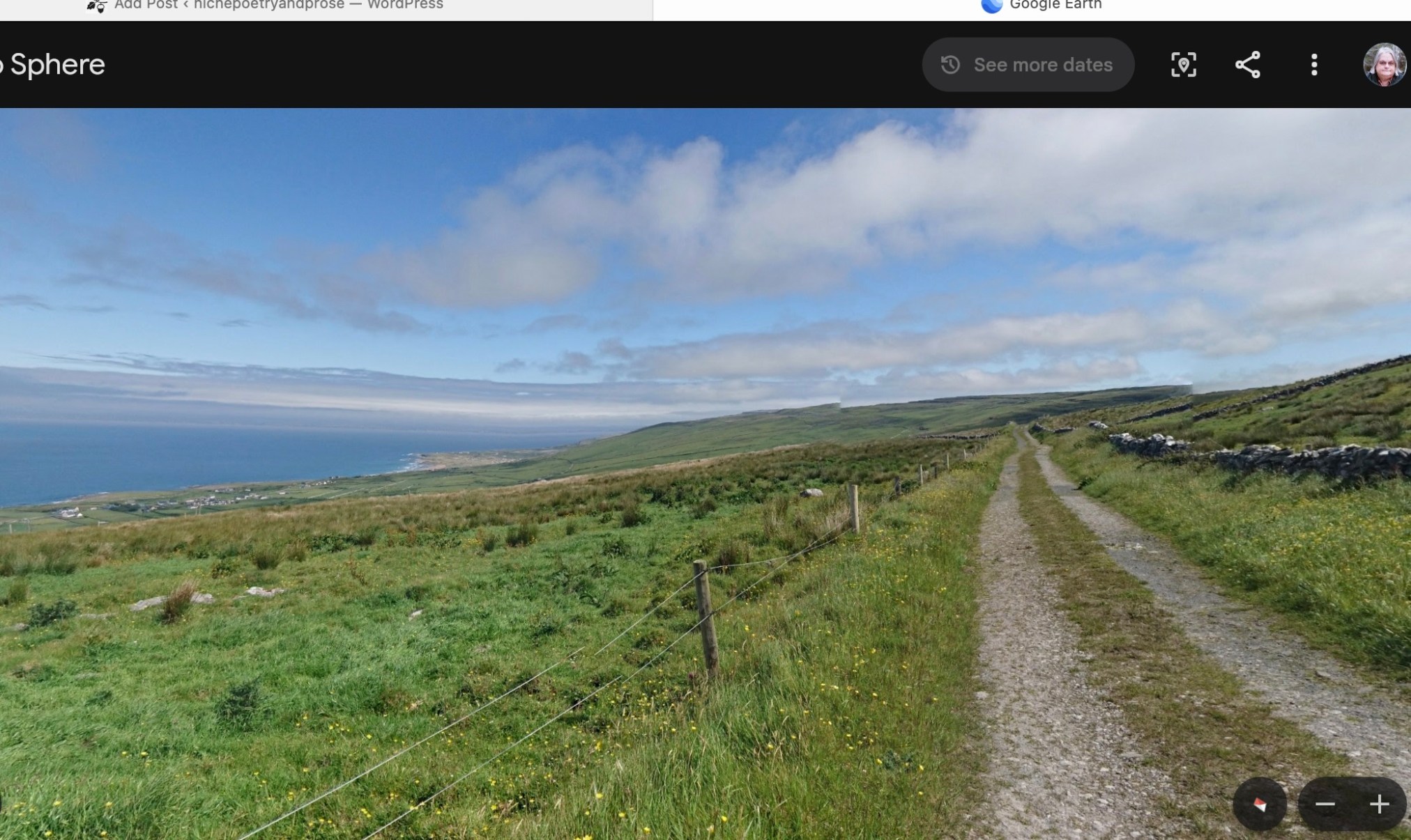
Source: Google Street View
~
Although there are no Street View roads to follow for much of the Burren Way, there is an image of the green road at one point (Photo Credit: Jacek D). Dry-laid rock fencing lines the road now used as a walking trail and passage for herds of sheep and cattle.
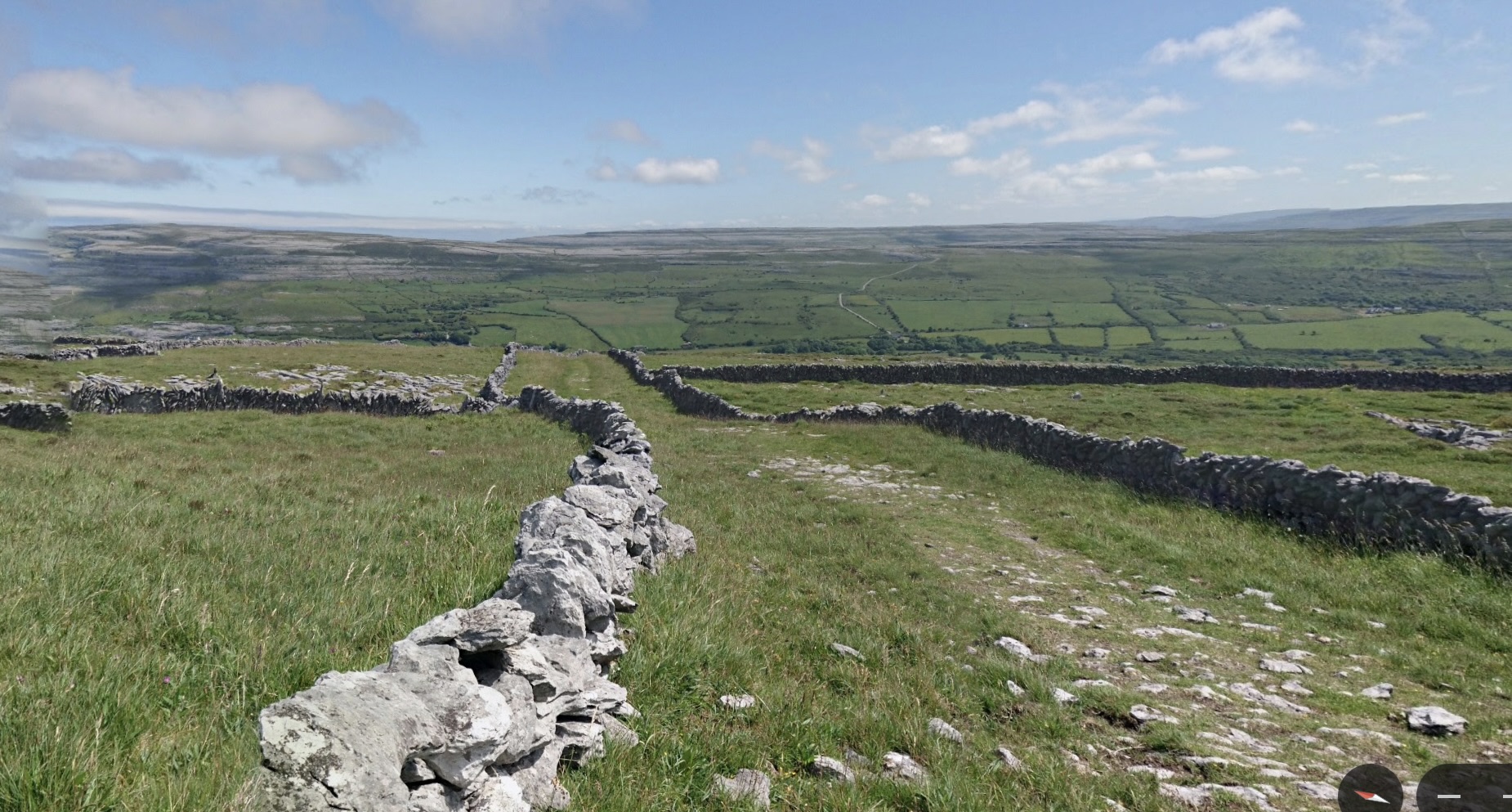
~
At the northeast part of the trail, Street View shows the roadways. Along this part of Burren Way are several church ruins.
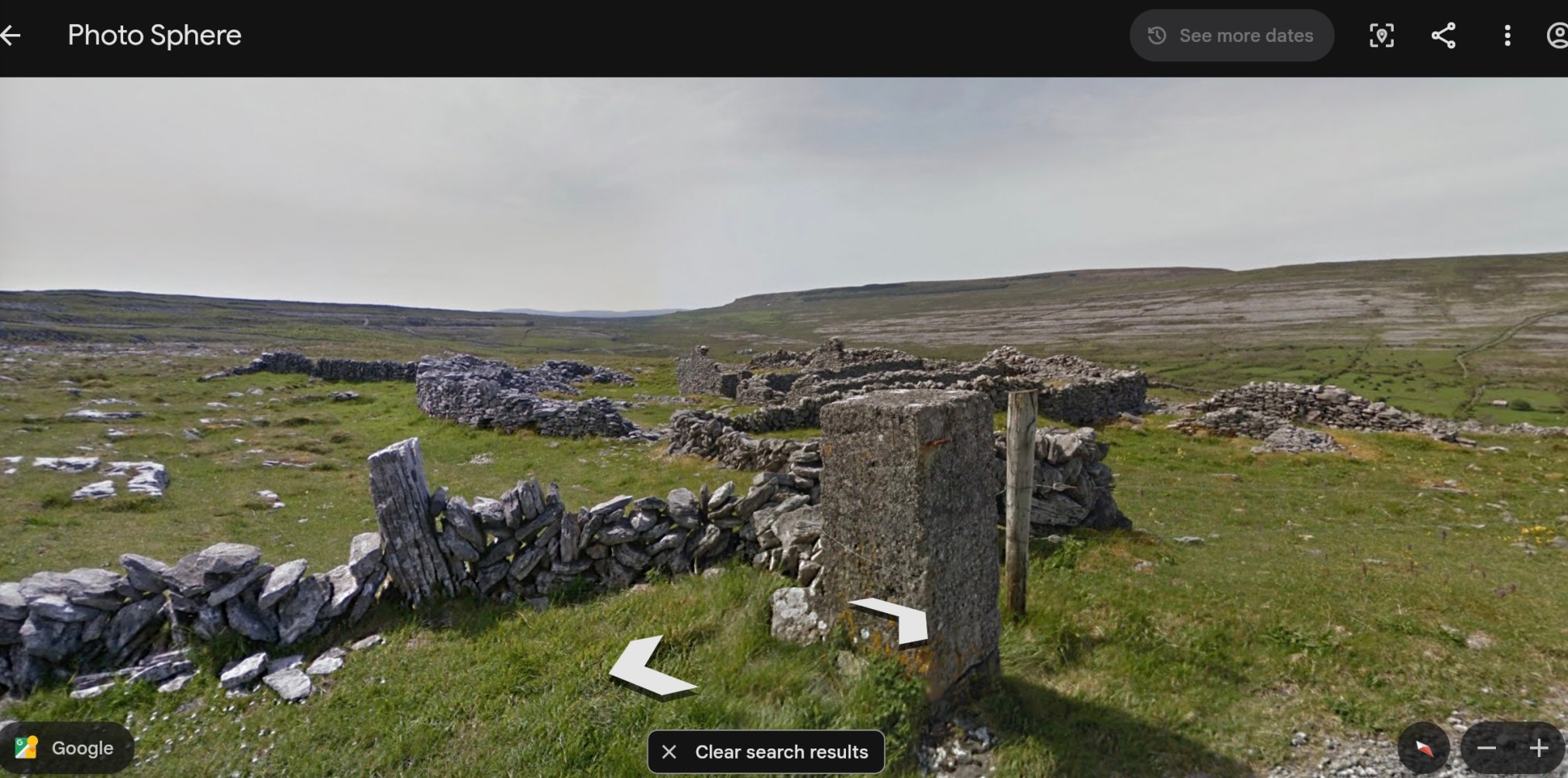
~
In case you think there are no trees to be seen, here is a shot of some of the hedgerow and trees of the deciduous woodland along the northeastern portion of the trail. The hedgerow is composed of spindle, blackthorn and whitethorn.
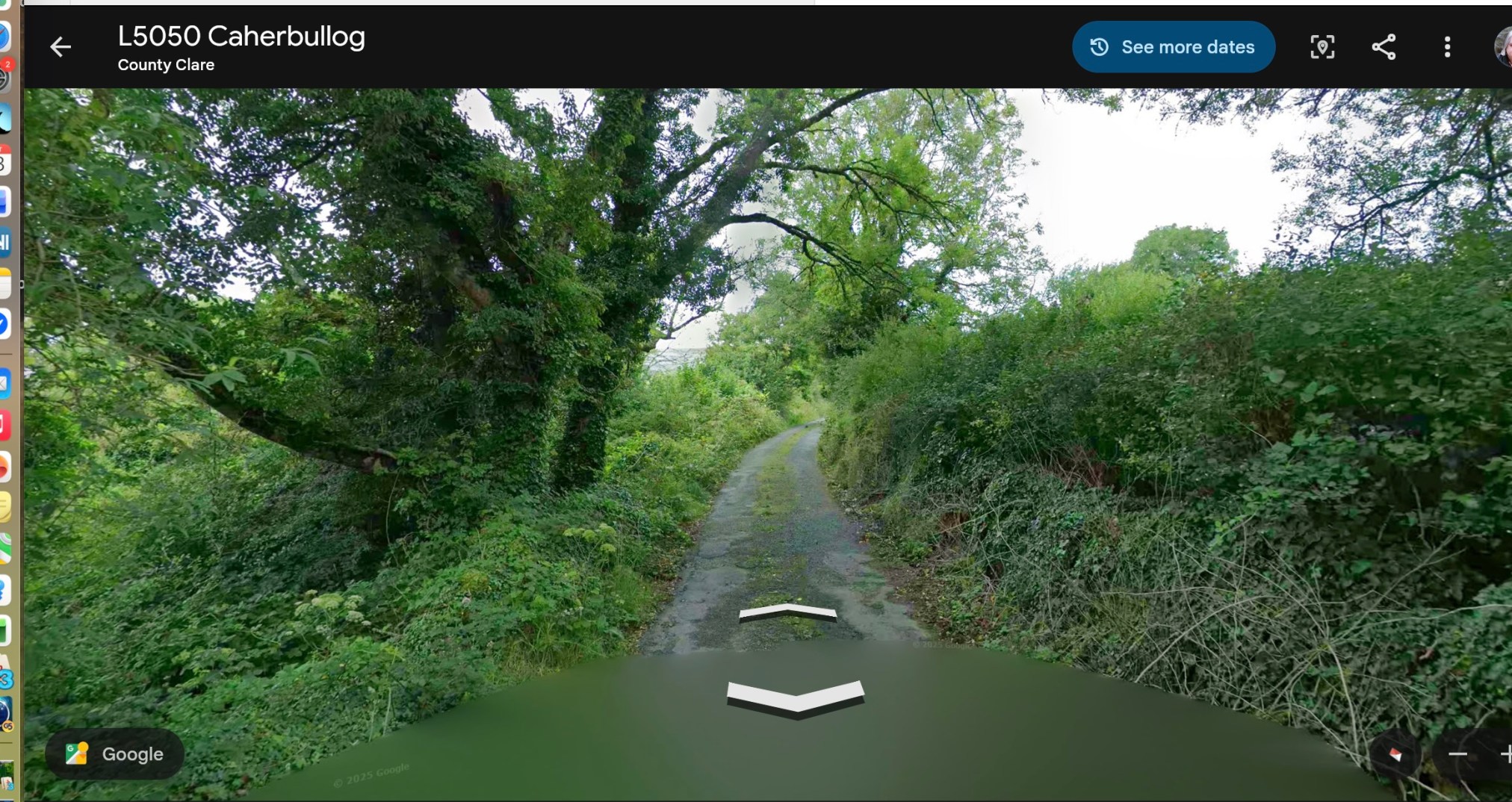
~
As a botanist, I was particularly interested in the vegetation described by the Walking Guide. Some of the plants occurring along the Burren Way include the rare pyramidal bugle and two species of heather (common and bell).
~
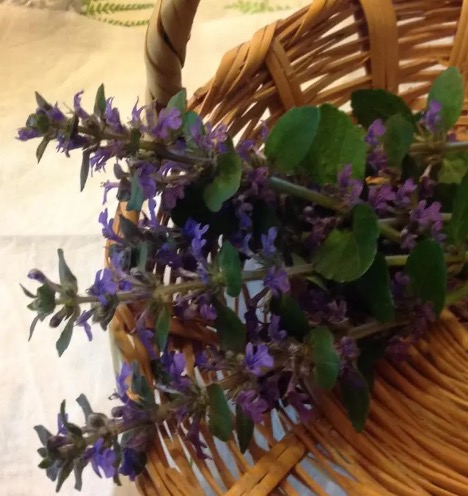
The pyramidal bugle (Ajuga pyramidalis) is a stubby, hairy version of the bugleweed growing in my own front yard. I use the plant as ground cover so I never have to mow the ‘lawn.’ The pyramidal bugle is a very rare native perennial, growing on calcareous soil.
~
~
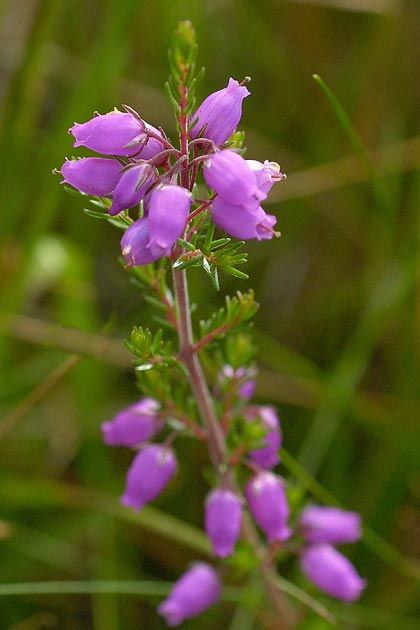
Years ago, I tried to grow the wiry and pink-flowered common heather (Calluna vulgaris) on our property, but although it lasted a few years, it did not stay. Bell heather (Erica cinerea) has magenta-purple flowers and narrow upright stems with narrow, needle-like leaves. Both heathers are woody as they age.
~
I will close this post with a lovely photo of bell heather (Source: wildflowersofireland.net).
~
All my Best,
Jane