Posts Tagged ‘Forget-me-not’
an attempt at ecoprinting
After our drive to Canterbury over the weekend, I was anxious to capture some of the roadside flower colour in my ‘harvesting colour’ experiments. I decided to try a technique described by India Flint in her book Eco Colour: Botanical Dyes for Beautiful Textiles (Interweave Press, 2010). ‘Ecoprinting’ involves bringing a plant into close contact with a fabric in order to transfer the colour to the cloth. I am very impressed with the effects shown in Eco Colour – prints of leaves, flowers and berries.
~
For my experiment I tried a handful of the Forget-me-nots I collected on our weekend drive …
~
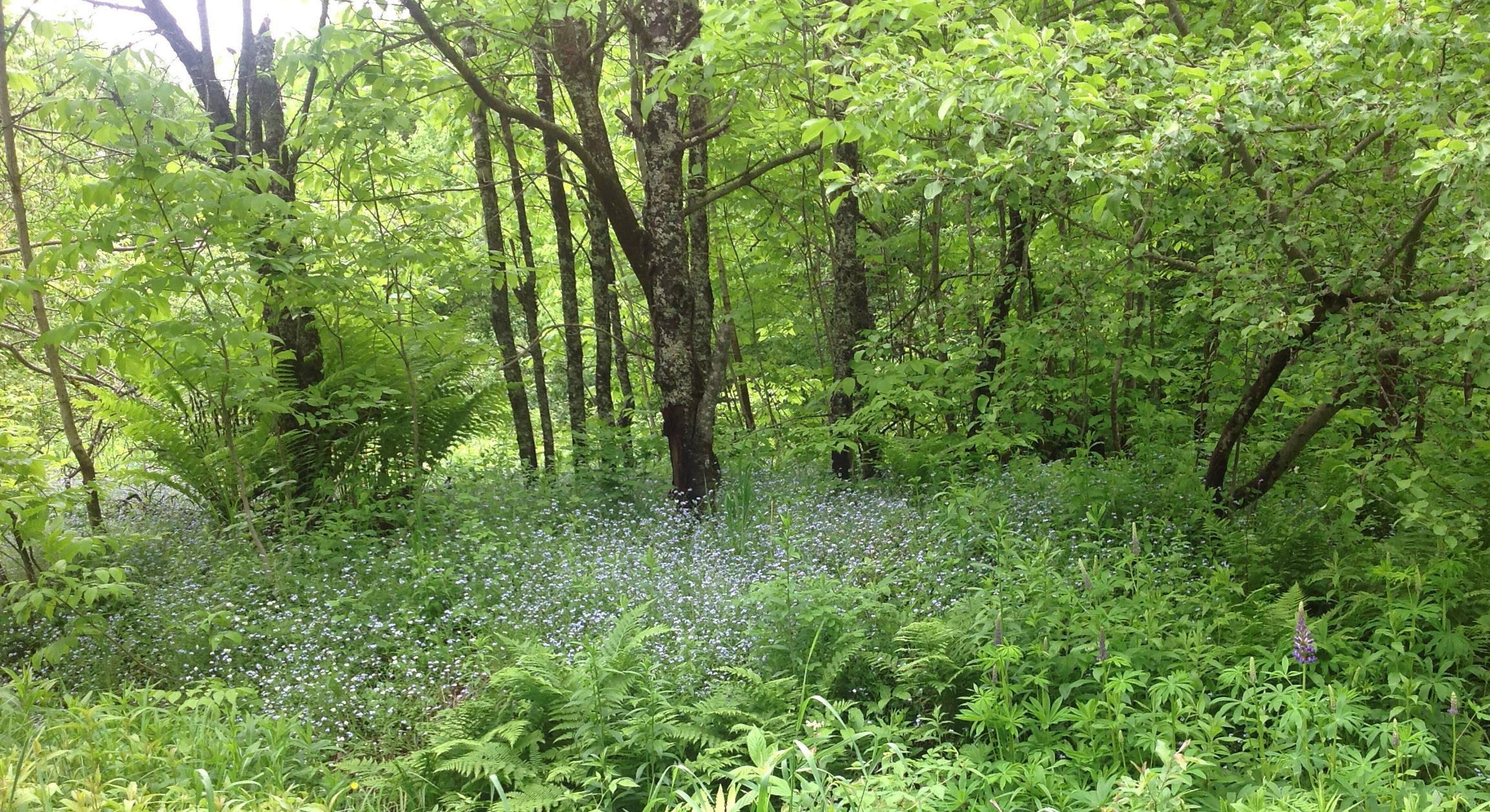
Forget-me-nots in the woods
~
a bundle of the purple Lupins growing along the road in my community …
~

Lupins along the road
~
and a bunch of a ground cover plant growing in my yard, Bugleweed (Ajuga reptans) …
~
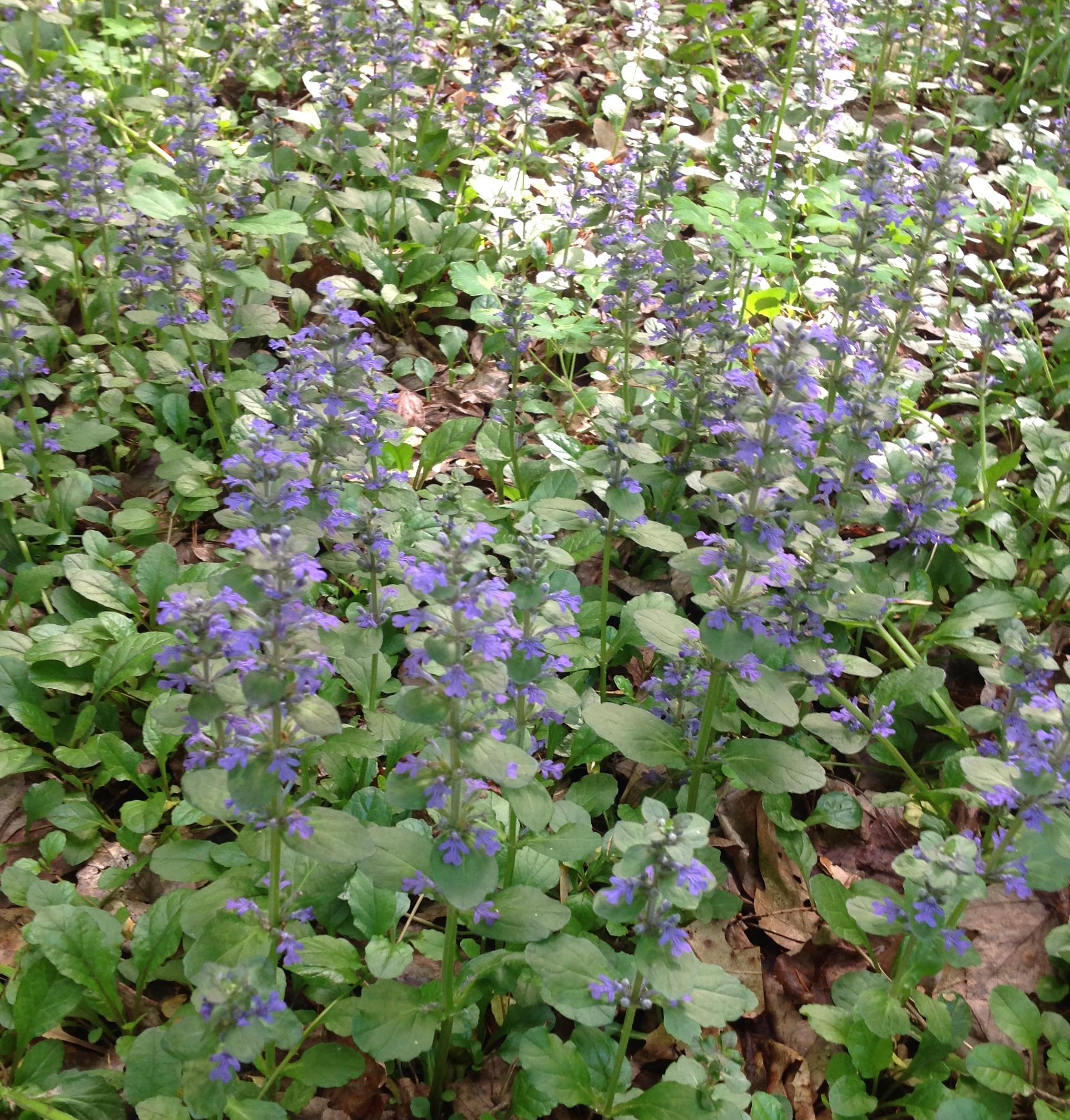
Bugleweed in the orchard
~
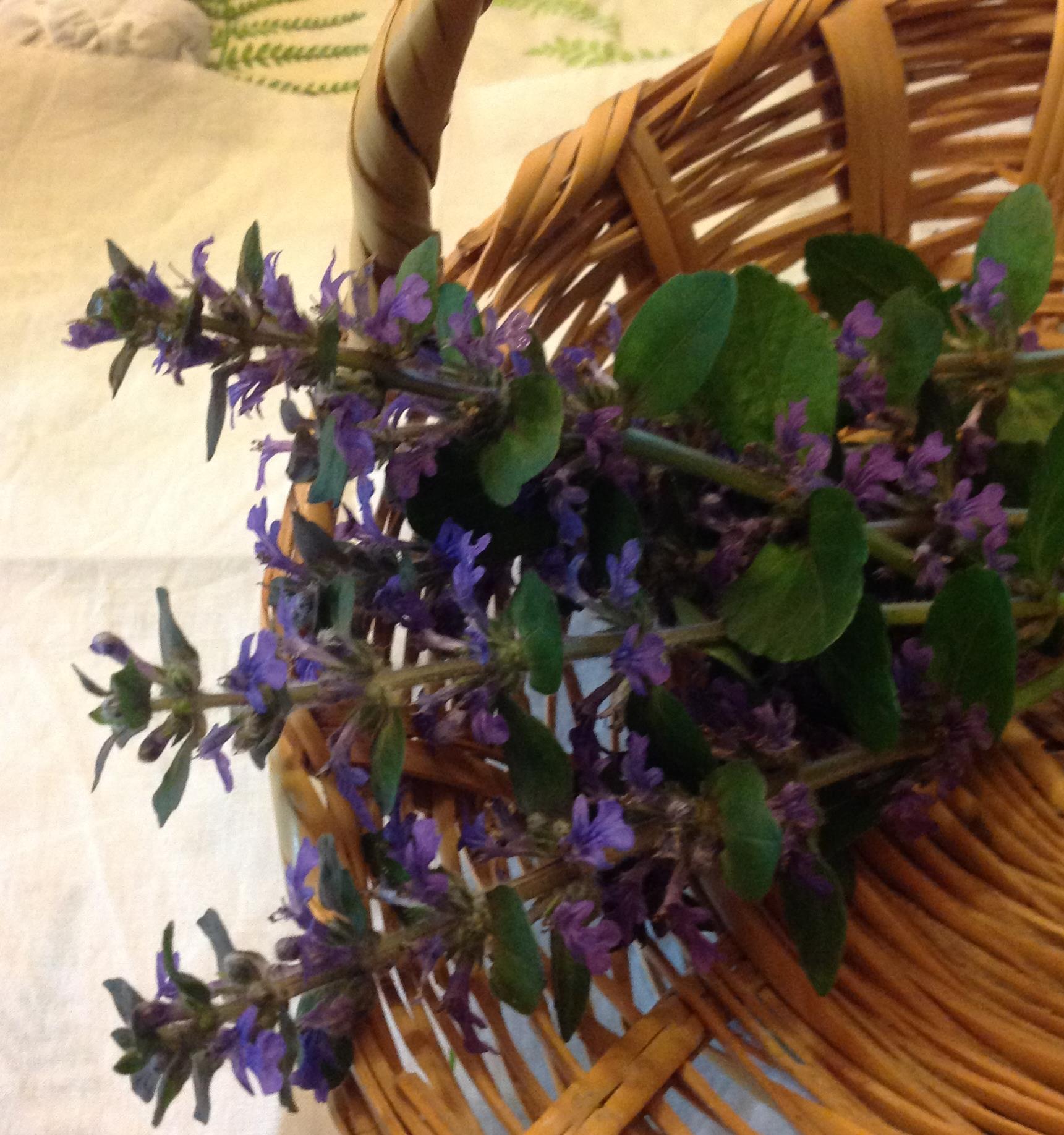
basket of Bugleweed
~
I only used small samples of cloth … my idea is to use these ‘patches’ to make a little quilt to show the results of my ‘colour harvest’. I arranged a few of the flowers, both petals and leaves, inside the cloth …
~

Forget-me-nots on cotton
~

Lupin petals and leaves on cotton
~
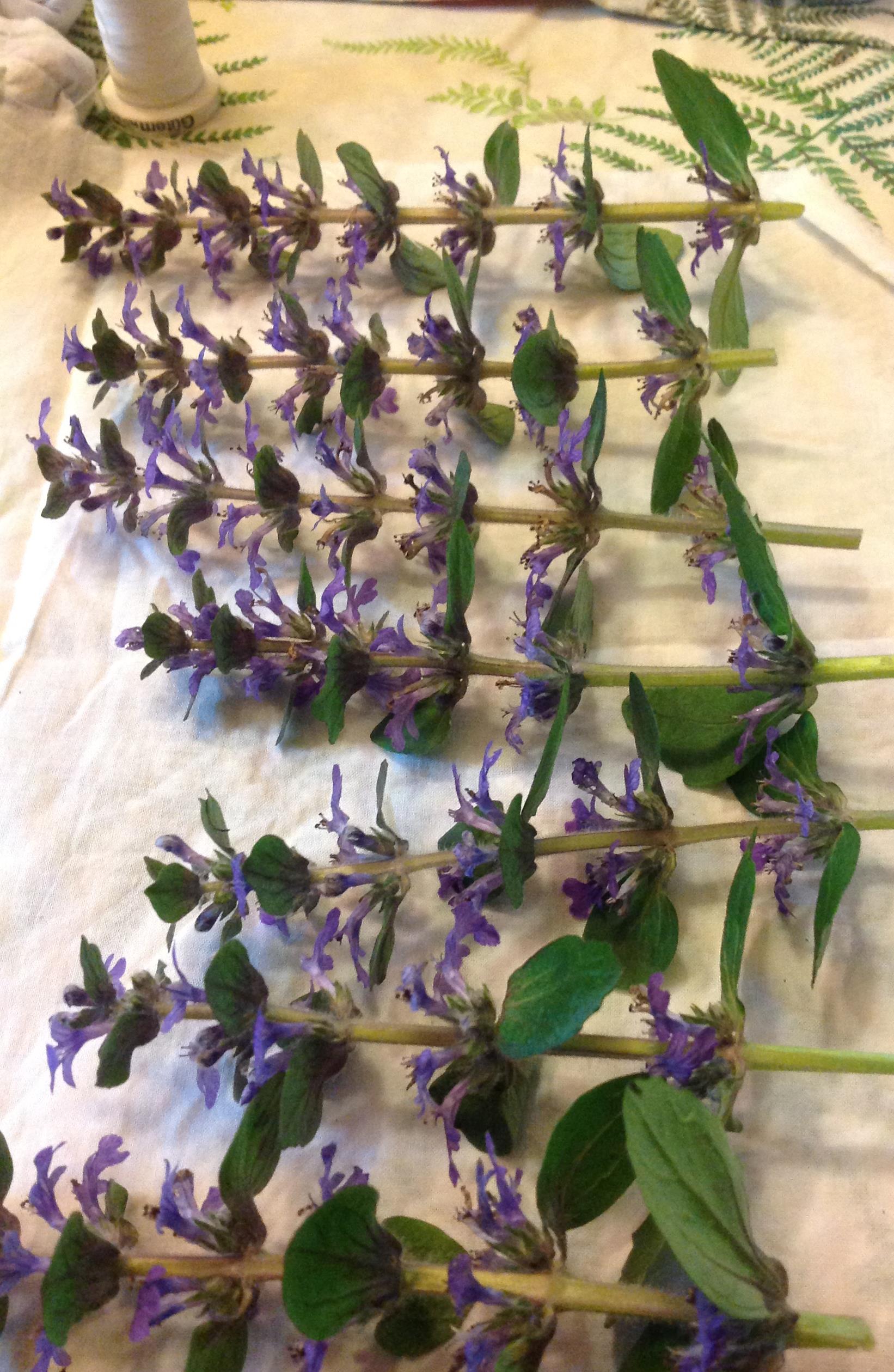
Bugleweed on cotton
~
Then I folded the cloth in half, enclosing the flowers like a sandwich …
~

flowers folded in cotton
~
and rolled the cloth up tightly …
~

rolling the bundle tightly
~
and tied it with cotton thread …
~

flower and cotton bundles
~
I put my bundles in a wire basket and steamed them for an hour …
~
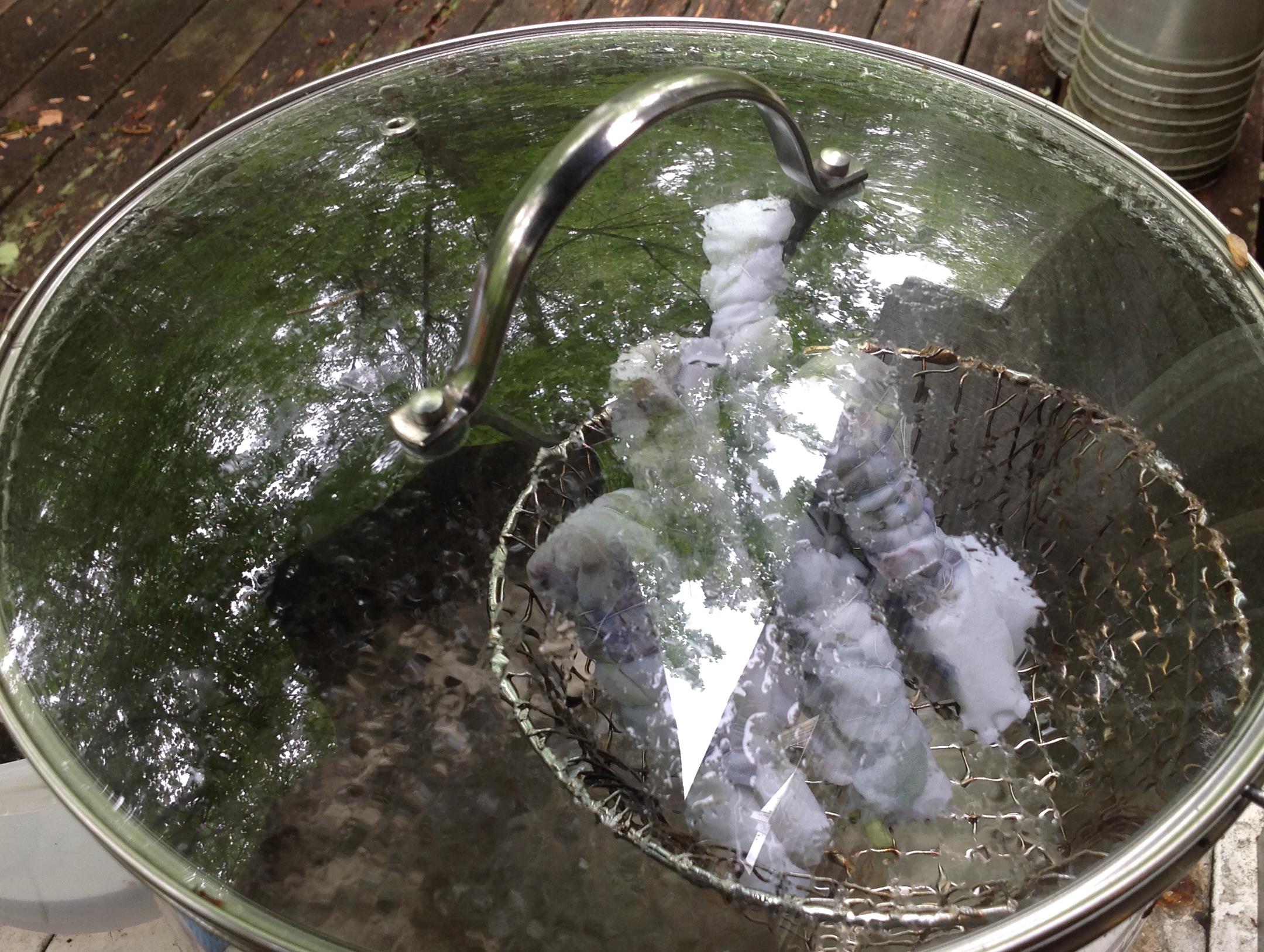
flower and cotton bundles steaming (as usual I have thrown in a bit of woods and sky)
~
After cooling, I opened the bundles, discarded the leaves and flowers, and rinsed the cloth. I was quite pleased with the results. After ironing, I have a pale array of colour. The Bugleweed left a definite lime green. The Lupin a more indefinite green and pale violet. The Forget-me-nots left a faint violet-grey.
~

pale colour
~
I did not get the flower and leaf impressions I expected, but I will keep trying. There are so many variables, steaming time and ‘unbundling’ time among them. I do hope to see that lovely lime green again!!!
~
Copyright 2014 Jane Tims
blue in the woodland
About a decade ago, we took a drive from Canterbury to McAdam on a gravel road. The memory I have carried with me for years is of a section of woodland absolutely blue with flowers. I often wondered what the flowers were and if I’d be able to find the spot again. This weekend we tried to find the place and the sea of blue in the woodland.
~

Highway 630 from Canterbury to McAdam in New Brunswick (map from Google Maps)
~
Canterbury, like many rural communities of New Brunswick, has faced a shrinking population over the years. Settled by Loyalists, it was a center for logging and railroad traffic and, in the late 1800s, had a population of over 1000. Today it has only about 340 residents. Nevertheless, it is a charming village and has a newly renovated school, housing all 12 grades.
~
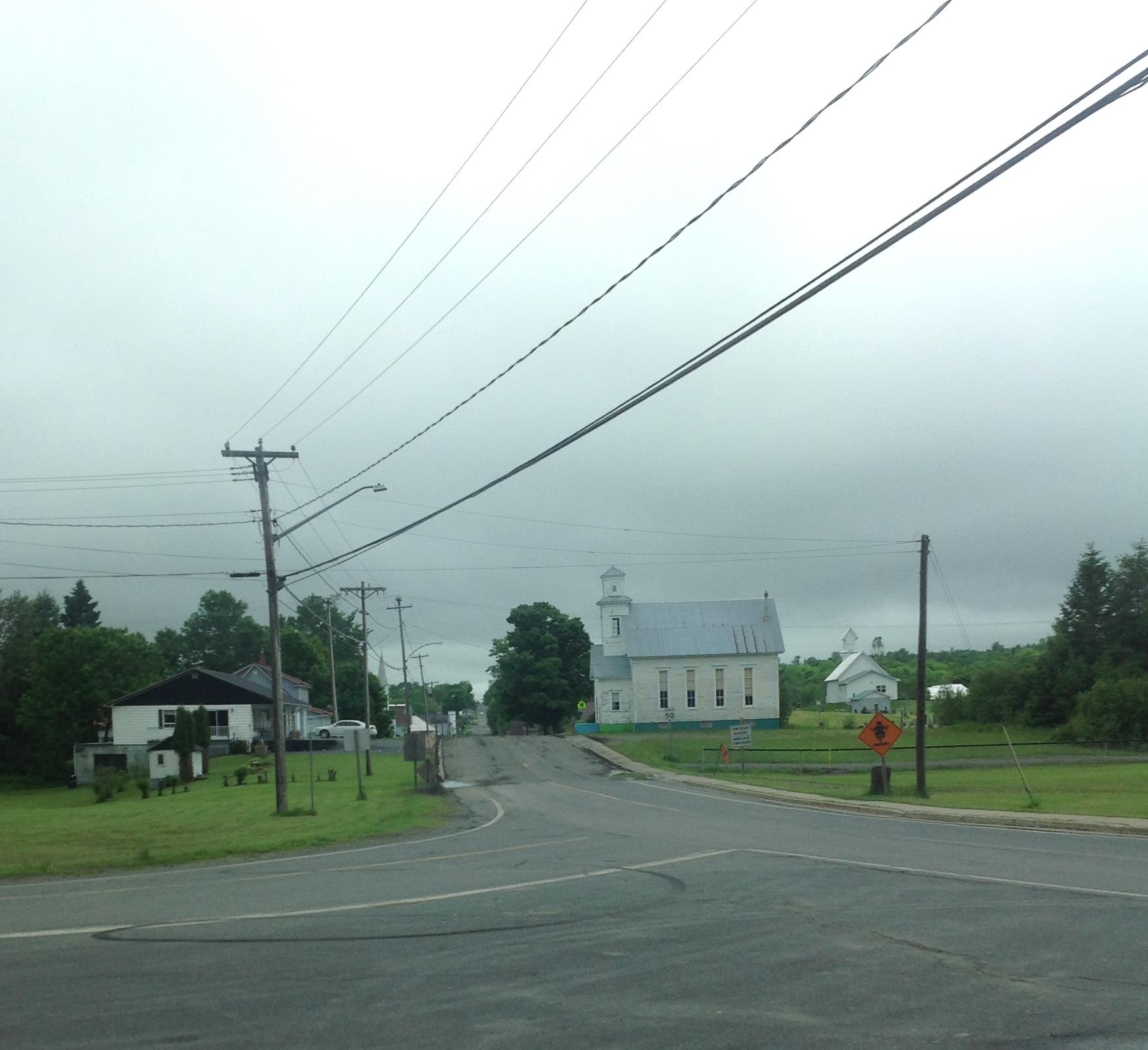
Village of Canterbury at the turn to Highway 630
~
The route from Canterbury toward the south is a numbered road. But Highway 630 is not paved and quite rutted in some sections. In one place we had to ask some ATVers if we were on the right road!
~

Highway 630
~
As we drove, I watched the woods for those blue flowers. Wildflowers were certainly a theme of our drive. By the road we saw Pink Lady’s Slipper (Cypripedium acaule), Bluebead Lily (Clintonia borealis), Bunchberry (Cornus canadensis) and Quaker Ladies (Houstonia caerulea).
~
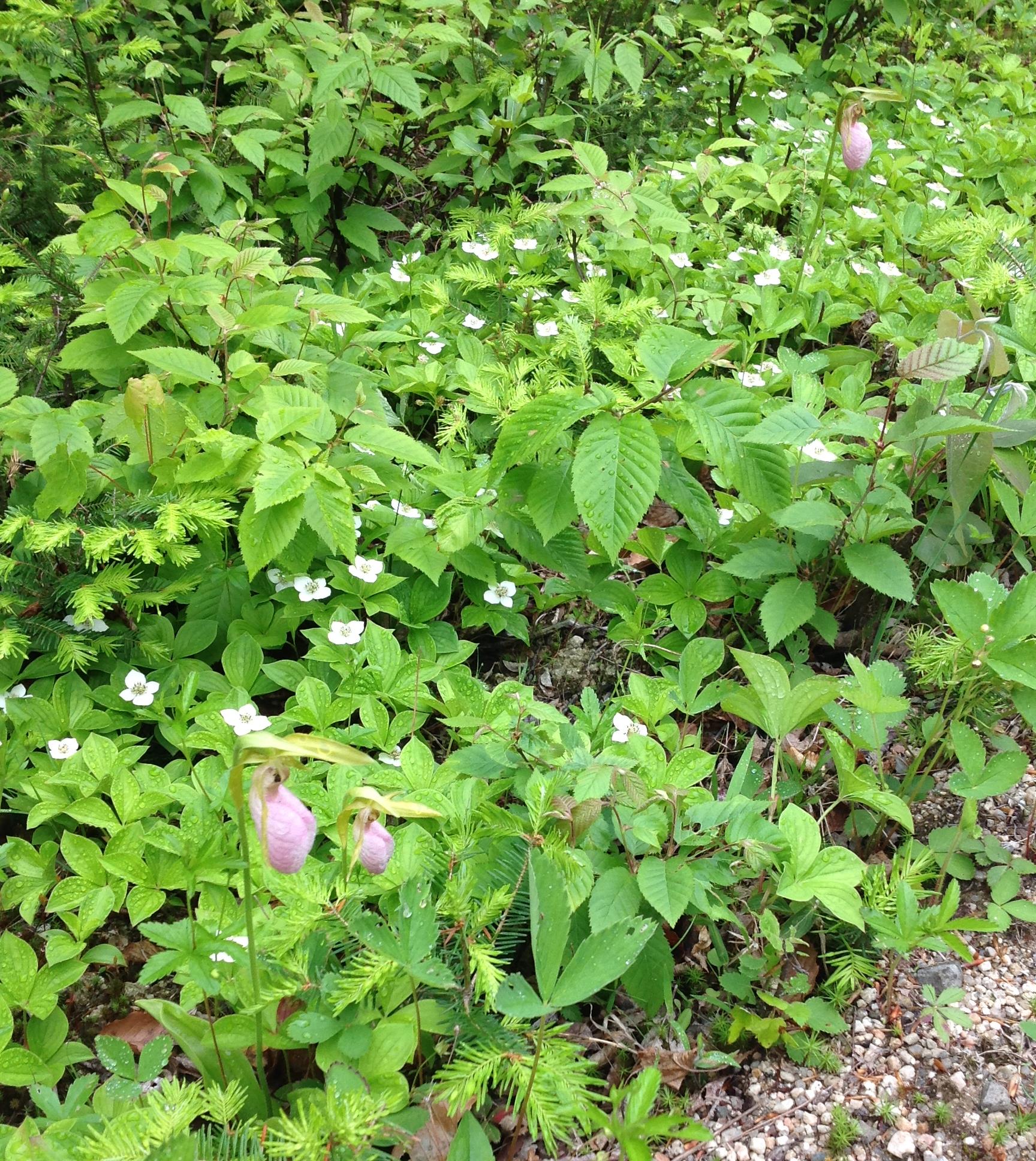
Lady’s Slipper and Bunchberry along the road
~
The map shows a community named Carroll’s Ridge just south of Canterbury. When we reached the location marked on the map, there were no homes or buildings, only a few old roads and cleared areas. But there in the woods was evidence people had once lived there. I found my sea of blue! Forget-me-nots, escaped from some forgotten garden to thrive in the near by woods.
~

Forget-me-nots escaped from an old garden
~
In my memory, the ‘blue’ of the flowers was more intense a decade ago. But we noticed many of the Forget-me-nots there now are a white variety. Who knows if flower colour or memory really changed during those ten years.
~

blue flowers in the woodland
~
Forget-me-nots in the woods
~
I picked a few of the Forget-me-nots, to try an ‘eco-print’ dyeing experiment in coming days. But what I really took away was another image of a sea of blue flowers in the woods.
~
Copyright 2014 Jane Tims




 nichepoetryandprose