along the country road #1
When I was taking botany in university, a requirement of my taxonomy course was to make a ‘collection’ of plants, so I could learn how to identify them. Since I lived at home, and spent lots of time on the road, the easiest collection for me to make was of plants living along the roadside.
I made the collection, identified, pressed and dried each plant, glued them to the herbarium sheets, prepared their labels, and got a good mark in the course. The real legacy of the collection was that I developed the habit of botanizing along the road, at the edges and in the ditches. Gradually, I learned the names of the plants of the roadside better than any other group.
One of my favorite roadside plants is Common Yellow Rattle (Rhinanthus minor). In early summer, it’s a small herbaceous plant, with wiry stems and opposite leaves. In the axil of each leaf is a yellow, two-lipped flower with an inflated green calyx.
The charm of Yellow Rattle is also the reason for its common name. After flowering, when the calyx dries and turns brown, it becomes a natural rattle. If you pick the dry plant and give it a shake, you can hear the seeds clattering inside the pod.
Rhinanthus minor L. is also known as Rhinanthus Crista-galli L. The old generic name crista-galli means cock’s-comb, from the deeply toothed flower parts. The present generic name is from rhis meaning snout, referring to the shape of the flowers. In French, the plant is called claquette (tap dance), or sonnette (door chime).
Do you have a favorite roadside plant? Next time you take a walk along the road, what plants do you see and do you know their names?
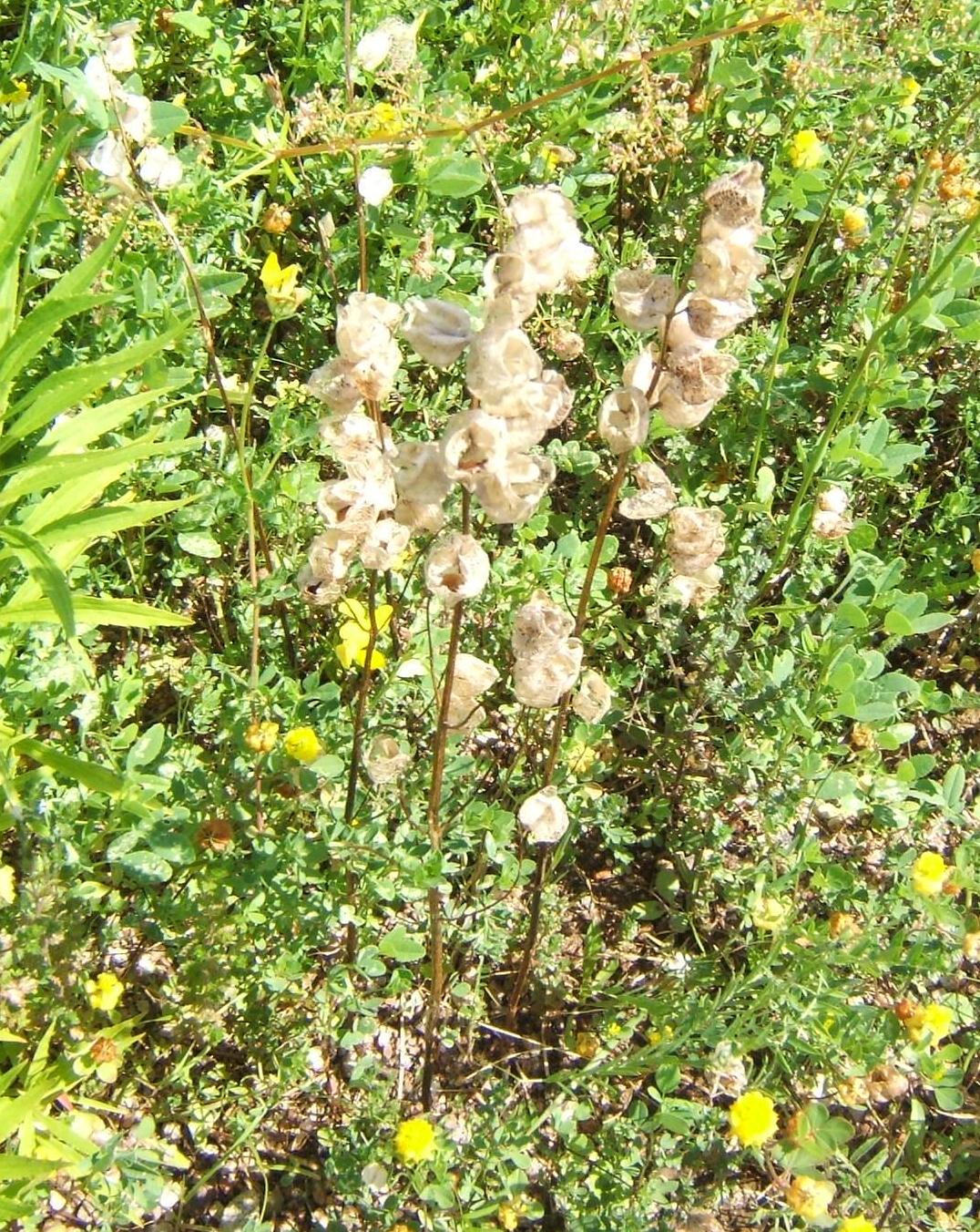
The dry brown plants are the rattling seed-pods of Yellow Rattle. Photo was taken in early August, so no flowers are present. The yellow flowers you see in the photo are two other plant species.
Yellow Rattle
Rhinanthus minor L.
weeds at the roadside
tickle my ankles
parchment whispers
like Alberta prairie
rattler whirr
I freeze
as I do when mouse feet rustle
in a house I thought empty
shake
loose seeds
in paper packets
yellow rattle snouts
test the air
crista-galli flowers
toothed as a cock’s comb
chatter at the north wind
claquette
tap dance on the chilly breeze
sonnette
quick scratching at summer’s door
Published as: ‘Yellow Rattle’, Summer 1994, the Fiddlehead 180
© Jane Tims
‘niche’ above the ground
Around us are spaces so familiar, we don’t pay attention to them anymore. I remember this when I walk in the woods near our house. On the ground, at my feet, are layers of leaves from last autumn, the carpet of mosses, the plants of the understory.
And then I remember to look up and see the space above me.
This space is the realm of the trees. It is a space shaped by their canopies, the needles of the Balsam Fir and White Pine, the leaves of Red Maple, and the dead branches and twigs of the spruce. Most of the trees reach upward, roughly perpendicular to the ground. They stand together, parallel, the masts and rigging of a sailing ship. Others have succumbed to decay and gravity and wind, and have fallen. Their trunks make diagonal slashes through the spaces above and leave gaps in the canopy.
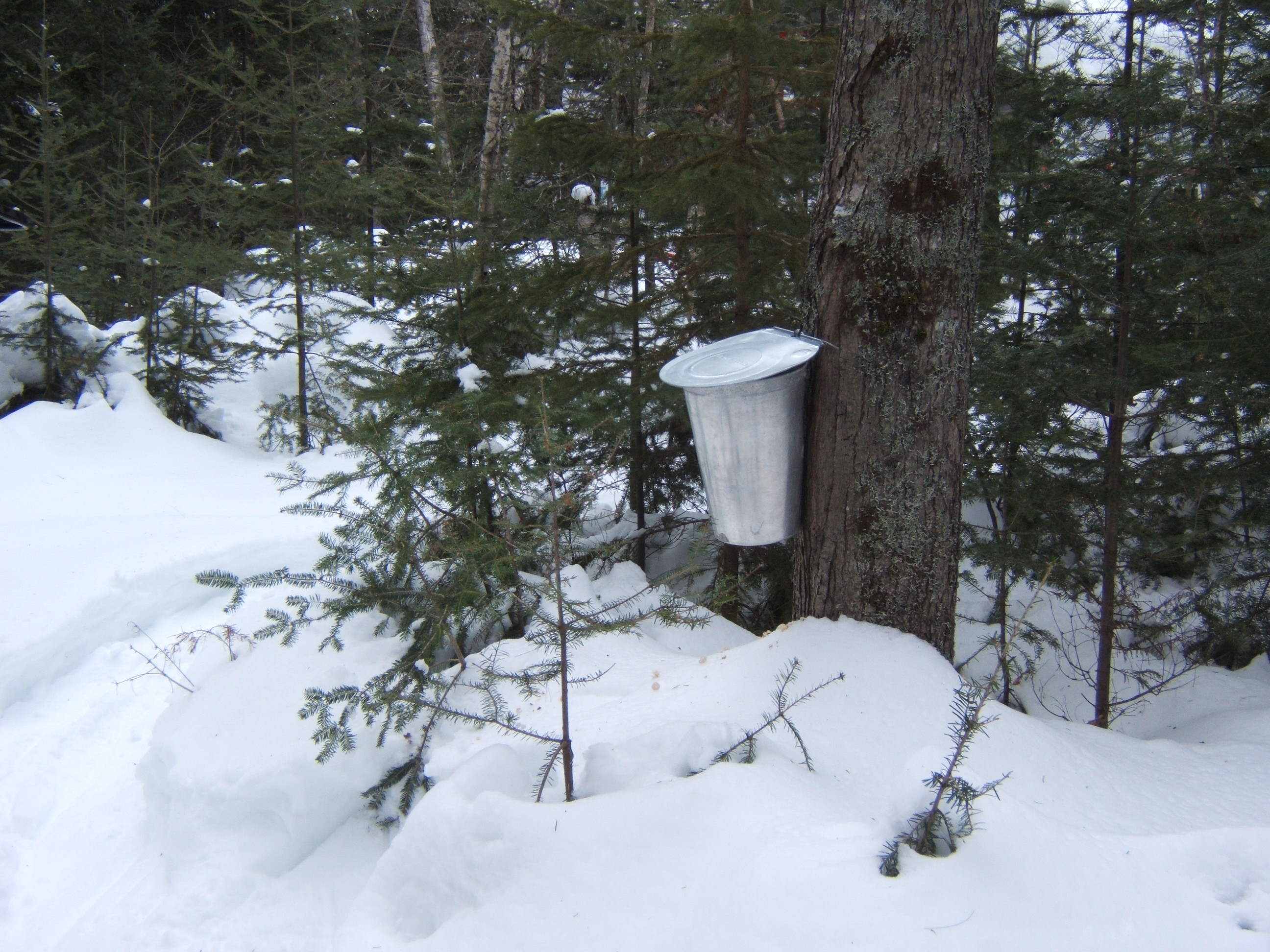
snowshoe trail and sap bucket on maple
These are spaces I cannot access, since my tree-climbing days are over. But I can move there, briefly, in winter. When the snow builds on the ground, it lifts me into the trees. I am reminded of this when I see the empty tap holes in the trunks of the maples along the trail. These are the holes left behind when we pull the taps at the end of maple syrup production in the spring. When we collected the sap, the taps were about three feet above the surface of the snow, so we could access them easily. Now, snow gone, the tap holes are above my head. Our snowshoe paths were elevated into the space above the ground. One winter the snows were so high, we had to trim the branches along the trail. Next summer we could look up and see our winter path, traced by the absence of branches in the space above our heads.

Usnea subfloridana Stirt. is a lichen often found growing on old and stressed trees in coniferous woods. The common name, Old Man's Beard, refers to the matted, stringy appearance of the lichen, hanging in clumps from tree branches. Lichens are made up of two species, an algae and a fungus, living together symbiotically.
Old Man’s Beard
Usnea subfloridana Stirt.
you and I
years ago
forced our ways
bent through the thicket
of lichen and spruce
Usnea
caught in your beard
and we laughed
absurd!
us with stooped backs
and grey hair?
found a game trail
a strawberry marsh
wild berries
crushed into sedge
stained shirts
lips
and fingers
strawberries
dusted with sugar
washed down with cold tea
warmed by rum
today
an old woman
alone
lost her way in the spruce
found beard
caught in the branches
and cried
Published as: ‘Old Man’s Beard’, Summer 1994, the Fiddlehead 180
© Jane Tims
on my grandfather’s farm
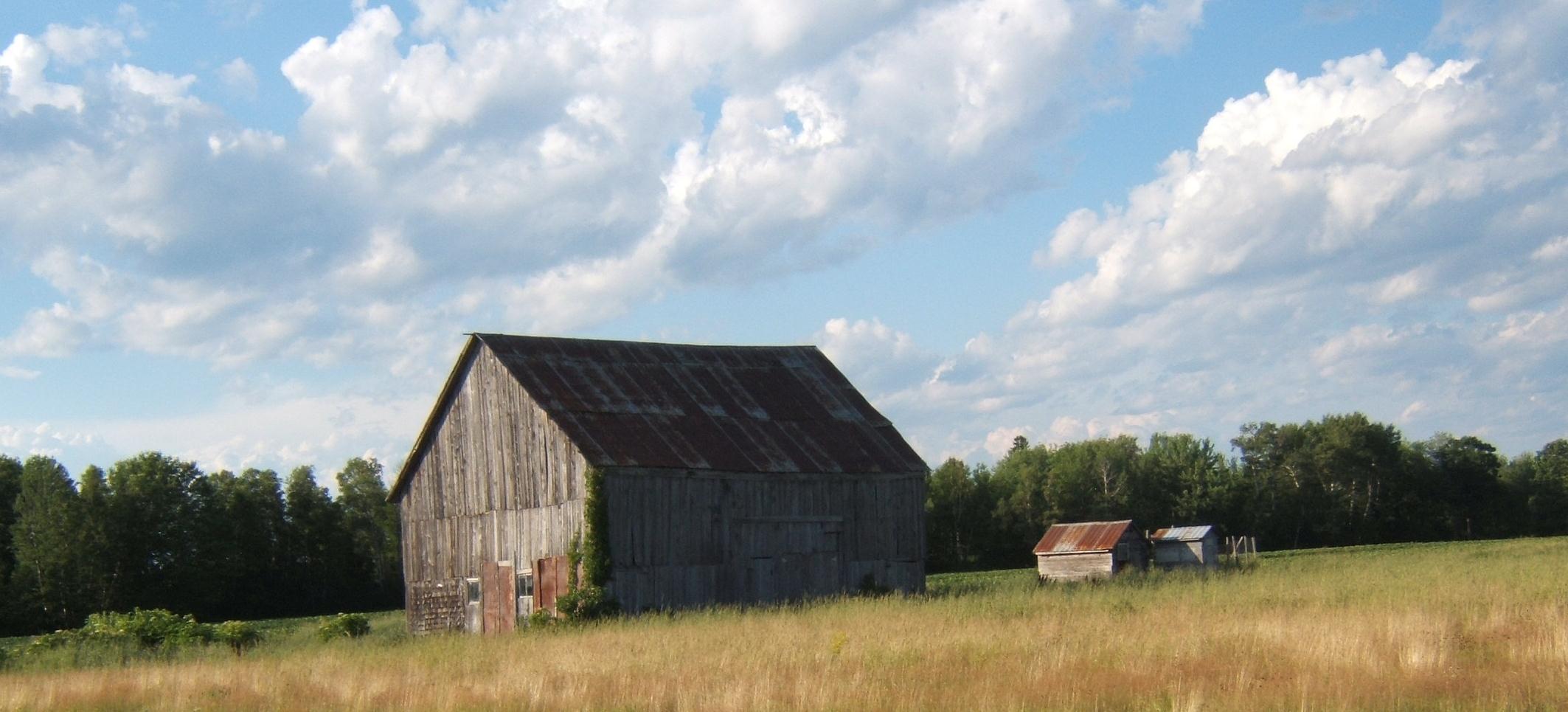
a haybarn and its out-buildings
When August arrives, I always remember the summers of my childhood. One of my favourite places to visit was my grandfather’s farm in Nova Scotia. It was a place of rambles, exploration and discovery. I looked forward to returning there each August, to reconnect with the farm and my extended family, especially my cousins. I was a city kid and loved the country life, picking berries, tramping hay, playing in the hay mow, and going for picnics at the lake.
My grandfather’s farm was part of a small community that included my aunts and uncles, and, of course, the cousins. These were families that depended on the forests, fields and lakes for their livelihood. Food was mostly local, grown on the farm or gathered from the fields and woods.
The farm was like a community itself, a miniature village of buildings. They included the main house, the big barn and various out-buildings. In my memory, there were about eight buildings in all, each with its own purpose, and its own sights, sounds, smells, tastes and stories.

The best was the big barn, built by my great-grandfather, with a high pitched roof, two lofts for hay, a central alley between, and back stalls for the cows and horses. The chicken coop was under the hay loft of the barn, sheathed in chicken wire and stuffed with new hay. Across the yard, closer to the house, was another bird coop, a loft for the more exotic birds my grandfather liked to keep: ring necked pheasants, a golden pheasant, and fantail doves. Another out-building, the noisy mink pen, was kept apart from the house, in the pasture, to hush the noise and keep the rank smell at bay.
The other buildings hover just at the edge of my recall. I think there was a lean-to beside the barn, cool and dark, housing the hay wagon, its big wooden wheels as large in diameter as I was tall. I also remember a machine shed, smelling of grease and oil, its doors always open.
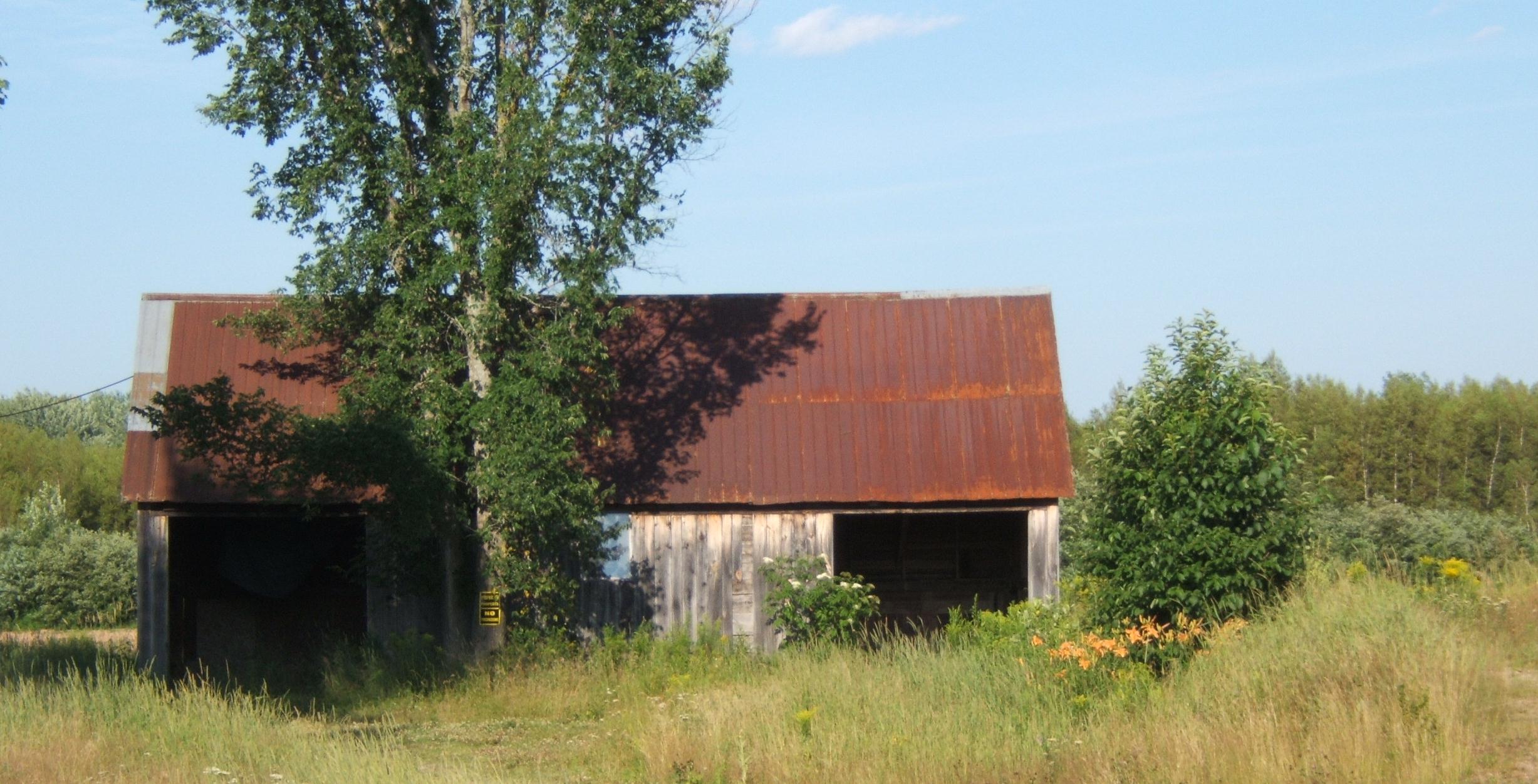
a machine shed with the remains of a garden and its old fashioned day lilies
The farm included a large acreage of pastures, fields and woods. These were also spaces to explore. My favourite was the apple orchard, and one particularly crooked tree, made for climbing. There was the farm yard with the chickens tottering about, squawking and annoying one another. Beyond the farm were the pastures, blue with berries, and the fields, edged with Black-eyed Susans, sturdy Rugosa roses, and other wild flowers. Our wandering usually followed the road, a winding way through mossy woods, leading to the lakes. Past the farm, it was a mere cart-track. Bordering the track was a fence with a swinging gate, perfect for sitting and dreaming. At one of the lakes was a favourite place for swimming, with a wooden diving board and a mythically deep pool, so clear you could see to the sandy bottom.
Farming can be a hard life, but viewed from the point of view of a child, my grandfather’s farm was a place of magic and wonder. I have tried to spend my life in surroundings that remind me of the farm. The experience of the small family farm is disappearing, but each day I try to recapture something of the feeling. I keep my garden wild, growing day lilies and Creeping Jenny at the edge of the lawn. I look forward to picking blueberries in the early days of August. And I roll down the car windows to catch the smell of new mown hay.
I wonder if your childhood included a farm and if you remember it well. Is the farm you knew still standing, or has it been abandoned with the years?
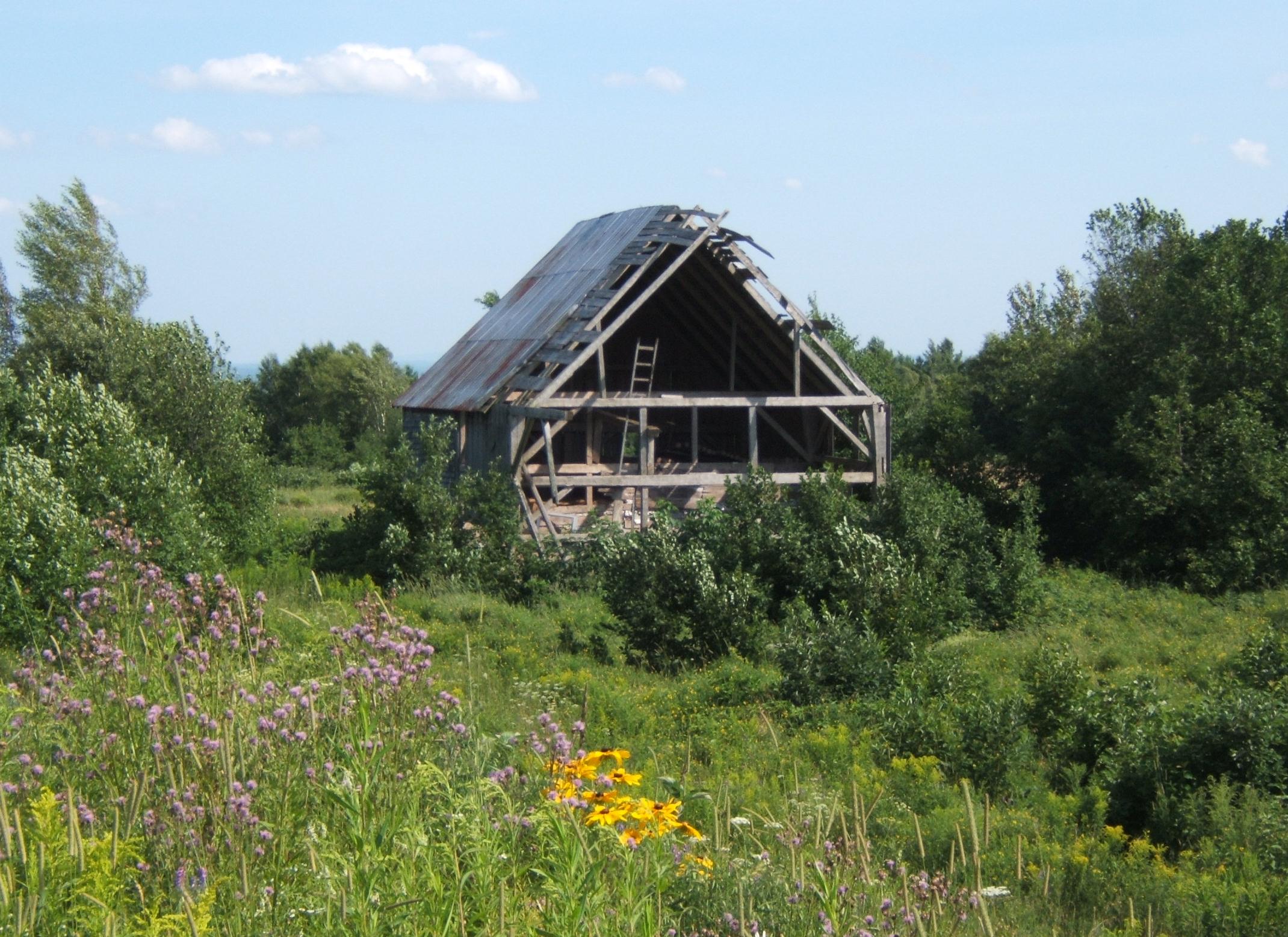
an old hay barn
an afternoon in the blueberry field
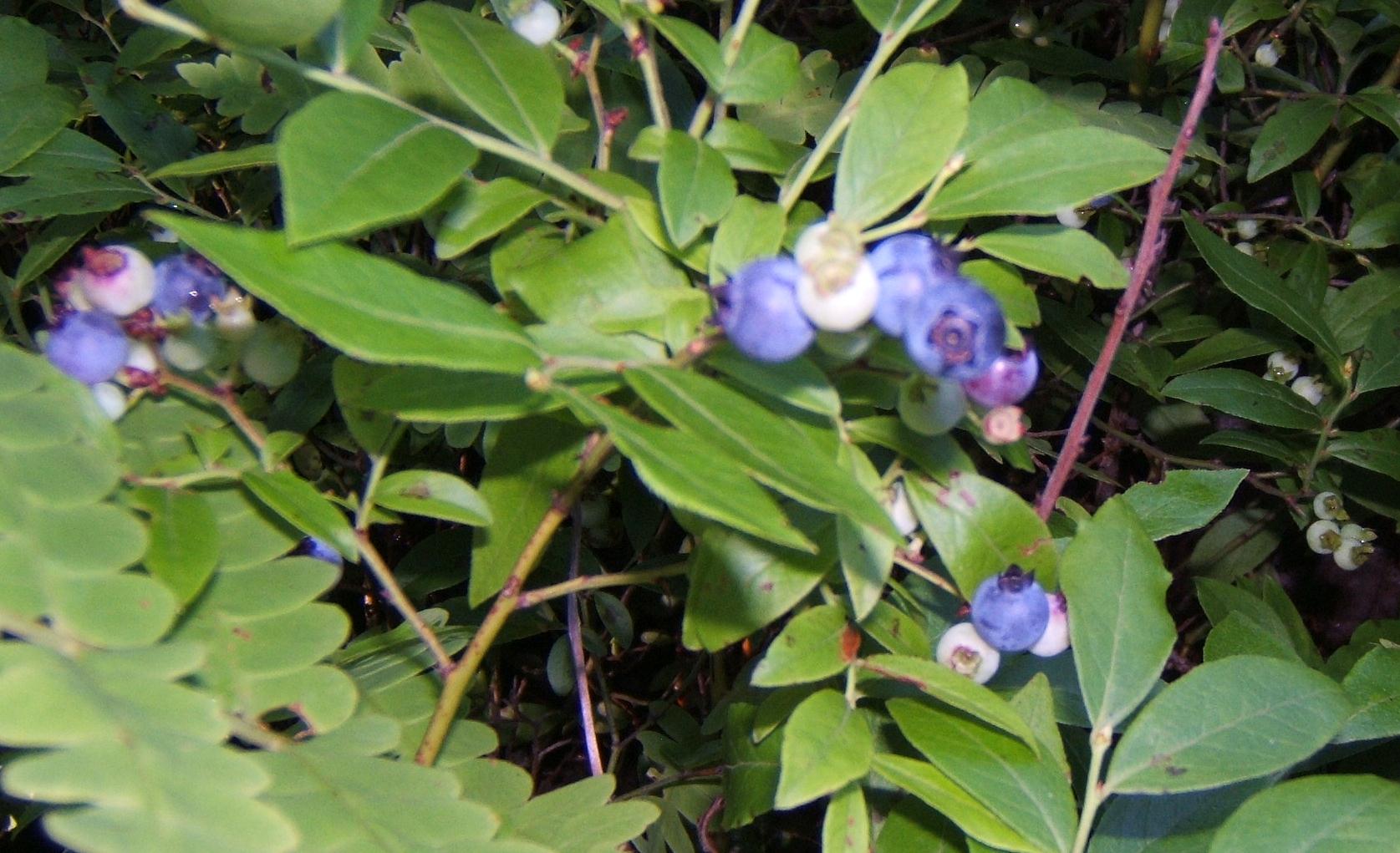
blueberries ripening
One of my favourite places to be is a blueberry field. Nothing is better than lying on your back between islands of blueberry bushes, watching clouds build in the sky and munching on newly picked blueberries.
When I was young, I spent lots of time picking blueberries with my Dad, in the pasture behind my grandfather’s farm. I can still see his hands deftly stripping berries from each branch, and hear the staccato ripple of berries filling his pail. My picking was considerably slower and less productive. In my pail, the berries spoke in single plinks, each separated by several seconds of silence.
Later, when I was a teenager, I went once with my Mom to pick blueberries on our neighbour’s hillside. My berry picking skills had not improved and I know I ate more than I picked. But how I wish I could spend, just one more time, that afternoon with my Mom, picking blueberries on a sun-washed hill.
Today, I pick blueberries every summer, in the field near our cottage. Since I am usually the only one picking, I now aim to be efficient. Sometimes I use my blueberry rake to strip the berries from the branches, quickly and with little waste. Of course, this means picking through the berries by hand, removing leaves and other debris. But the ripe berries are still blue and sweet, and plump with the warmth and fragrance of August.
This poem is in remembrance of my Mom and our afternoon of picking blueberries:
Bitter Blue
of all the silvery summer days we spent none so warm sun on
granite boulders round blue berry field miles across hazy miles
away from hearing anything but bees
and berries
plopping in the pail
beside you I draped my lazy bones on bushes crushed berries and
thick red leaves over moss dark animal trails nudged between rocks
baking berries brown musk rising to meet blue heat
or the still fleet scent
of a waxy berry bell
melting in my mouth crammed with fruit sometimes pulled from
laden stems more often scooped from your pail full ripe blue pulp
and the bitter shock of a hard green berry never ripe
or a shield bug
with frantic legs
and an edge to her shell
Published as: ‘Bitter Blue’, Summer 1993, The Amethyst Review 1 (2)
© Jane Tims
Warning: 1. never eat any plant if you are not absolutely certain of the identification; 2. never eat any plant if you have personal sensitivities, including allergies, to certain plants or their derivatives; 3. never eat any plant unless you have checked several sources to verify the edibility of the plant.Niche: poetry and prose about place
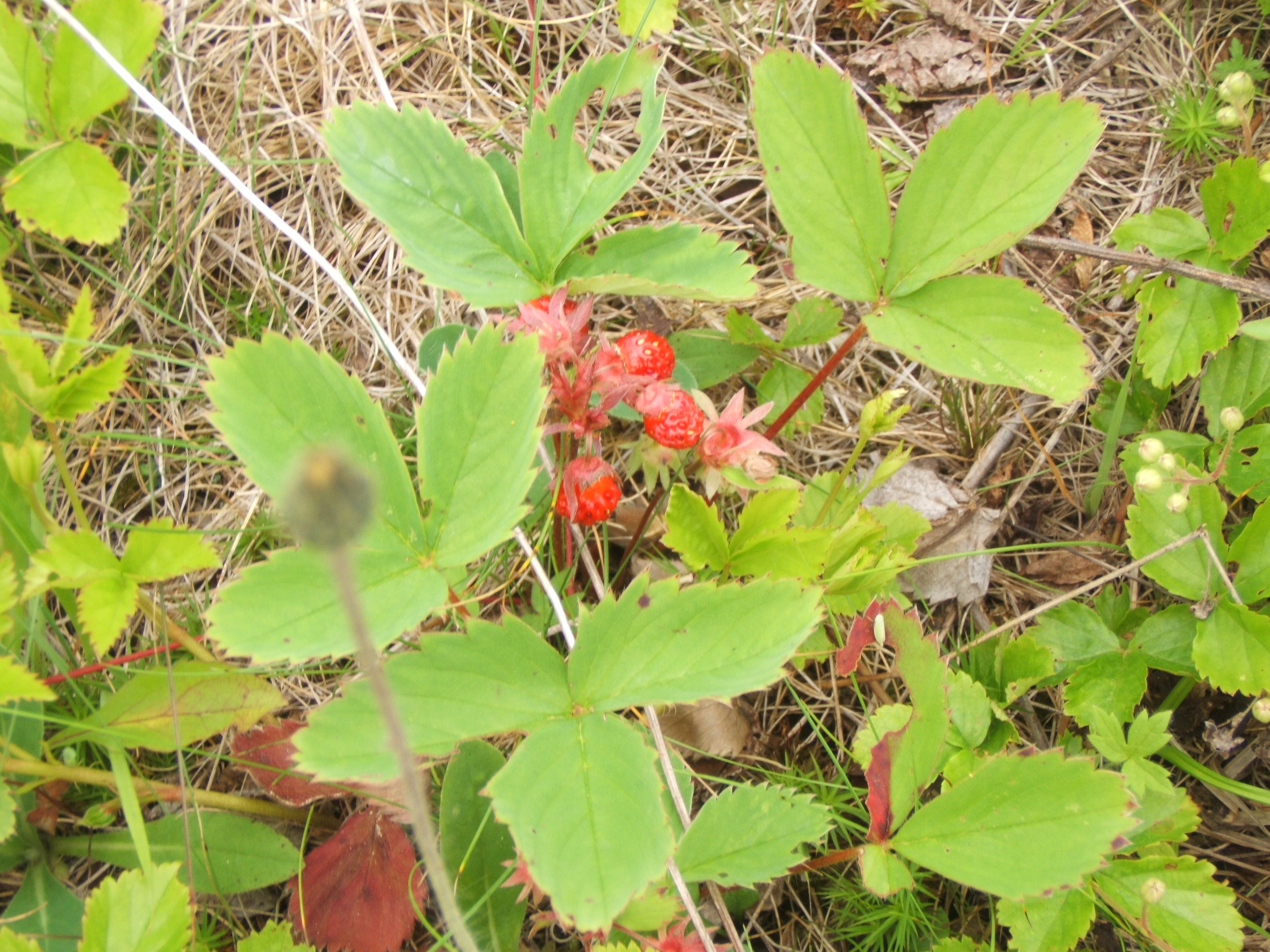
wild strawberries
In biology, ‘niche’ refers to the space occupied by a plant or an animal. ‘Niche’ is the sum total of the habitat needs of a plant or animal – physical, nutritional, and biological. For example, the wild strawberries in our field grow where the moisture, sunlight and soil are just right. ‘Niche’ also includes the role the wild strawberries play in the ecosystem, the way its fruit and leaves provide food for insects, field mice and birds.
In human terms, ‘niche’ can be a metaphor for personal space, home, or community. My best space to live is in the country, where I can garden, be near to woods and water, and escape from urban noise. When I am in my right ‘niche’, I contribute best to my family and to the community where I live.
In my experience, ‘niche’ is not stagnant but changes, hour to hour, day to day, season to season. One way of looking at the timeline of life is to think of it as a sequence of niche-spaces lived-in, sought after, avoided, encountered, or discovered.
The place where I am also influences how I feel. Stress occurs when ‘niche’ does not quite fit. Comfort is discovering a space answering all my ‘niche-needs’. Sadness is in trying to return to a space once occupied but no longer available. Conflict can occur when I have trouble sharing my space with others.
Contentment is finding and inhabiting a space that is, if not perfect, at least mine.
This blog space will be devoted to poetry and prose about ‘niche’. I’ll include poems and stories about human space: home and away, past and present. I’ll write to explore some of the place-based themes I love: laughing and talking with friends, growing and gathering food, wandering in forest and field, and travelling to other places. Because I am a biologist, I’ll also write about wild plants and animals, and the spaces where they live and interact with one another.
Visit often, because I love to write and I’ll have regular updates. For now, tell me about your best place, your ‘niche’, the place where you belong.