Archive for the ‘books with a strong sense of ‘place’’ Category
I’m a Shelf Monkey!
I see myself in many roles in this life – mother, wife, reader, writer, botanist, artist, friend, sister, and so on. Recently, I have added one more role … I am a Shelf Monkey!
~
My life as a Shelf Monkey began when I responded to a message from ecw press in Toronto. They seek folks who love to read and would be willing to write a review of one of their titles.
~
To be a Shelf Monkey, you must be 16 years or older and live in Canada or the United States. Once ecw accepts you as a Shelf Monkey, they ask you to read and review one of their books. First, they email you a choice of books. Then you are entered into a draw (since there are other Shelf Monkeys). If you win the draw, you receive an advance reading copy of your chosen book in the mail. Your book review can be by Blog, Facebook, Amazon, and so on. They encourage posting a review within a month of receiving the book.
~
For more information on becoming a Shelf Monkey, see http://www.ecwpress.com/be-shelf-monkey .
~

Jane, reading
~
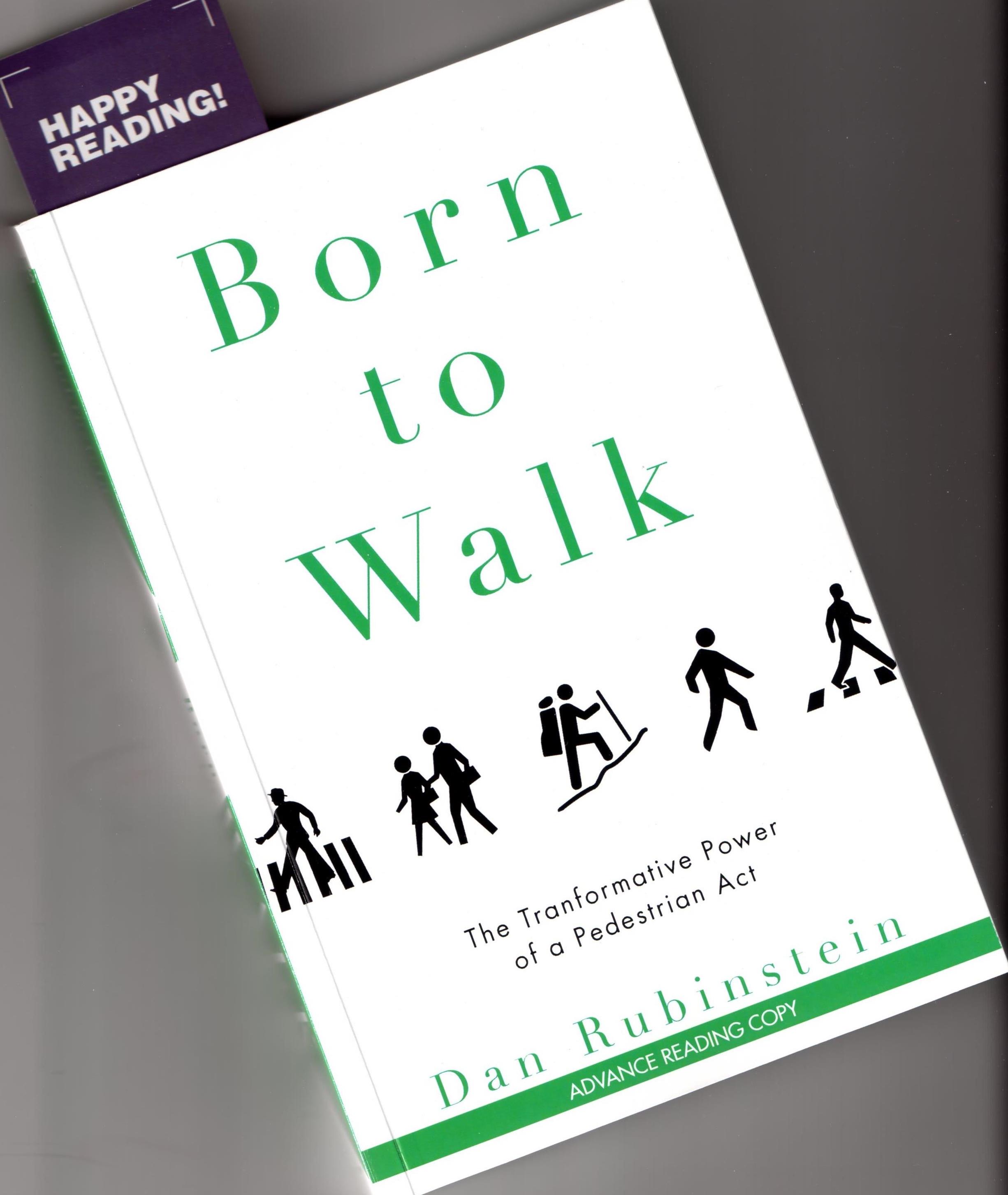
I am currently reading my first Shelf Monkey book – Born to Walk – The Transformative Power of a Pedestrian Act by Dan Rubinstein (ecw press, 2015, Toronto). I chose the book because of my interest in mobility and the simplicity of the idea – walking can transform our lives. I should be finished the book within the next couple of weeks and I’ll be posting a review on my Blog.
~
~
I would read faster, but the first chapter has inspired me to get out and do more walking!!!
~
Copyright 2015 Jane Tims
in a yellow caravan
The Wind in the Willows by Kenneth Grahame was published in 1908 and has defined the relationship of people to place for four generations. The story of animal friends and their lives along the river is a magical yet down-to-earth tale. It solidifies ideas of home, adventure and longing. It captures (or doesn’t) the insubstantial voice of nature:
… it passes into words and out of them again – I catch them at intervals – then it is dance-music once more, and then nothing but the reeds’ soft thin whispering.
One of the memorable characters of the book is Toad. He is reckless and arrogant, and constantly gets into trouble, but I think his appeal is the adventurer in all of us. Some of his adventures are in a bright yellow caravan …
~

2003 ‘Toad’s yellow cart, Wind in the Willows’ Jane Tims
~
… there, drawn out of the coach house into the open, they saw a gipsy caravan, shining with newness, painted a canary-yellow picked out with green, and red wheels.
‘There you are!’ cried the Toad … ‘There’s real life for you, embodied in that little cart. The open road, the dusty highway, the heath, the common, the hedgerows … The whole road before you, and a horizon that’s always changing …
~
My copy of Wind in the Willows (Kenneth Grahame, 2007, Vancouver: Blue Heron Books) was illustrated by Robert Ingpen (what a name for an artist!). I will leave you with his illustrations of Toad’s yellow caravan …
~

~

~
Copyright 2015 Jane Tims
Daisy’s light
The Great Gatsby by F. Scott Fitzgerald (1925) is a book of excesses and haunting results. It is a cautionary story about the consequences of pursuing wealth without responsibility.
~
My painting is of Jay Gatsby as he looks across the bay to Daisy’s green light on the far shore.
~

Jane Tims ‘Daisy’s light from The Great Gatsby’ 2003 (acrylic)
~
Something in his leisurely movements and the secure position of his feet upon the lawn suggested that it was Mr. Gatsby himself, come out to determine what share was his of our local heavens.
I decided to call to him. Miss Baker had mentioned him at dinner, and that would do for an introduction. But I didn’t call to him, for he gave a sudden intimation that he was content to be alone — he stretched out his arms toward the dark water in a curious way, and, far as I was from him, I could have sworn he was trembling. Involuntarily I glanced seaward — and distinguished nothing except a single green light, minute and far away, that might have been the end of a dock.
from F. Scott Fitzgerald (1925) The Great Gatsby
~
The disposable wealth and carelessness of Gatsby are things most of us will never know. But we can feel for Gatsby who is willing to accept blame in the name of love and loses his life in consequence.
~
~
Copyright 2015 Jane Tims
silence
How many stories written by Edgar Allan Poe can you name? Certainly ‘The Pit and The Pendulum’. Perhaps ‘The Fall of the House of Usher’ and ‘The Purloined Letter’. Perhaps ‘The Murders in the Rue Morgue’.
~
My favorite story by Poe is ‘Silence – A Fable’, published in 1837. As many of Poe’s tales of the macabre, after numerous readings it still has the power to send shivers along the spine. The setting of the story is vividly portrayed with words. These were the inspiration for my painting.
~

Jane Tims (2002) ‘Silence by Edgar Allan Poe’ (acrylic on canvas, 20″ X 26″)
~
The waters of the river have a saffron and sickly hue; and they flow not onwards to the sea, but palpitate forever and forever beneath the red eye of the sun with a tumultuous and convulsive motion. For many miles on either side of the river’s oozy bed is a pale desert of gigantic water-lilies. They sigh one unto the other in that solitude, and stretch towards the heaven their long and ghastly necks, and nod to and fro their everlasting heads. And there is an indistinct murmur which cometh out from among them like the rushing of subterrene water. And they sigh one unto the other.
From Edgar Allan Poe, ‘Silence – A Fable’, 1837
‘Silence – A Fable’ describes the waters of the Zaire River and a strange man who sits on a rock along the river. A Demon in the water, wants the man to get down from the rock. So the Demaon sends all manner of horrors: the hippopotamus and the behemoth, and the tempest with torrential rains, thunder and lightening. But the man will not get off the rock. So what does the Demon do to get the man down from the rock. You need to read the story.
~
For a full text of this wonderful fable, see http://classiclit.about.com/library/bl-etexts/eapoe/bl-eapoe-silence.htm
~
I have a book of stories by Edgar Allan Poe that belonged to my Uncle Alec. The stories are illustrated with wood engravings by Fritz Eichenberg. These engravings are, in themselves, a study in horror. I thought you might like to see a couple of my favorites.
~

Illustration by Fritz Eichenberg of the Edgar Allan Poe story ‘The Fall of the House of Usher’ (Poe, 1944, Tales of Edgar Allan Poe, New York: Random House)
~

Illustration by Fritz Eichenberg of the Edgar Allan Poe story ‘The Black Cat’ (Poe, 1944, Tales of Edgar Allan Poe, New York: Random House)
~
I wonder how Fritz Eichenberg would have illustrated ‘Silence – A Fable’. Perhaps illustrations can never be as frightening as ‘… and the lilies sighed one unto the other in the solemnity of their desolation’. Just try reading the story aloud!
~
Copyright 2015 Jane Tims
heart of darkness
I love to read. Certain scenes in the books I read stick in my head. Sometimes they inspire me to try to capture the author’s words on canvas.
~
I thought I would share a few of my paintings over my next few posts. If you have read these books, perhaps my paintings will remind you of the words and scenes they try to portray. If you have not read them, perhaps the paintings will inspire you to add them to your reading list.
~

Jane Tims 2002 ‘Joseph Conrad’s Heart of Darkness’ acrylic on canvas, 20 X 16
~
‘ … Only the barbarous and superb woman did not so much as flinch, and stretched tragically her bare arms after us over the somber and glittering river …’ – Joseph Conrad, 1902, Heart of Darkness
~
I first read Joseph Conrad’s ‘Heart of Darkness’ in school. First published in 1902, the book is set against a background of British colonialism and the ivory trade. The novella takes us on a dark journey along the Congo River as the narrator travels to meet Kurtz, the chief of the Inner Station of a Belgian Trade Company. The book is a study of what happens to humans when corruption and greed become the drivers for life, and when they are left to operate outside the norms of society.
~
The painting tries to capture the moment in the story when the steamboat is about to leave the Inner Station with the gravely ill Kurtz. The natives he has been living with come to the shore. Kurtz’ ‘mistress’, a ‘superb woman’, reaches her arms towards the leaving steamer. A moment later the men on the boat use the people on the shore for target practice.
~

My battered and dog-eared copy of Heart of Darkness. Leonard F. Dead (ed.) (1960) ‘Joseph Conrad’s Heart of Darkness – Backgrounds and Criticisms’, Englewood Cliffs: Prentice-Hall, Inc.
~
Copyright 2015 Jane Tims




 nichepoetryandprose