Posts Tagged ‘mystery book’
drear November: Project #4 – writing and finishing a mystery story
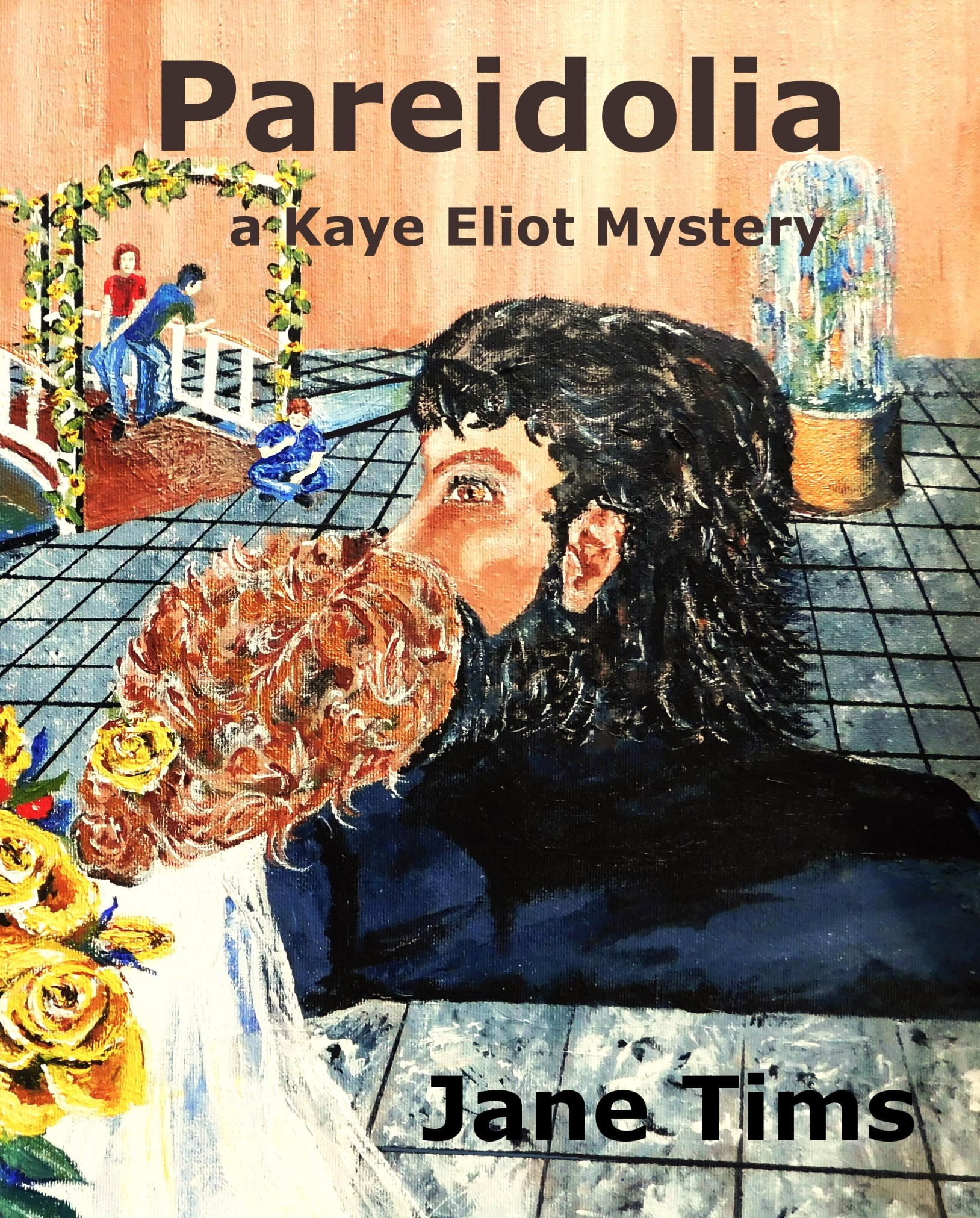
As you may know, I have finished the final draft of my Kaye Eliot Mystery, Pareidolia. It is now available on Amazon.ca — just click here.
~
~
Pareidolia began as a search for an unusual way people from the past could communicate with people of the present. Each of the Kaye Eliot Mysteries has looked at one of these cross-time communication methods:
| How Her Garden Grew | letters |
| Something the Sundial Said | diary |
| Land Between the Furrows | postcards |
| Stained Glass | stained glass |
| Pareidolia | ? |
~
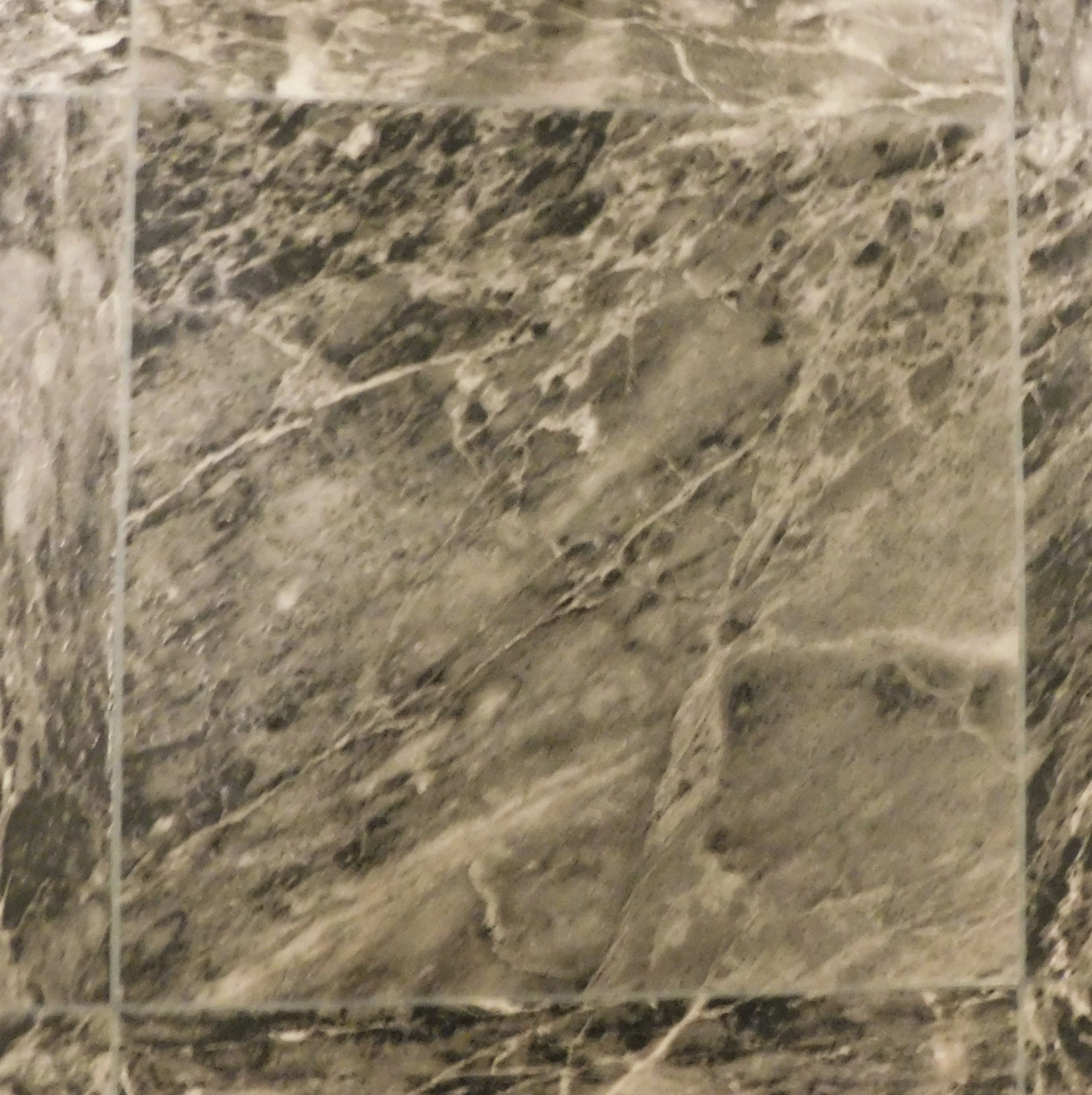
Every day I stare at the tiles in my kitchen and wonder at the images I see. One tile fascinated me in particular. I could see faces, and also horses and dogs, depending on the angle I considered. This made me think that a story or puzzle could be built into the tiles of a building and the idea for Pareidolia was born.
~
~
Have a look at the tile above. Do you see a Siamese fighting fish? a horse’s head viewed from above, a dog, a scary skull with teeth? What do you see in the circle, bottom left? …..
~

~
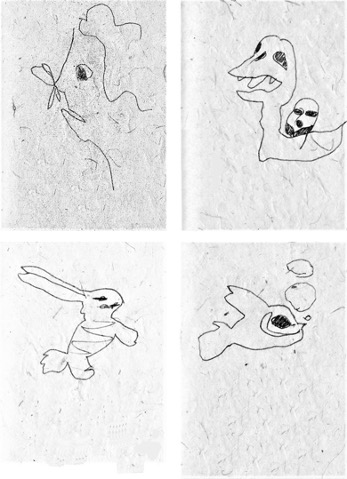
When I published the book, I wanted some of these tile-images to appear in the book. So as the Eliot family searches for the story in the clues, I show some drawings of some of the images I have seen.
As I say in the Acknowledgements for the book, ‘
‘…the strange little drawings I use to illustrate this book are of the creatures and faces I have seen in those tiles. Please do not think of them as poorly rendered drawings, but as the miraculous drawings of geological processes.’
~
~
Have a look at tiles you see and find a few images of your own. A great activity as you wait for an elevator!
All my best!
Jane (a.k.a. Alexandra)
clues in a mystery
I am still revising my novel, the third in my Kate Eliot Mystery series: Land Between the Furrows.
~
A mystery places additional demands on both writer and reader. It is the writer’s job to present the mystery, include clues to solve the mystery and then, work with the reader — ta da! — to solve the mystery. It is the reader’s job to accept the challenge of solving the mystery, look for clues, put them together and work with the writer to solve the mystery. The result is a story and plot where the writer and reader collaborate.
~
Mine is a cozy mystery. In this book, there is something to find. At first it is not clear what the something is, but gradually its characteristics are revealed and the location (where the object is hidden) is revealed. The mystery uses a device, a stack of post cards and the messages on them, to present the clues.
~
Most of the information is sorted through the gradual telling of the story and by the end of the first draft, I have a rough idea of the way clues will be distributed through the book. But, as for all writing, adjustment and revision is usually needed.
~
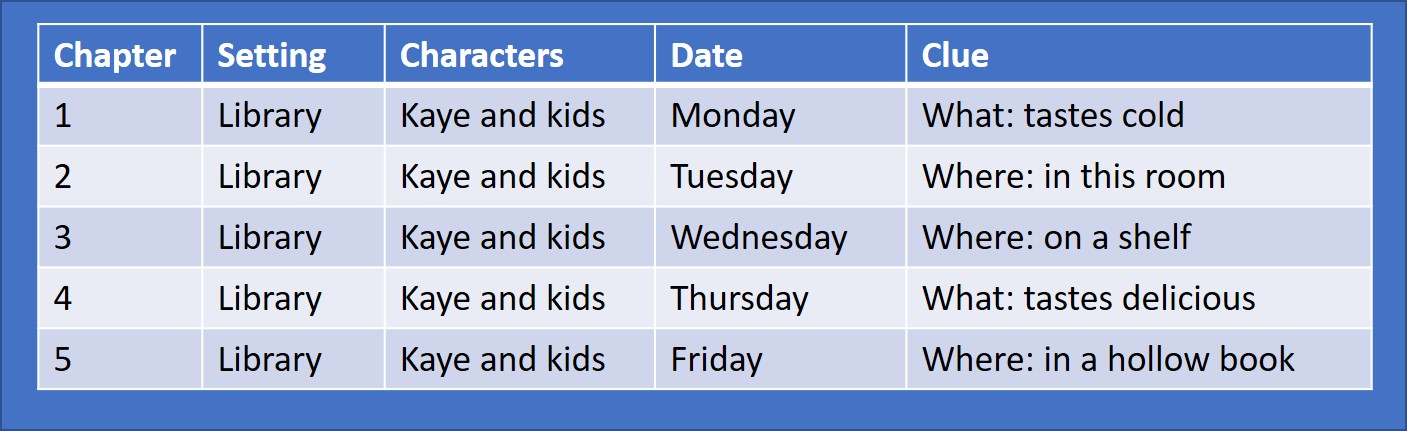
To do this, I use two tools. One is my Table of Chapters and Scenes. The other is my List of Clues.
~
So take a simple mystery. I have hidden an object in this room. There are really two sets of clues 1. What is the object? and 2. Where is it hidden? In a simple, straightforward mystery, the clues should be presented in a logical way and information should be progressive.
~

~
So, here is the room.
List of Clues
What is the item? the clues are:
- it’s cold
- it tastes delicious
- it’s purple
- it’s on a stick
Where in the room is the item hidden? the clues are:
- in the library
- on a library shelf
- in a hollow book
- name of the book: “Warm Day”
~
I use the Table of Chapters to make sure the clues are distributed completely and in order. These Table is not complete (there are probably ten chapters in this simple book), but this will give you the idea.
Of course there can be complexities: clues within clues; red herrings; dead ends; twists and turns.
By the time the book is near the end, I want to make sure all the clues have been given.
And Kaye and her kids get the Popsicle.

All my best,
staying safe,
Jane




 nichepoetryandprose